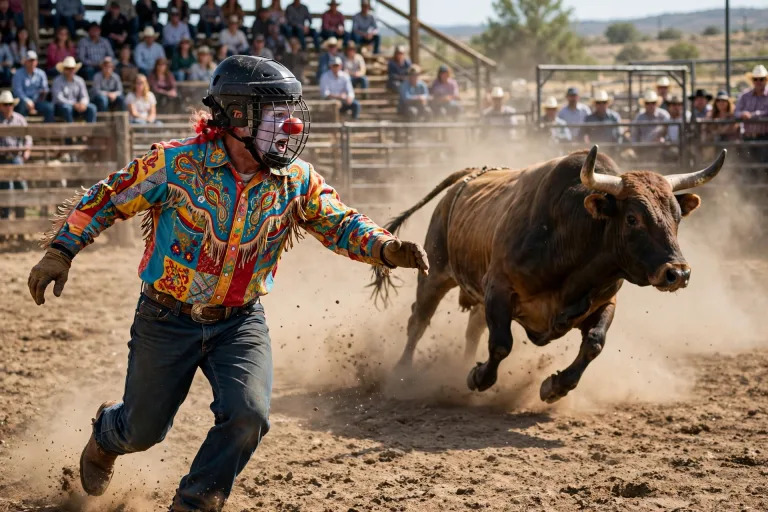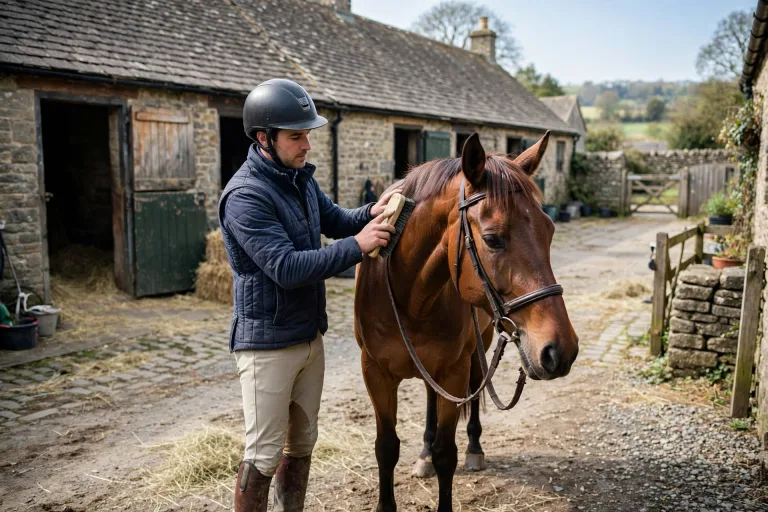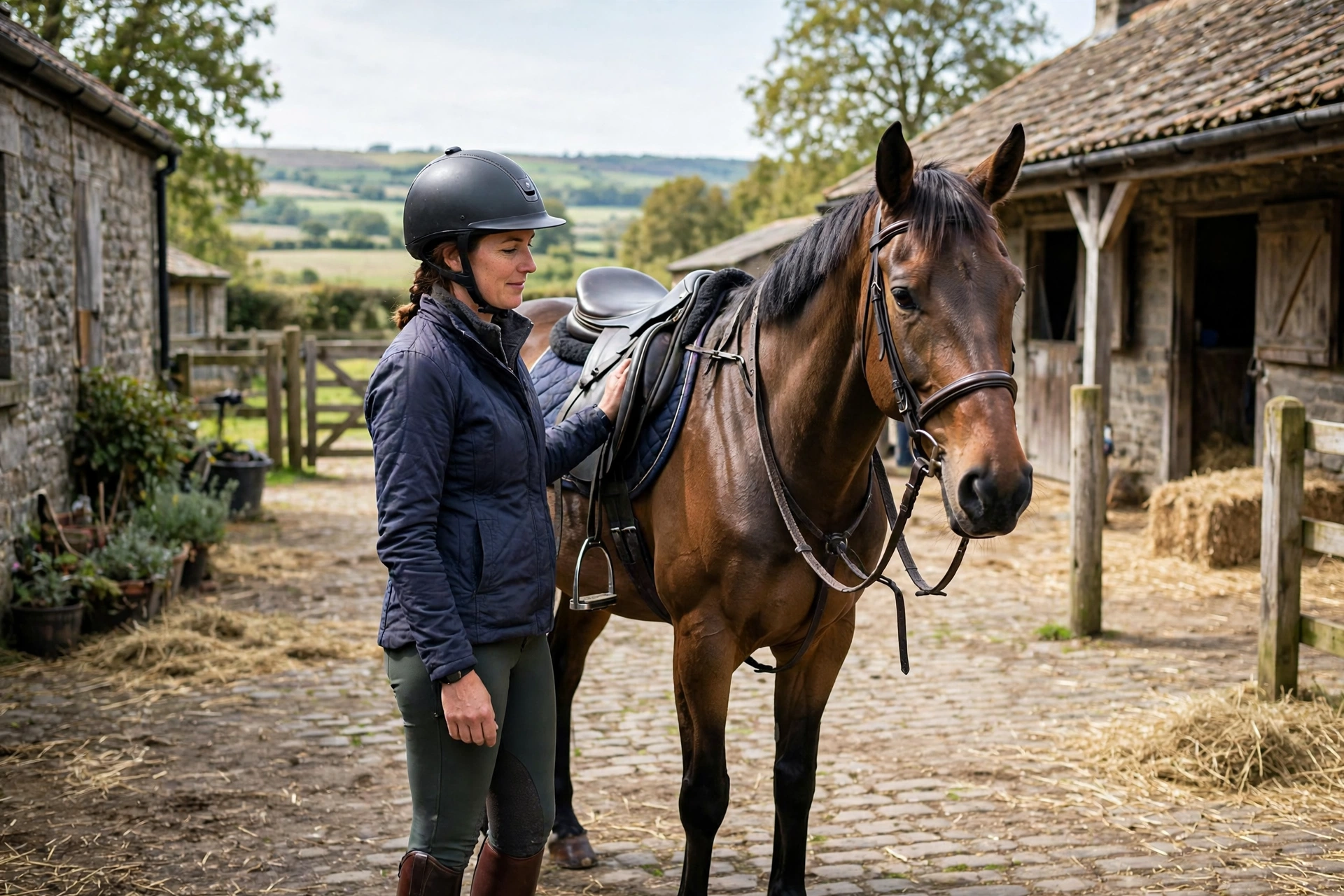
A helmet for horse trainers is a helmet worn by a trainer working with horses, and in general terms it should protect the head from a fall, a kick, or a knock while the trainer works around horses. Horse trainers spend much of their working day on foot in the yard, in the arena, or out on the gallops, and horses are large, strong, and quick to react. A helmet is part of the safety gear a trainer wears whenever there is a risk of a head injury, whether they are riding or handling a horse from the ground.
The right helmet for a horse trainer needs to suit both riding and yard work. A trainer may school a young horse in the morning, lunge another in the afternoon, and lead horses in and out of the stable in between. A helmet that is light, fits well, and stays comfortable through a long day is far more likely to be worn every time it is needed, and that everyday habit is what keeps a trainer safe.
Why do horse trainers need a helmet?
Horse trainers need a helmet because working with horses carries a real risk of a head injury. A horse can spook, shy, or rear without warning, and a rider who comes off can land hard on the ground. A helmet gives protection against that kind of impact, and it also protects the head if a horse kicks out or swings its head while being handled on the ground.
There are other risks in a yard too. A trainer may work in a stable where a horse turns suddenly in a small space, or lead a horse through a gateway where the horse pulls forward. A helmet protects the head from a knock against a door frame, a gate, or a stable wall. In general terms, a helmet is the most basic piece of head protection for horse work, and it is worn alongside boots, gloves, and a body protector as part of a trainer’s everyday kit.
What kind of helmet is best for horse trainers?
The best helmet for horse trainers is, in general terms, a riding helmet that meets the safety standard required by the yard or the sport, and that fits the trainer well. Many trainers choose a lightweight helmet with good ventilation, because they wear it for hours at a time in all weathers. A helmet with a low profile and a secure fit is a good choice, because it stays in place when the trainer bends down to pick up a hoof or leans forward in the saddle.
The helmet should be chosen with the work in mind. A trainer who schools young or sharp horses may want a helmet with the highest level of protection they can find, while a trainer who mostly works with steady horses on the flat may choose a lighter helmet that is cooler to wear. The helmet should also work with the trainer’s other gear, such as a body protector and a radio, and it should not block hearing, because a trainer needs to hear the horse, the yard, and other people around them.
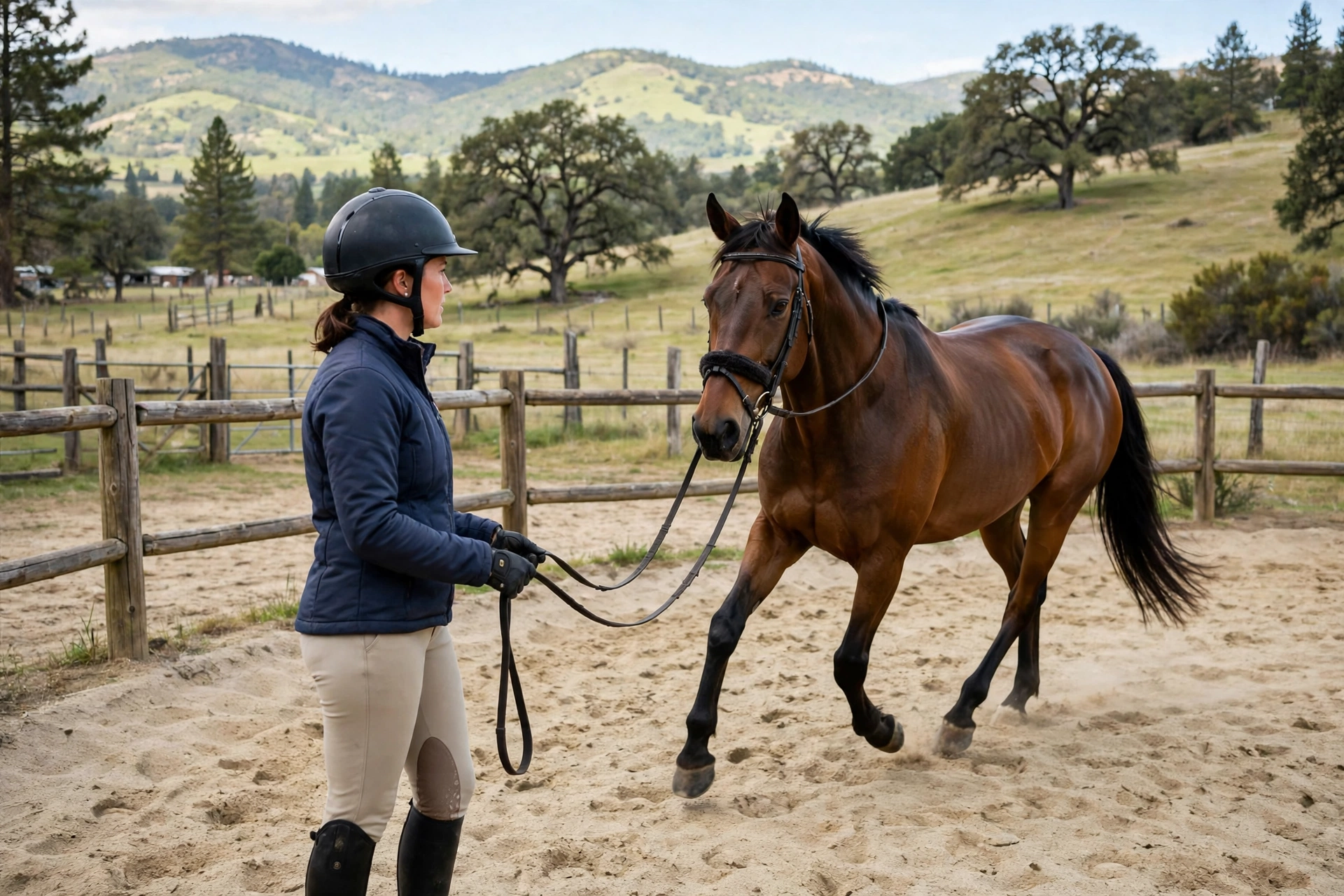
How should a helmet for horse trainers fit?
A helmet for horse trainers should fit snugly, sit level on the head, and stay in place when the trainer rides, bends down, or moves quickly around a horse. The helmet should cover the forehead and the top of the head, and the chin strap should be fastened securely every time the trainer is mounted or handling a horse. A strap left loose lets the helmet lift or slide in a fall, and a helmet that comes off is no help at all.
The fit should be checked with the trainer’s hair tied back as it will be worn at work, because a ponytail or a bun can change how a helmet sits. The helmet should not press hard on any one spot, and it should not rock forward over the eyes when the trainer looks down. A trainer who wears glasses should check that the helmet does not push the glasses out of place, because clear vision matters around horses just as much as head protection does.
What should a horse trainer look for when buying a helmet?
When buying a helmet, a horse trainer should look first at the safety standard it meets, and then at fit, comfort, and ventilation. The helmet should meet the standard required by the yard, the competition, or the sport, and the trainer should check the label inside the helmet before buying. A helmet that meets a recognised standard and fits well is a far better choice than a helmet that looks smart but does not meet the rules.
Comfort is just as important as protection, because a trainer may wear the helmet for a whole day. Ventilation helps to keep the head cool in summer, and a removable, washable lining keeps the helmet fresh. The helmet should be tried on before buying if possible, and the trainer should check that the chin strap is easy to adjust with gloves on. A helmet in a dark, plain colour is a common choice for trainers, because it suits the yard and the arena, and it goes with the rest of the trainer’s kit.
How should a horse trainer’s helmet be looked after?
A horse trainer’s helmet should be looked after with regular cleaning and sensible storage, in the same way as any riding helmet. After a day in the yard, the trainer should brush off dust and hair, wipe the shell clean, and let the lining air out before the helmet is put away. The lining should be washed or replaced when it becomes dirty, because a clean lining is more comfortable and lasts longer.
The helmet should also be checked for cracks, dents, or damage to the shell, and in general terms a helmet that has taken a hard impact or a fall should be replaced rather than used again. Heat and sunlight can wear a helmet out over time, so it should be stored in a cool, dry place, away from direct sun and away from the stable heater. Trainers who want to learn more about features that can help in a fall may also want to read about a system designed to reduce rotational forces, such as MIPS, which is found in some riding helmets. A well-kept helmet, worn every time, gives a horse trainer the best chance of a safe day with horses.
Can a horse trainer wear the same helmet for riding and yard work?
Yes, in general terms the same riding helmet can be worn for riding and for handling horses on the ground. Many trainers wear their riding helmet all day, because the risk of a head injury is there whenever they are close to a horse.
Does a horse trainer need a helmet when not riding?
A helmet is still useful on the ground, because a horse can kick, swing its head, or pull suddenly while being led or handled. In general terms, wearing a helmet whenever working closely with horses is the safer choice.
When should a horse trainer replace a helmet?
A horse trainer should replace a helmet after a fall or a hard impact, or when it no longer fits well, shows cracks or damage, or has become worn out from age and sun exposure. When in doubt, replace it rather than keep riding in it.

Olivia
Writer at Helmet Today, covering helmet reviews, fit and riding safety.