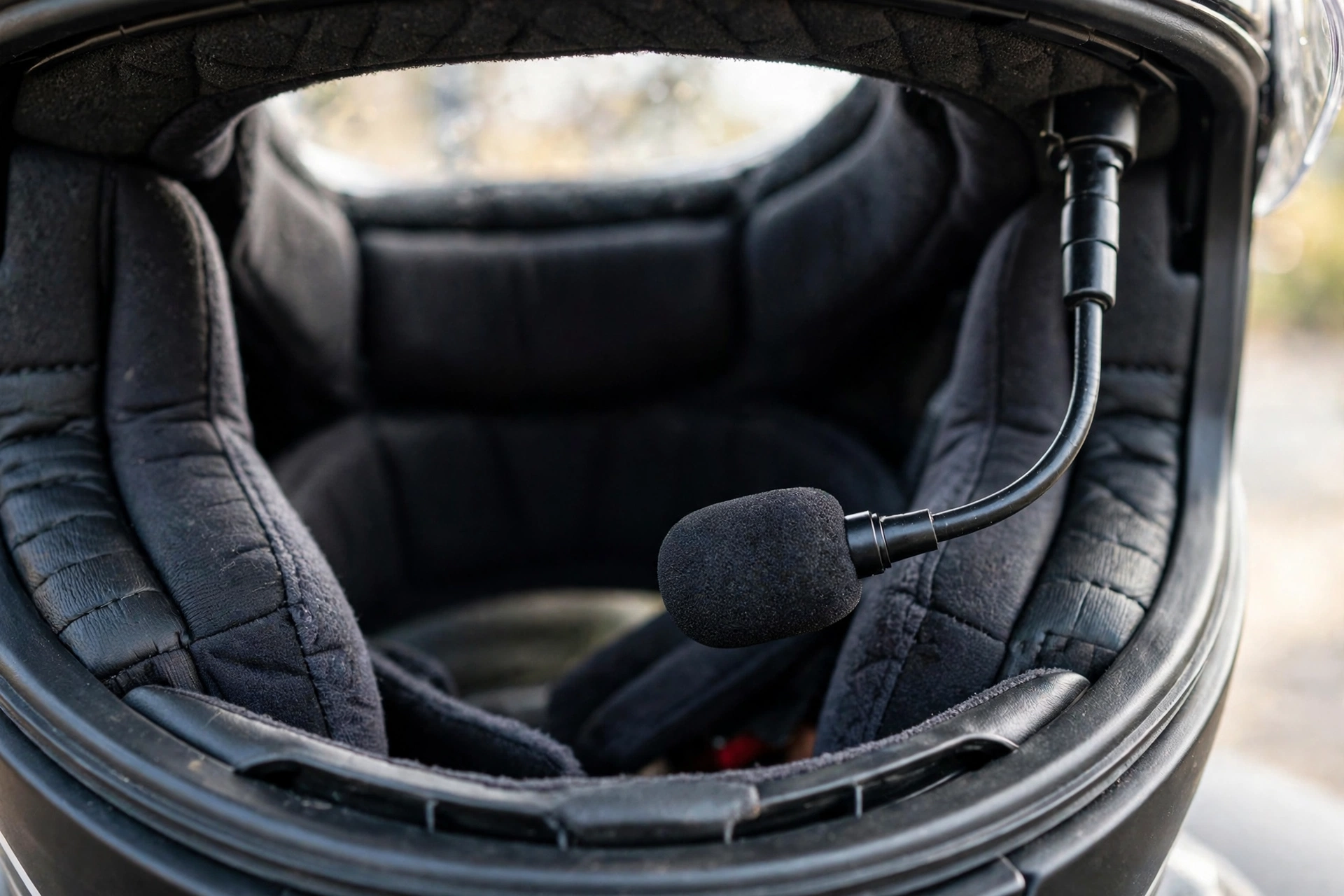
Microphone placement is one of the most important details of a helmet intercom — a microphone in the wrong spot will make your voice quiet, muffled or drowned in wind noise, while the right spot gives clear audio on every call. In general terms, the microphone should sit close to your mouth, just off to one side, shielded from direct wind and away from the chin vent. A few millimetres of difference can change how clearly other riders hear you.
Most helmet intercoms come with two microphone options: a boom microphone on a flexible arm, and a small wired microphone that sticks to the inside of the chin bar. Full face helmets usually suit the boom microphone, while open face and modular helmets often suit the wired type. Whichever you use, the placement rules are the same: close to the mouth, out of the wind, and secure enough not to move while you ride. This guide explains where to put each type and how to fix common problems.
Where Should a Boom Microphone Sit?
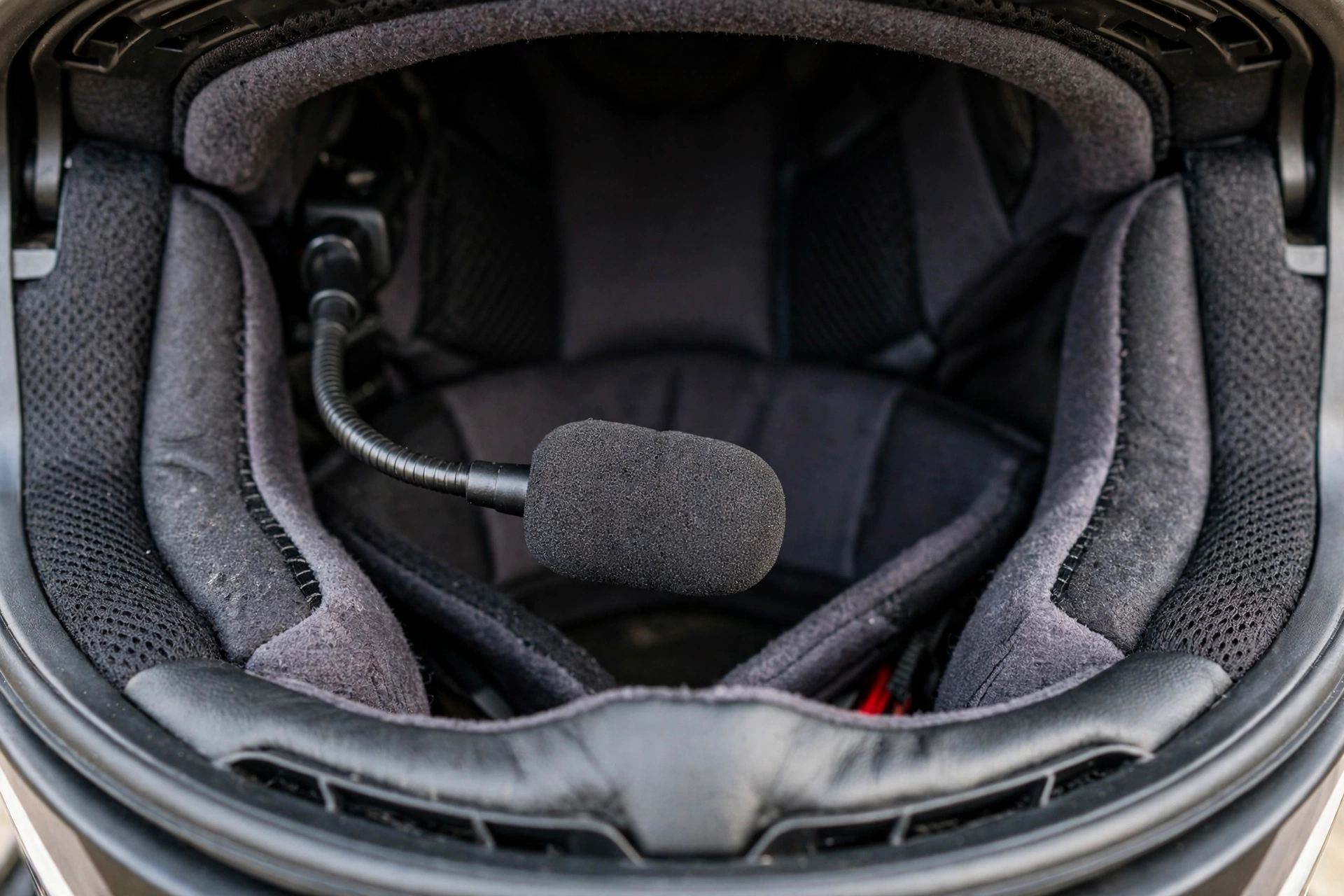
A boom microphone should sit just in front of your mouth, slightly to one side, about a finger’s width from your lips. It should not touch your lips, because contact creates thumps and rustling sounds every time you move your head. It should not sit directly in front of your mouth either, because your breath will hit it squarely and create a puffing sound on every word.
The best position is usually just to the side of the mouth, near the corner of the lips, with the small foam wind cover fitted. The foam cover matters more than most riders realise — it cuts wind noise and softens the sound of your breathing. If your unit came with a larger wind sock, use it for open face helmets or high-speed riding, where the wind is stronger.
Bend the boom arm gently to hold the position, and check it stays put when you close the visor and shake your head. If the arm keeps drifting, the microphone will wander away from your mouth and your voice will fade.
Where Should a Wired Microphone Sit?
A wired microphone is a small flat unit that sticks to the inside of the helmet, usually on the chin bar or the cheek pad, close to the mouth. It has no arm to adjust, so its position is fixed once you stick it down — which makes getting it right the first time important. Before you peel off the adhesive backing, hold the microphone in place with tape and test it with a call or a voice recording.
The ideal spot is on the inside of the chin bar, just to one side of the centre, as close to your mouth as the helmet allows. Avoid placing it directly in front of a chin vent, because air rushing through the vent will blow straight across the microphone and create noise. Also avoid spots where the microphone presses against your lips or chin, which causes rubbing sounds.
If your helmet has a removable chin curtain, the microphone can sit just above it, shielded from the wind coming up from below. In a modular helmet, check that the microphone does not get caught or pinched when you flip the chin bar up and down. A microphone that is pinched will either stop working or produce a constant crackle.
How Does Placement Affect Voice Clarity?
Distance is the biggest factor. A microphone more than a few centimetres from your mouth picks up much less of your voice and much more of the surrounding noise. The result is a quiet, distant voice that other riders struggle to hear, especially at speed. Moving the microphone closer usually fixes this at once.
Angle matters too. A microphone pointing at your mouth picks up your voice clearly; one pointing across your face or up towards your nose picks up breathing and wind instead. Most boom microphones have a marked side that should face your mouth — check the manual, because fitting it backwards is a common mistake that makes the audio sound thin and quiet.
Wind is the third factor. A microphone exposed to airflow from a vent or an open visor will pick up a rushing sound that can drown out speech. Shielding the microphone behind the chin bar, fitting the foam cover, and closing vents that blow directly across it all help. If your voice still sounds windy, try moving the microphone slightly further back from the front edge of the helmet.
What Causes Muffled or Quiet Audio?
Muffled audio is often caused by something covering the microphone. A balaclava, a neck warmer or a chin curtain that sits over the microphone will dull your voice. Tuck the fabric away from the microphone or cut a small opening so the microphone has a clear path to your mouth. In cold weather, a balaclava is almost essential, so this is a common winter problem.
Quiet audio can also come from a microphone that is too far away, or from a volume setting that is too low. Check the microphone position first, then check the volume on both your unit and your phone or connected device. Some intercoms have a microphone sensitivity setting in their app — raising it slightly can help, though raising it too far will also raise the background noise.
Finally, check for damage. A microphone that has been crushed by the chin bar, soaked in rain, or clogged with dust can sound muffled even in the right position. If cleaning the foam cover and repositioning the microphone does not help, try the spare microphone that came with the kit. If you are learning about the safety technology inside the helmet itself, reading about what MIPS is for helmets can help you understand how modern helmets handle rotational forces in a crash.
How Do You Test Microphone Placement Before a Ride?
The simplest test is a voice recording. Put the helmet on, close the visor, and record yourself speaking at normal volume using your phone or the intercom’s own test feature. Listen back and check that your voice is clear, at a good volume, and free of wind or rubbing sounds.
Next, make a test call with another rider. Ride together at a moderate speed and ask them how you sound. They can tell you at once if your voice is quiet, muffled or windy, and you can adjust the position before the real ride begins. It is far easier to fix placement at a standstill than on the move.
Once you find the sweet spot, mark it. A tiny dot of nail polish on the boom arm, or a note of where the wired microphone sits, means you can put it back in exactly the same place after cleaning the helmet or swapping the lining.
Frequently Asked Questions
Q: Should the microphone touch my lips?
A: No. A microphone touching your lips picks up thumps and rustling with every head movement. Keep it about a finger’s width away, just to one side of your mouth.
Q: Which is better, a boom microphone or a wired microphone?
A: In general terms, a boom microphone suits full face helmets because it can be positioned precisely, while a wired microphone suits open face and modular helmets. Both work well when placed close to the mouth and shielded from wind.
Q: Why do other riders hear wind noise when I speak?
A: The microphone is probably exposed to airflow from a vent, an open visor or the gap under the chin bar. Fit the foam wind cover, move the microphone further back, and close any vent blowing across it.

Olivia
Writer at Helmet Today, covering helmet reviews, fit and riding safety.