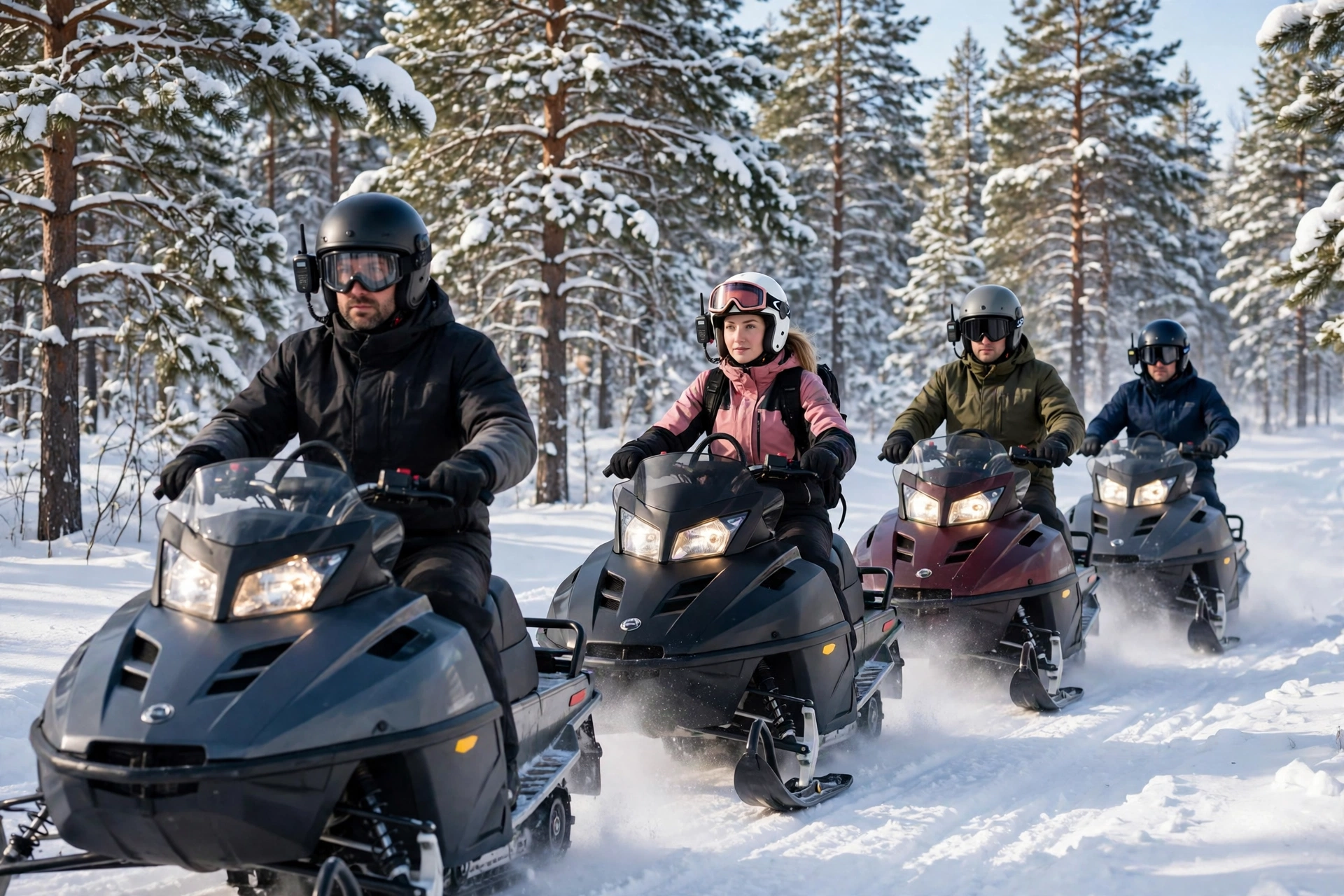
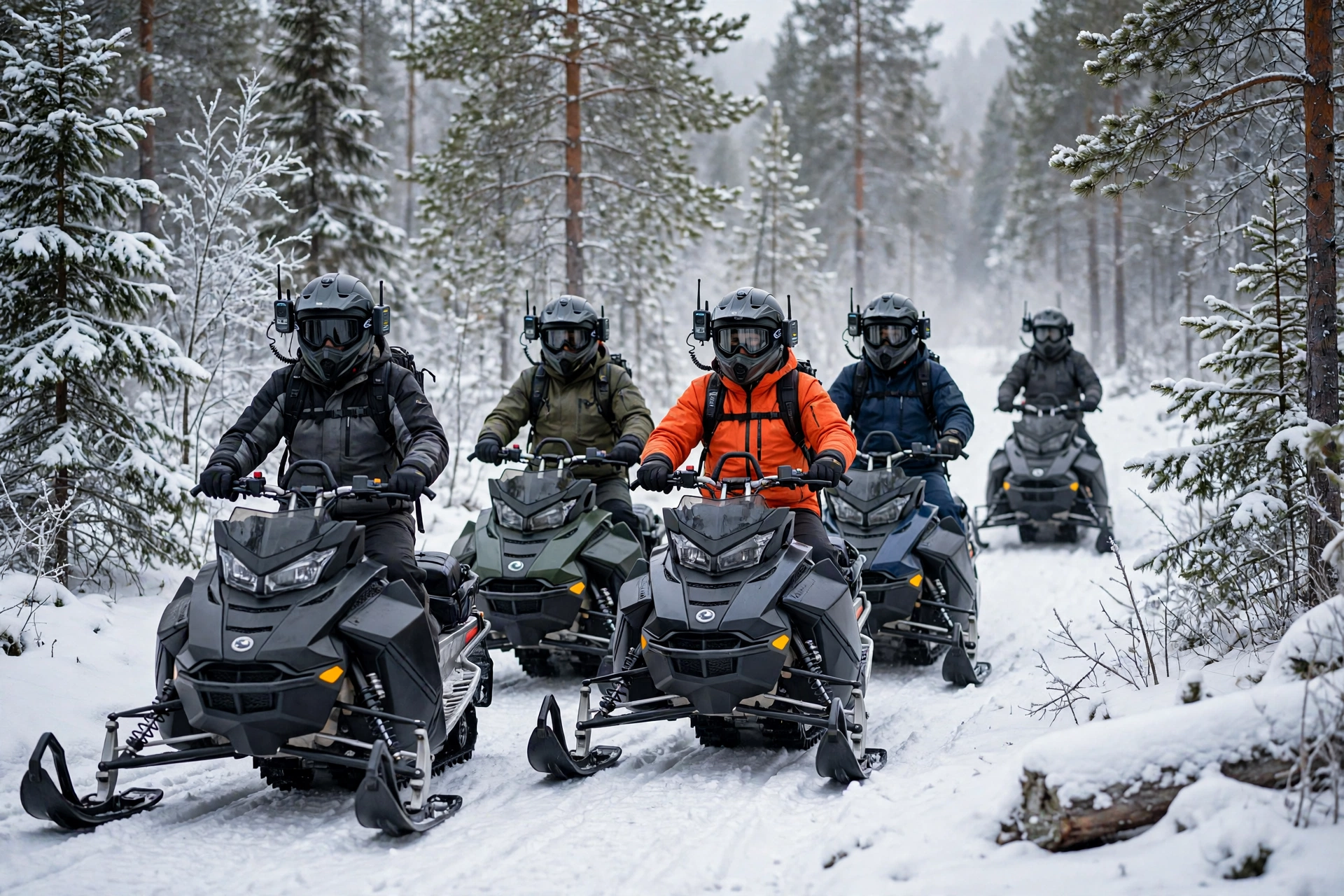
Yes, a helmet intercom works well for snowmobile groups — it lets riders talk across a trail in cold, windy conditions where shouting is useless and stopping is inconvenient. In general terms, a group intercom keeps a snowmobile party connected across open snowfields and through wooded trails, so the leader can warn about thin ice, a rider can report a machine problem, and the group can agree on stops without anyone taking off their gloves. For winter trail riding, it is one of the most useful pieces of kit a group can carry.
Snowmobiling is usually a group activity, but the conditions work against conversation. Engines are loud, wind chill is high, helmets are thick, and riders wear balaclavas and neck warmers that muffle the voice. A helmet intercom solves this by placing a speaker and microphone inside the helmet, close to the ear and mouth, and linking the group wirelessly. This guide explains how it works for snowmobile groups, how cold and wind affect it, and how to set it up for a winter ride.
How Does a Group Intercom Work on a Snowmobile Trail?
A group intercom links several helmet units so every rider can hear the others. Most modern systems use mesh technology, which creates a shared network that every unit joins. If one rider drops out of range, the rest of the group stays connected, and the missing rider rejoins automatically when they come back into range.
On the trail, the leader calls out hazards — a drift across the path, an icy corner, a groomer working ahead, or a junction where the group needs to turn. Riders at the back can report problems, such as a snowmobile that will not restart or a rider who has stopped. Because everyone hears the same conversation, the group can react quickly without pulling over.
Most systems also allow music and phone calls, but on a cold trail most groups keep the channel clear for riding talk. An open microphone is the easiest setup, since it lets riders speak naturally without pressing a button through thick gloves. The trade-off is that wind noise can leak in, so a good microphone with a wind cover is important in winter conditions.
How Do Cold and Wind Affect a Helmet Intercom?
Cold is the biggest enemy of a helmet intercom in winter. Batteries lose capacity in freezing temperatures, so a unit that lasts all day in summer may run flat much sooner on a cold day. Keeping the unit charged overnight, storing it somewhere warm before the ride, and turning it off during long stops all help to stretch the battery through the day.
Wind is the second problem. At snowmobile speeds, wind rushes over the helmet and the microphone, and it can drown out a rider’s voice or fill the channel with a constant roar. A foam wind cover over the microphone helps a great deal, as does positioning the microphone close to the mouth and shielded behind the chin bar or the balaclava. Some riders also fit a wind deflector on the helmet to cut the airflow around the microphone.
Snow and ice can also block the microphone or the speaker grille. Wet snow that melts and refreezes can seal the openings, so it is worth checking the unit at fuel stops and brushing off any build-up. A unit mounted under a helmet peak or behind the shell’s edge is partly sheltered from falling snow, which helps on a long ride.
How Many Riders Can Join a Snowmobile Group?
The number depends on the system. Smaller Bluetooth units may support two to four riders, which suits a family outing or a small group of friends. Larger mesh systems can link many more riders at once, which suits club rides and organised trail days where a dozen machines are out together.
In practice, a group of four to six riders works well on a snowmobile trail. Larger groups can become noisy, with too many voices on the channel at once, and the line of machines gets long enough that the riders at the back are far from the leader. Many clubs split a big ride into smaller sub-groups, each on its own channel, with a lead rider coordinating between them.
Before you buy, check how the system handles riders joining late or leaving early. A good system lets a new rider join without everyone else having to stop and re-pair, and it should reconnect automatically when a rider who has fallen behind comes back into range. On a winding forest trail, riders drop in and out of range often, so automatic reconnection is almost essential.
How Do You Set Up Intercoms for a Winter Group Ride?
Prepare the night before. Charge every unit fully, keep them indoors overnight so they start the day warm, and pair the whole group while everyone is standing together at the trailhead. Test that each rider can hear and be heard before the engines start.
Agree on simple channel rules. The leader speaks first on hazards and turns, and other riders keep their messages short and clear. Riders should say who they are when they speak, because voices can sound alike through a helmet speaker, especially when everyone is wearing a balaclava. A short habit — “This is Anna, I need a stop” — avoids confusion.
Carry a backup plan for when the technology fails. Batteries die faster in the cold, and a unit can stop working mid-ride. Agree on hand signals for stop, turn and hazard, and make sure everyone knows the meeting point if the group gets separated. The intercom is a great tool on a winter trail, but it should never be the only way the group stays in touch.
What Should You Look for When Buying for Snowmobile Groups?
Start with battery life in the cold. Look for a unit with a long quoted battery life, and remember that freezing temperatures will cut it down. A unit that can charge from the snowmobile while riding, or from a small power bank at a stop, is a real advantage on a long winter day.
Next, check the controls. Thick winter gloves make small buttons hard to use, so large, well-spaced buttons or a jog dial are much easier to operate on the trail. Voice commands can also help, if the system supports them. Try the controls with your winter gloves on before you buy, if you can.
Finally, check the fit with your snowmobile helmet. Helmets for winter riding vary in shape, and not every intercom clamp fits every shell. If you are learning about the safety technology inside the helmet itself, reading about what MIPS is for helmets can help you understand how modern helmets handle rotational forces in a crash. A good intercom should mount firmly, sit comfortably, and keep working through a long, cold day on the trail.
Frequently Asked Questions
Q: Will a helmet intercom battery last a full day of snowmobiling?
A: In general terms, a fully charged unit should last a day of riding in mild cold, but freezing temperatures shorten battery life. Charge overnight, keep the unit warm before the ride, and switch it off during long stops.
Q: Can I use a motorcycle intercom on a snowmobile?
A: Yes, in most cases. Motorcycle intercoms and snowmobile intercoms are usually the same hardware. The main differences are the helmet it mounts to and the cold-weather battery life, so check both before you ride.
Q: Does snow block the intercom microphone?
A: It can. Wet snow that melts and refreezes over the microphone will muffle your voice. Brush snow off the unit at stops and use a foam wind cover to keep the microphone clear.

Olivia
Writer at Helmet Today, covering helmet reviews, fit and riding safety.