Yes — if you are an older rider returning after a break, the right helmet is a modern, well-fitting one that feels light, fastens easily, and suits the riding you plan to do now, not the riding you did years ago. Your old helmet may be out of date, and your needs may have changed too, so the best first step is to treat the helmet as a fresh purchase rather than digging an old one out of storage.
Returning to riding after months or years away is a big step, and it is a good one. Many older riders come back to motorcycling, cycling, or scootering after a long pause — sometimes after retirement, sometimes after an injury has healed, and sometimes simply because the time feels right again. The roads, the traffic, and the helmets themselves have all changed in the meantime. This guide explains what to look for in a helmet when you are coming back, so your first ride back feels safe and comfortable rather than stressful.
What Has Changed Since You Last Rode?
Helmet design has moved on a great deal, and in general terms today’s helmets are lighter, better ventilated, and more comfortable than the ones sold a decade or more ago. Liners are softer and more adjustable, visors are clearer and easier to swap, and many helmets now come with features such as drop-down sun visors and space for communication systems. Standards have also been updated, so a helmet that met the rules when you last rode may no longer meet the current standard in your country.
Your own body may have changed too, and that matters just as much. Neck strength, shoulder mobility, and eyesight all change with age, and a helmet that felt fine at forty can feel heavy and awkward at sixty-five. A helmet that is hard to lift on, hard to fasten, or tiring to wear for an hour will put you off riding, so comfort is not a luxury here — it is part of the safety picture. A helmet you enjoy wearing is a helmet you will actually wear on every ride.
What Should an Older Rider Look for in a New Helmet?
Start with weight. In general terms, a lighter helmet puts less strain on your neck, which matters on longer rides and at the end of a long day. Try several helmets on and notice how each one feels after a few minutes, not just in the first few seconds. A helmet that feels light in the shop is the one to remember, and a helmet that already feels heavy before you leave the shop will only feel worse after an hour on the road.
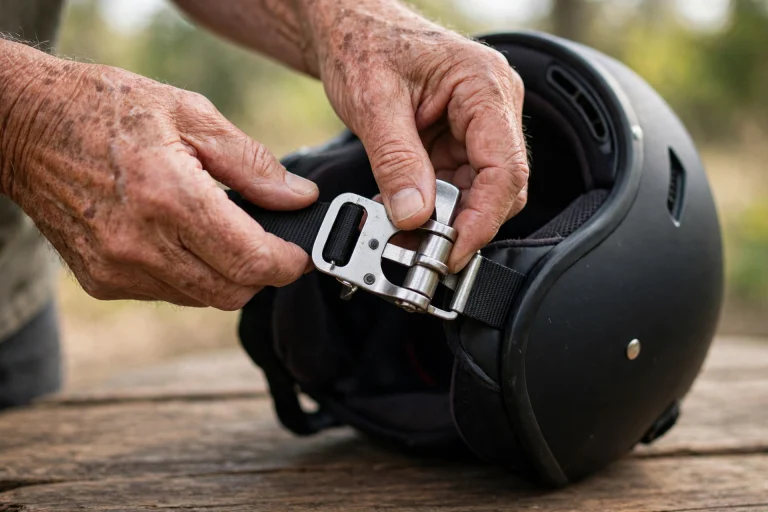
Next, look at how easy the helmet is to use. Can you open and close the visor with one gloved hand? Can you fasten and unfasten the chin strap without a struggle? If you wear glasses, does the helmet have space for the arms of your glasses, and can you put the helmet on without the glasses digging in? These small details make a real difference on every ride, and they are worth testing in the shop rather than discovering on the road.
Ventilation is the third thing to check. A helmet that breathes well keeps you cooler and reduces visor misting, which helps you see clearly in cold or damp weather. Look for vents you can open and close easily, and for a visor that seals well when shut. If you ride in changeable weather, a helmet with a drop-down sun visor or a Pinlock-ready visor can save you from swapping visors at the roadside.

Should You Replace Your Old Helmet After a Long Break?
In general terms, yes. If your old helmet has been sitting in a garage or loft for years, it is worth replacing even if it looks fine from the outside. The materials inside a helmet age over time, and heat, cold, damp, and sunlight can all wear them down while the helmet is in storage. The padding can harden or go flat, the strap can weaken, and the fit can change as the liner settles.
There is also the question of standards. Helmet safety standards are updated from time to time, and an older helmet may have been tested to a standard that has since been replaced. A new helmet will meet the current standard, and it will come with a fresh liner, a clear visor, and a strap that has never been used. For a rider coming back after a long break, that fresh start is worth the cost.
How Do You Check the Fit Before You Buy?
Fit is the single most important thing about any helmet, and it is worth taking your time over. Measure around your head just above your eyebrows and ears, and use the maker’s size guide as a starting point — but always try the helmet on, because sizes vary between brands. The helmet should sit level on your head, feel snug all round, and stay put when you shake your head gently from side to side.
Wear the helmet in the shop for at least ten minutes. A helmet that feels tight at first may settle as the liner beds in, but a helmet that presses hard on your forehead or temples is the wrong shape for your head, and no amount of breaking in will fix that. Check that the chin strap fastens comfortably under your chin, with room for about two fingers between the strap and your throat. If you wear glasses, put them on with the helmet and check that nothing pinches.
If you are learning about how helmets handle different kinds of impact, reading about what MIPS is for helmets can help you understand one of the technologies used in modern helmet design. Some helmets include this kind of rotational impact protection, and it is worth knowing what it does before you choose.
What About Comfort on Longer Rides?
Comfort on a long ride comes down to a few things working together: weight, ventilation, fit, and noise. A light helmet with good airflow and a snug but even fit will stay comfortable far longer than a heavy helmet that presses in one spot. Wind noise can be tiring too, especially on a motorcycle, so a helmet with a good visor seal and a chin curtain can make a long ride much more pleasant.
Frequently Asked Questions
Q: Can I use my old helmet if it was only worn a few times before my break?
A: In general terms, it is safer to replace it. Helmet materials age in storage, and standards change, so a new helmet gives you a fresh liner, a current standard, and a fit matched to your head as it is now.
Q: Is a lighter helmet always better for an older rider?
A: In general terms, yes for comfort, because less weight means less strain on the neck. But fit and the right safety standard still come first — a light helmet that fits badly is worse than a slightly heavier one that fits well.
Q: Should I buy a helmet online or in a shop when returning after a break?
A: A shop is the better choice for a returning rider, because you can try several sizes and shapes on, test the strap and visor with gloves on, and get advice on fit from staff who do this every day.

Olivia
Writer at Helmet Today, covering helmet reviews, fit and riding safety.