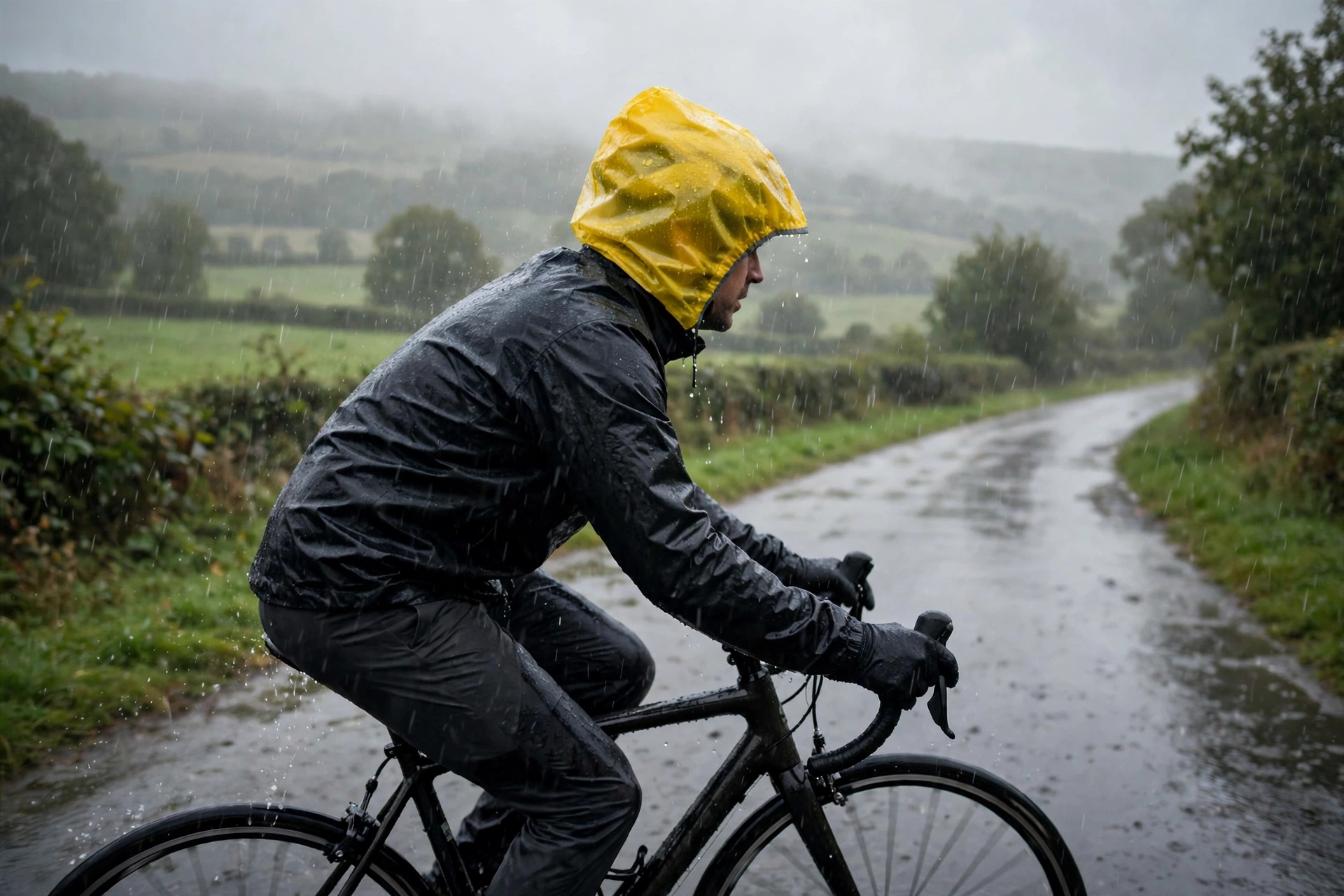
In general terms, a helmet rain cover is a thin, waterproof sleeve that stretches over your helmet to keep rain out of the vents and off your head, and it is worth using whenever you ride in steady rain. It keeps your head drier, stops rain dripping onto your face and glasses, and helps your helmet liner stay dry. It does not make a helmet waterproof in the way a rain jacket does, but for most wet rides it makes a real difference to comfort.
Rain covers are simple, cheap, and light, which is why so many commuters and touring riders carry one in a pocket or saddlebag. The trick is choosing one that fits your helmet, stays in place at speed, and does not block so much ventilation that your head overheats. This guide explains how rain covers work, what to look for, and how to use one well.
How Does a Helmet Rain Cover Work?
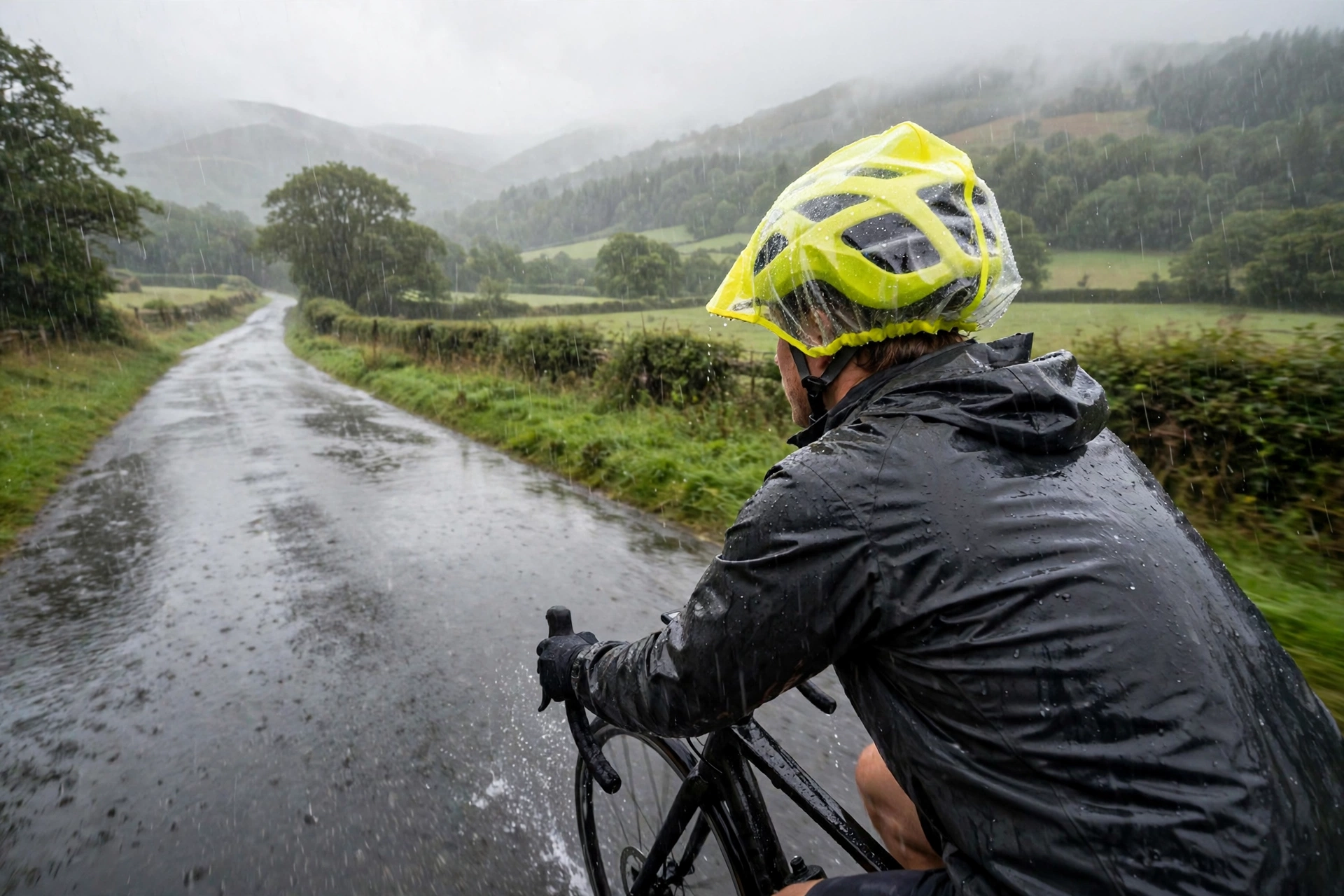
A rain cover works by covering the vents and much of the outer shell with a waterproof layer, so rain runs off the outside instead of pouring through the vents onto your head. Most covers are made from a light waterproof fabric or coated nylon, with an elastic edge or a drawcord that grips the base of the helmet.
The cover does not need to be fully sealed to work. In general terms, it just needs to sit smoothly over the shell, without gaps where rain can run underneath.
Most rain covers are designed for a particular helmet shape, such as a road cycling helmet, a commuter helmet, or a full-face helmet. A cover made for a different shape may still stretch on, but it will often sit baggy in places and tight in others, which lets rain in and makes it more likely to blow off. Matching the cover to your helmet type is the first step.
What Are the Different Types of Helmet Rain Cover?
The simplest type is a stretchy lycra-style cover with a water-resistant coating. It is light, packs down small, and suits light rain and showers, but in general terms it will soak through in heavy, prolonged rain. It is a good choice for commuters who want something that lives in a pocket and comes out for a short shower.
Fully waterproof covers, often made from coated nylon or a similar fabric, offer stronger protection for long wet rides. They are slightly heavier and bulkier, and they can feel warmer, but they keep rain out for much longer. Many have taped seams and a snug elastic hem, and some have a small rear flap to keep rain off your neck.
There are also covers with extra features, such as a built-in peak, reflective panels, or a bright colour for visibility. If you are learning about helmet technology, reading about what MIPS is for helmets can help you understand one of the features you may see listed on the box.
Will a Rain Cover Make My Helmet Too Hot?
A rain cover will reduce ventilation, because it covers the vents that normally let air through the helmet. In heavy rain on a cool day, that is rarely a problem, and the cover can even keep you warmer, which is welcome. On a warm day in light rain, though, a fully waterproof cover can trap heat and sweat, leaving your head damp from the inside even as it stays dry from the outside.
To manage this, choose a cover that suits the conditions. A light, breathable cover is better for warm, showery weather, while a fully waterproof cover suits cold, steady rain.
Some covers have small vent holes or mesh panels that let a little air through while keeping most rain out. These are a useful compromise for riders who run hot. Whatever cover you choose, keep your helmet’s fit the same underneath it: the cover should not force you to loosen the straps or change how the helmet sits.
How Do You Fit a Helmet Rain Cover Correctly?
Start with the helmet on your head, fitted as normal, then pull the cover over the top from front to back. Smooth it down so it sits evenly over the shell, with the elastic edge or drawcord sitting just above the base of the helmet. The front edge should sit above your forehead without dipping into your line of sight, and the back should cover the rear vents without riding up.
Check the fit by turning your head and shaking it gently. The cover should stay put without sliding, and it should not pull the helmet out of position. If it keeps slipping, it may be the wrong size or shape for your helmet, or the elastic may have lost its grip. A cover that needs constant adjustment while riding is a distraction you do not need in the rain.
If your cover has a drawcord, tighten it just enough to hold the cover snug, and tuck the loose end away so it does not flap. If it has a peak, make sure the peak sits level and does not block your view when you look up. A quick check in a mirror before you set off can save a fiddly adjustment at a junction.
How Do You Look After a Helmet Rain Cover?
After a wet ride, take the cover off, shake off the water, and hang it up to dry with the helmet. Do not leave a wet cover bunched up inside a bag, because it can develop a musty smell and the coating can suffer over time. In general terms, most covers dry quickly if they are hung in a ventilated spot away from direct heat.
Wash the cover only as the maker advises, usually with mild soap and lukewarm water, and let it air-dry. Avoid harsh detergents and fabric softeners, which can damage a waterproof coating. If the cover starts to soak through rather than shedding rain, the coating may be worn, and it may be time to replace it rather than trying to revive it with a spray.
Store the cover flat or loosely rolled, not tightly folded in the same creases every time, so the fabric and elastic last longer. Keep it somewhere you can reach it quickly, such as a jacket pocket or saddlebag, because rain rarely waits until you are ready for it. A cover you cannot find when the rain starts is no use at all.
Frequently Asked Questions
Q: Do I need a rain cover if my helmet already has few vents?
A: In general terms, a helmet with few vents lets less rain in, but a cover still helps in steady rain by keeping water off the shell and liner. For light showers, you may manage without one; for longer wet rides, a cover is still worth carrying.
Q: Can I use a rain cover on a full-face helmet?
A: Yes, if the cover is made for a full-face shape. Covers made for open-face cycling helmets will not fit a full-face shell properly, so choose one sized and shaped for your helmet type.
Q: Will a rain cover affect my helmet’s safety?
A: In general terms, no, if it fits well and does not change how the helmet sits or how the straps work. A cover that pulls the helmet out of position or blocks your view is unsafe, so check the fit before you ride.

Olivia
Writer at Helmet Today, covering helmet reviews, fit and riding safety.