Yes, a spare visor is worth having if you ride in changing light or weather, and in general terms the right one is the visor that matches your helmet model, suits the conditions you ride in, and is easy to change on the road. A visor is the clear or tinted screen on the front of a full face helmet, and it is the part you look through. A spare lets you switch from a clear visor for night riding to a tinted one for bright sunshine, or replace a scratched visor without waiting for a new one to arrive. It is a simple accessory, but choosing the wrong one can mean a poor fit, a distorted view, or a visor that does not stay in place.
What Is a Spare Visor and Why Would You Need One?
A spare visor is an extra screen for your helmet, identical in fitting to the visor that came with it, but often different in tint or finish. It attaches to the same pivots on either side of the helmet, and it can be swapped in a few minutes once you know how. Some riders keep a spare in their luggage for long trips, while others keep one at home and change it according to the season or the weather forecast.
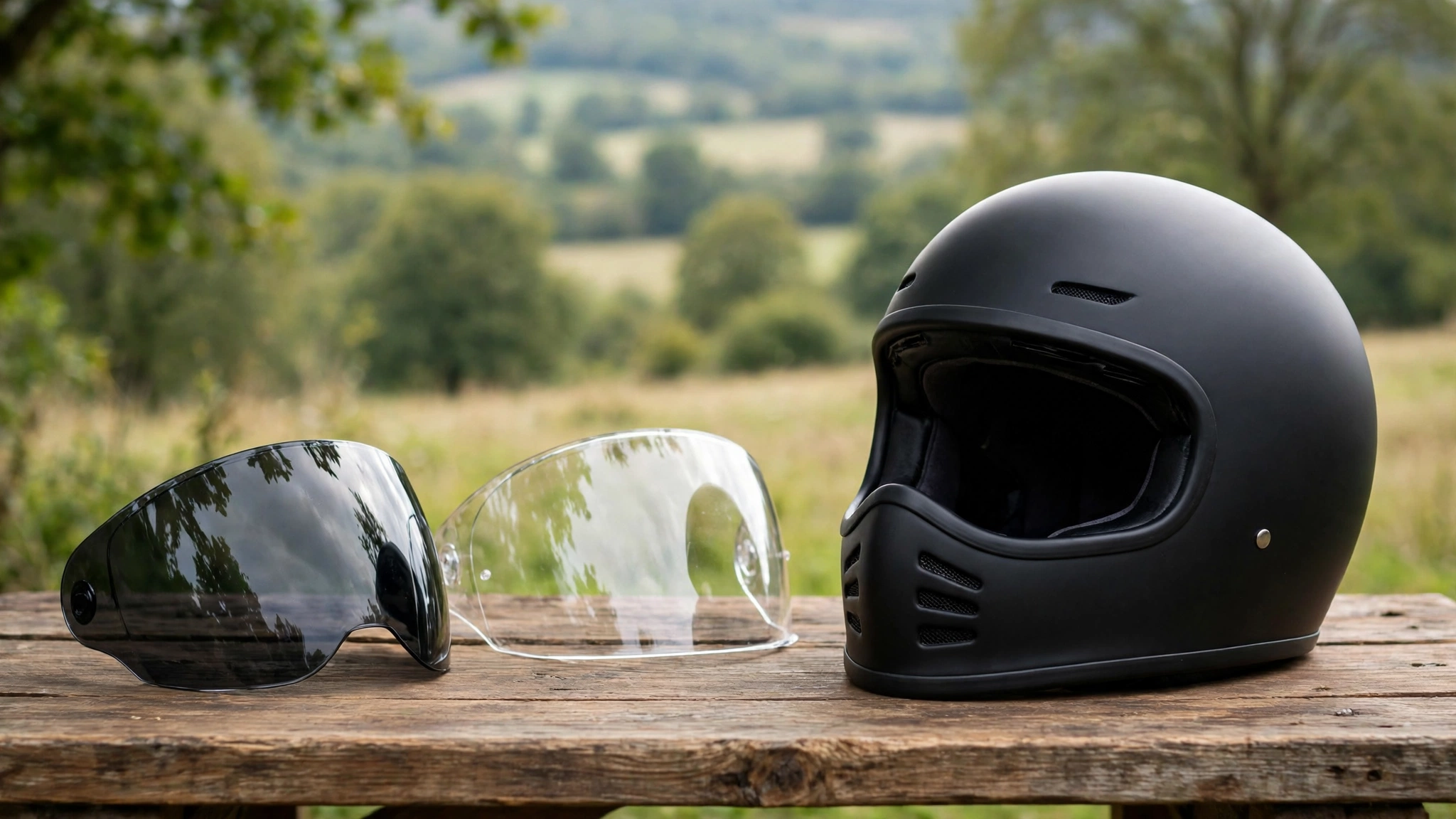
The most common reason for a spare is light. A clear visor is best at night and in low light, because it lets through as much light as possible. A tinted visor cuts glare on a bright day, but it is not suitable for night riding, because it reduces the light reaching your eyes. Having both means you can choose the right visor for the ride, rather than struggling with glare in the day or poor vision at night.
A second reason is damage. Visors can be scratched by grit, insects, or a careless wipe, and a scratched visor can distort your view, especially when the sun is low or when you are riding at night with oncoming headlights. A spare lets you replace a damaged visor straight away, rather than riding with a screen that makes it harder to see. In general terms, if a visor is badly scratched, it is better to replace it than to keep using it.
What Types of Spare Visor Can You Choose?
The most common type is the clear visor. This is the standard visor supplied with most helmets, and it is the right choice for night riding, overcast days, and riding in tunnels. It gives the clearest view in low light, and it is the visor you should use whenever visibility is poor. If you only have one visor, it should be a clear one.
The next type is the tinted visor, which comes in light, medium, and dark tints. A light tint, sometimes called a light smoke, cuts a little glare without darkening the view too much, and it can be useful on bright but overcast days. A medium tint, or smoke, is a common choice for sunny days. A dark tint, or dark smoke, cuts the most glare, but it also reduces vision the most, so it is only suitable for bright daylight and should never be used at night.
A fourth type is the visor with an anti fog coating or a fitting for an anti fog insert. These are designed to reduce misting on the inside of the visor in cold or damp conditions, and they can be a practical choice for winter riding. Some visors come with the coating already applied, while others are made to take a separate insert that fits inside the visor. If you ride in cold weather often, this type is worth considering. If you are learning about helmet safety features, reading about what MIPS is for helmets can help you understand how modern helmets are designed to manage impact forces.
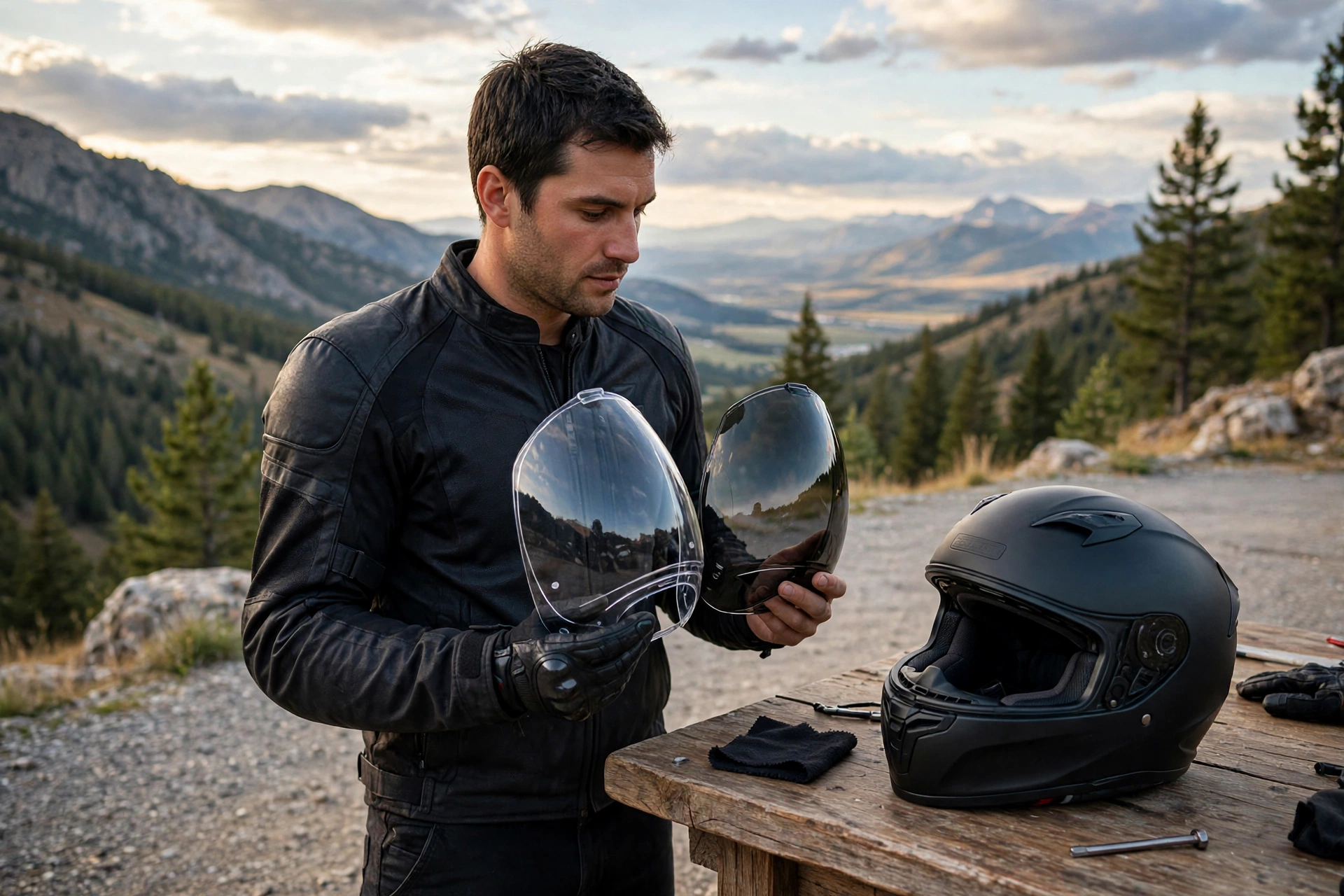
How Do You Choose the Right Spare Visor for Your Helmet?
The second rule is to think about the conditions you ride in most. If you ride mainly in daylight, a tinted visor may be a useful spare. If you ride at night or in mixed light, a clear visor is the safer spare to carry. If you ride in all conditions, having one of each is the most flexible option, and you can change between them according to the time of day and the weather.
The third rule is to check the quality of the visor. A good visor should be optically clear, with no distortion when you look through it, and it should fit snugly against the helmet seal when closed. Hold it up to the light and look through it before you fit it, and check for scratches, marks, or distortion. A visor that distorts your view, even slightly, is not worth using, because it can make it harder to judge distance and speed.
How Do You Fit, Clean, and Store a Spare Visor?
Fitting a spare visor is usually a simple job, but it varies from one helmet to another. Most helmets have a quick release system, where you open the visor fully, press a small lever or button on each side, and lift the visor out. Fitting the new one is the reverse: line up the pivots, press them into place, and check that the visor opens and closes smoothly. Read the instructions for your helmet first, because forcing a visor can damage the pivots.
Cleaning a visor needs care, because a scratched visor is a damaged visor. Rinse it with clean water first to remove grit and insects, then wash it gently with warm water and a mild soap, using a soft cloth or your hand. Avoid paper towels, harsh cleaners, or solvents, which can scratch or damage the surface and any coating. Dry it with a soft, clean cloth, and avoid rubbing it when it is dry and dusty.
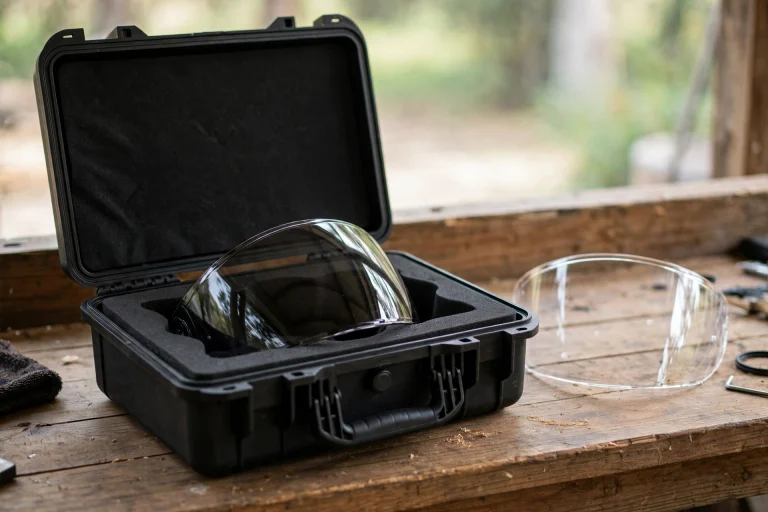
Storing a spare visor is just as important as fitting it. Keep it in a soft bag or sleeve, away from hard objects that could scratch it, and store it flat or in a shape that does not bend it. If you carry a spare on the bike, wrap it well and keep it somewhere it will not be knocked around. A visor that arrives at your destination scratched is no use as a spare.
When Should You Replace a Visor?
You should replace a visor when it is scratched badly enough to affect your view. Small, light scratches at the edge may not matter, but scratches in the centre of your line of sight, or a network of fine scratches that catch the light, can make it harder to see, especially at night or in low sun. If you find yourself squinting through a visor or wiping it constantly, it is probably time for a new one.
Frequently Asked Questions
Q: Can I use a tinted visor at night?
A: No, you should not use a tinted visor at night. A tinted visor reduces the light reaching your eyes, which makes it harder to see in the dark. Use a clear visor for night riding and low light conditions.
Q: Will any spare visor fit my helmet?
A: No, visors are made for specific helmet models, and a visor for one helmet will usually not fit another. Check the model name on your helmet and buy a visor made for that exact model.
Q: How do I stop my spare visor getting scratched in storage?
A: Keep it in a soft bag or sleeve, away from hard objects, and store it flat or in a shape that does not bend it. Rinse it with clean water before wiping it, and avoid paper towels and harsh cleaners.

Olivia
Writer at Helmet Today, covering helmet reviews, fit and riding safety.