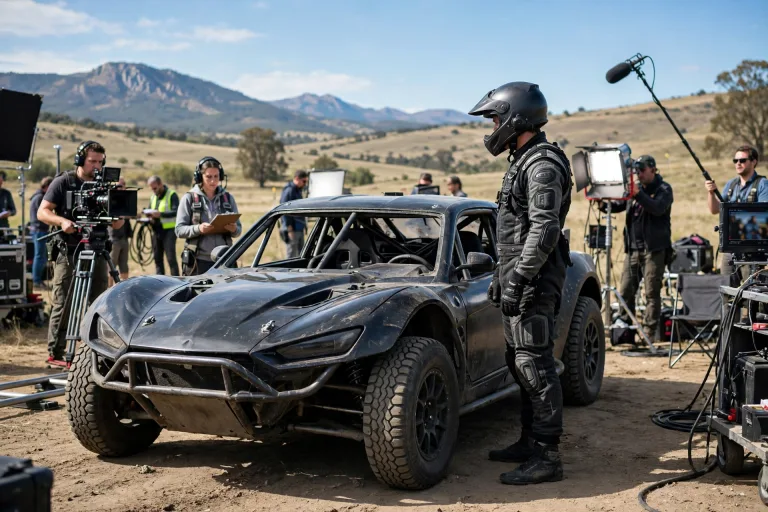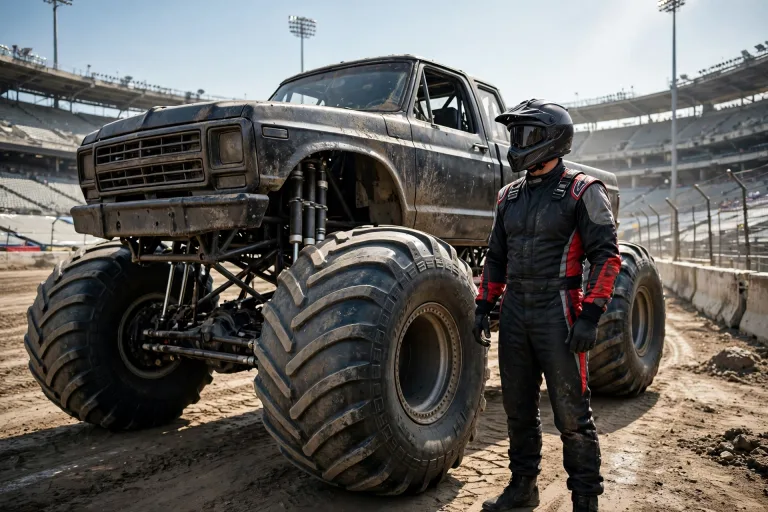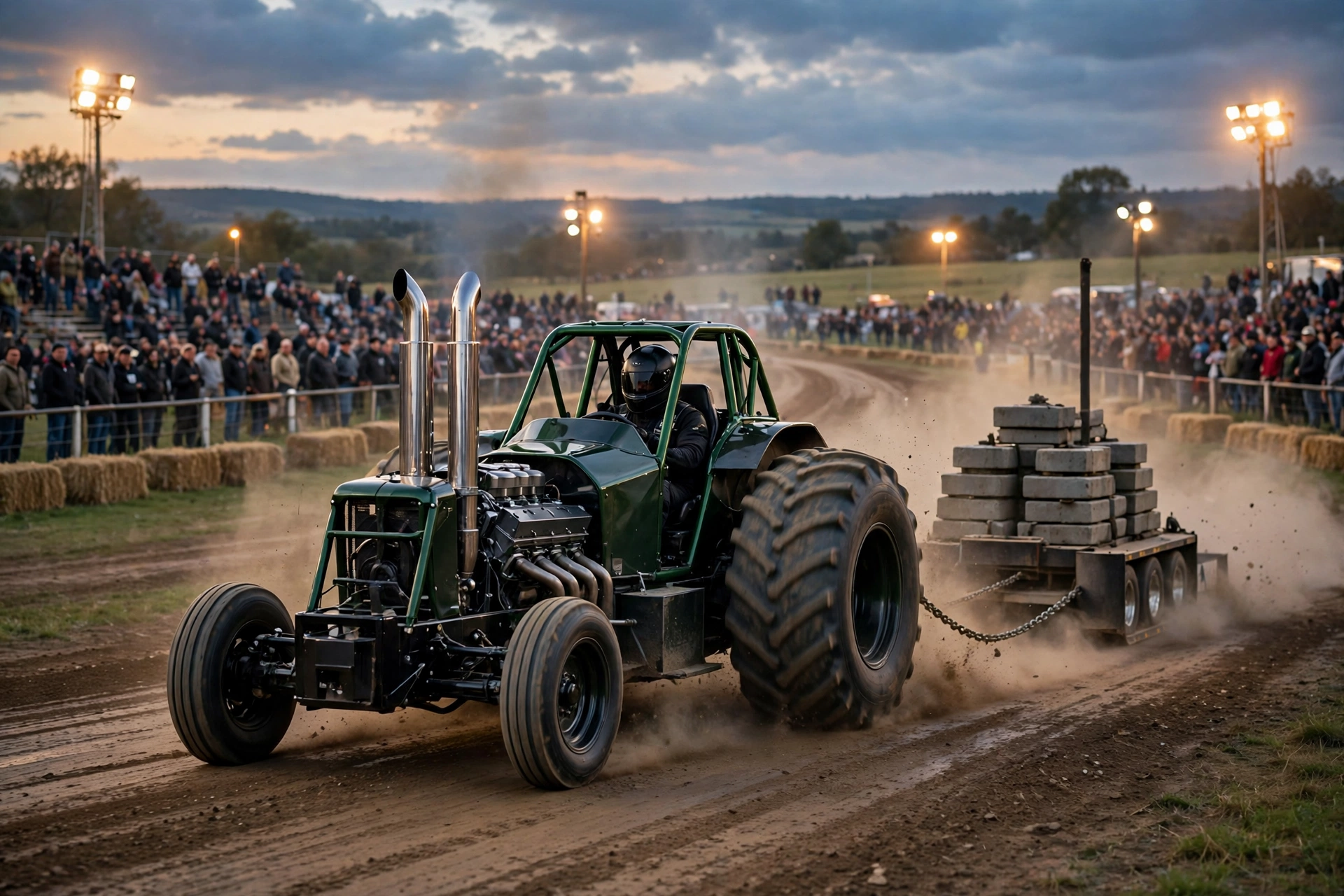
A helmet for tractor pulling is a full-face motorsport helmet worn by a driver in a pulling tractor to protect the head from engine fires, rollovers, and flying debris, and in general terms every driver in a tractor pulling competition should wear one that fits well and is fastened securely before the tractor moves. Tractor pulling is a motorsport in which a heavily modified tractor drags a weighted sled down a dirt track, and the engines are tuned to produce enormous power. A helmet is treated as essential safety equipment in this sport, not as an optional extra.
A pulling tractor can produce far more power than a farm tractor, and the engine can fail in a dramatic way. A blown engine can throw parts and hot oil, and a fire can start in a moment. The driver sits close to the engine, with the exhaust and the turbocharger nearby, so a helmet protects the driver from heat, flames, and flying pieces as well as from the risk of a rollover.
Why do tractor pullers need a helmet?
Tractor pullers need a helmet because the engines in pulling tractors run at the edge of what they can take. An engine failure can send hot metal, oil, and flames towards the driver, and a helmet with a visor helps to guard the face and eyes against those hazards. In general terms, a helmet spreads the force of an impact and helps to protect the skull, and that protection matters all the more when the driver is sitting close to a powerful engine.
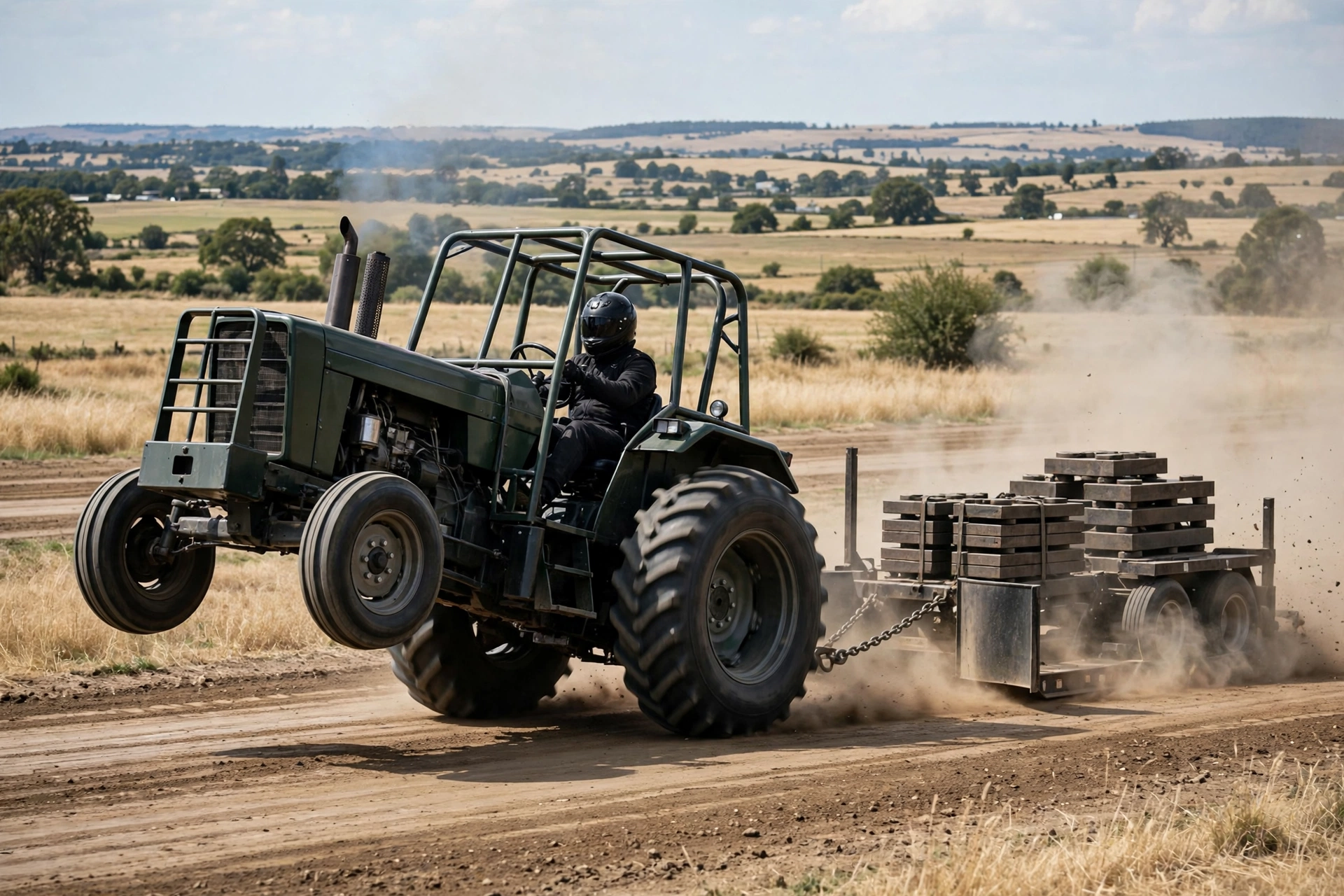
There is also the risk of a rollover. A pulling tractor can lift its front wheels off the ground, and if the power is not cut in time the tractor can tip backwards. A helmet gives a layer of protection in that moment. The dirt track can also throw up stones and dust, and a helmet with a visor helps the driver to keep their eyes clear and their focus on the track ahead.
What kind of helmet is best for tractor pulling?
The best helmet for tractor pulling is, in general terms, a full-face helmet made for motorsport, with a hard outer shell, a fire-resistant lining, a secure chin strap, and a visor that gives a clear view. Many pullers use a helmet made for car racing, because those helmets are built to cope with heat, fire, and high-speed impacts. The key points are a snug fit, strong protection, and a lining that can cope with the heat of a pulling tractor.
The helmet should also work with the rest of the driver’s safety equipment. A pulling driver often wears a fireproof suit, gloves, and a head and neck restraint, so the helmet should fit well with that equipment. A visor that can be changed or cleaned easily is useful, because the dirt track can coat it with dust. A helmet that is too heavy or too hot will become a distraction on a long day at the track, so comfort matters as much as protection.
How should a helmet for tractor pulling fit?
A helmet for tractor pulling should fit snugly, sit level on the head, and stay in place when the driver shakes their head or the tractor hits a bump. The helmet should cover the forehead and the back of the head, and the chin strap should be fastened securely every time the driver is in the tractor. A strap that is left loose lets the helmet lift at speed or slide in a crash, and a helmet that comes off during a pull is no help at all.
The fit should be checked with the head and neck restraint and the fireproof balaclava the driver will actually wear, because that equipment can change how a helmet sits. The balaclava should sit neatly under the helmet without bunching, and the helmet should not press on the restraint or push it out of place. The driver should also check that they can see clearly out of the visor and hear the officials and the crew.
What should a driver check before a pull?
Before a pull, a driver should check the helmet for cracks, dents, or damage to the shell, and should look at the lining, the visor, the strap, and the buckle to make sure they are sound and working. A helmet that has been dropped onto hard ground, or that has taken a knock in an incident, should be looked at with care, and in general terms a helmet that has taken a serious impact should be replaced rather than used again. The damage may not be easy to see, so the driver should think honestly about what the helmet has been through.
The driver should also check the tractor, the sled, and the track before setting off. A helmet is only one part of staying safe in tractor pulling, and it works best when the driver also checks that the tractor is in good order, that the safety equipment is working, and that the crew knows the plan. Pulling with a crew who can help if something goes wrong is a sensible habit too.
How should a tractor pulling helmet be looked after?
A tractor pulling helmet should be looked after with regular cleaning and sensible storage, in the same way as any motorsport helmet. After a day at the track, the driver should shake out the dust, clean the vents, and wipe the shell and visor with a soft cloth. Dust and oil left inside the helmet can wear down the lining and the strap, so a clean helmet lasts longer and feels better to wear.
The helmet should be kept where it will not be knocked about or left in strong heat, because a hard knock or a hot vehicle can harm the materials in a helmet over time. A helmet bag is a simple way to protect it between events. Drivers who are choosing a new helmet may also want to learn about features that can help in a crash, including a system designed to reduce rotational forces, such as MIPS, which is found in some helmets made for motorsport use. A well-kept helmet, worn every time, gives a tractor puller the best chance of enjoying a powerful day at the track in safety.
Do all tractor pullers wear a helmet?
In general terms, most tractor pullers wear a helmet today, and many competitions and pulling associations expect it. A driver who is unsure should check the rules for the competition before entering.
Can a car racing helmet be used for tractor pulling?
Yes, in general terms a car racing helmet that fits well and is in good condition is often suitable for tractor pulling. The key points are fit, fire resistance, and a secure chin strap.
When should a tractor pulling helmet be replaced?
A tractor pulling helmet should be replaced after a hard impact, a fire, or an engine failure, or when it no longer fits well, shows damage, or has been worn for a long time. When in doubt, replace it rather than keep pulling in it.

Olivia
Writer at Helmet Today, covering helmet reviews, fit and riding safety.