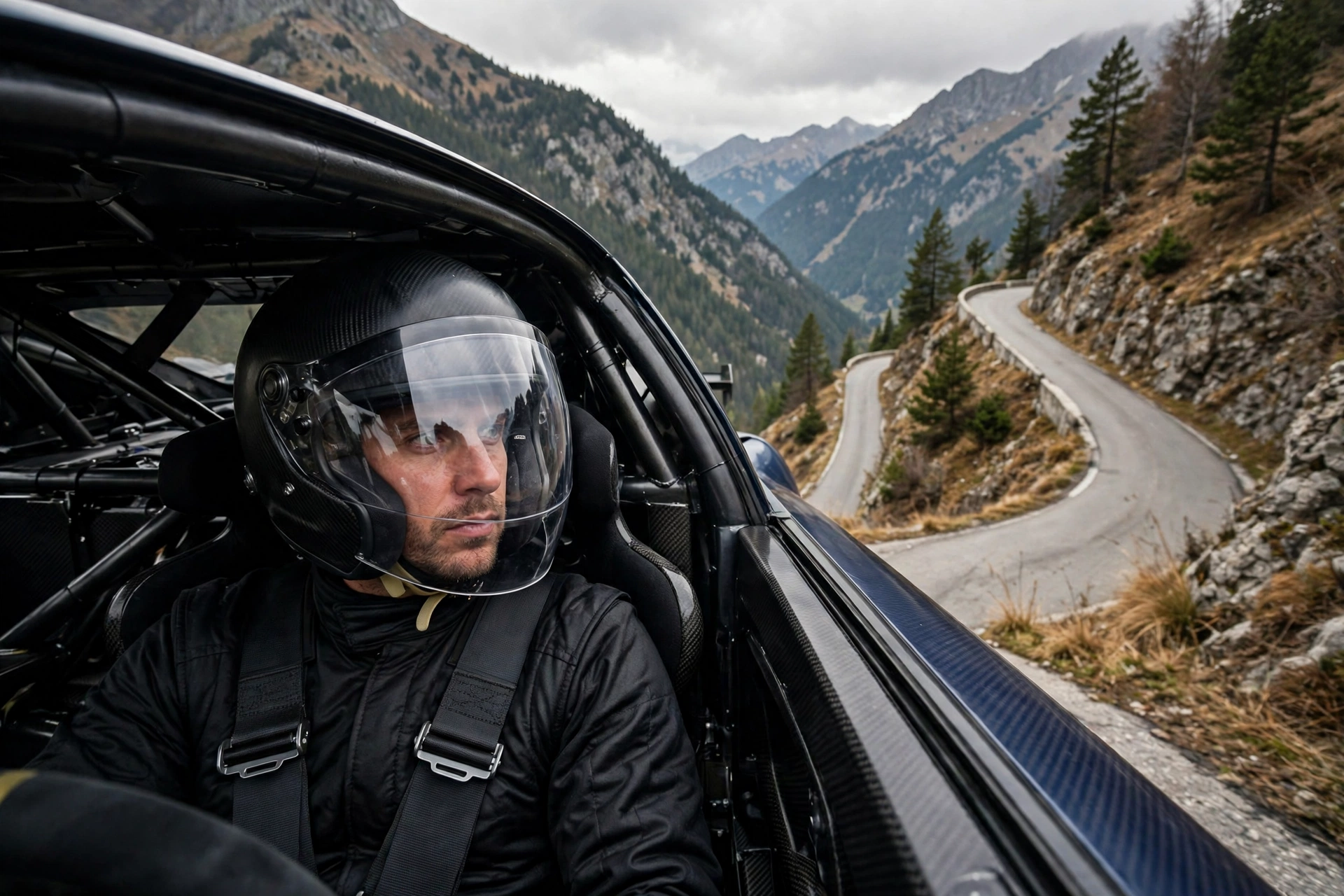
A hill climb racing helmet is a full face motorsport helmet, worn by drivers who race alone against the clock up a steep, winding course. Hill climbing is one of the oldest forms of motorsport: a driver tackles a closed public road or a purpose-built hill course, with no other cars on track at the same time. The speeds are high, the road is narrow, and the margin for error is small, so the helmet is a vital piece of safety kit.
Unlike circuit racing, there are no other cars to watch and no overtaking to plan. The driver’s whole attention is on the road ahead: the next corner, the next change in gradient, the next patch of surface. The helmet must give a clear view, stay comfortable through a short but intense run, and protect the driver if the car leaves the road. This guide explains what makes a hill climb helmet different, and what drivers look for when choosing one.
What Kind of Helmet Do Hill Climb Drivers Wear?
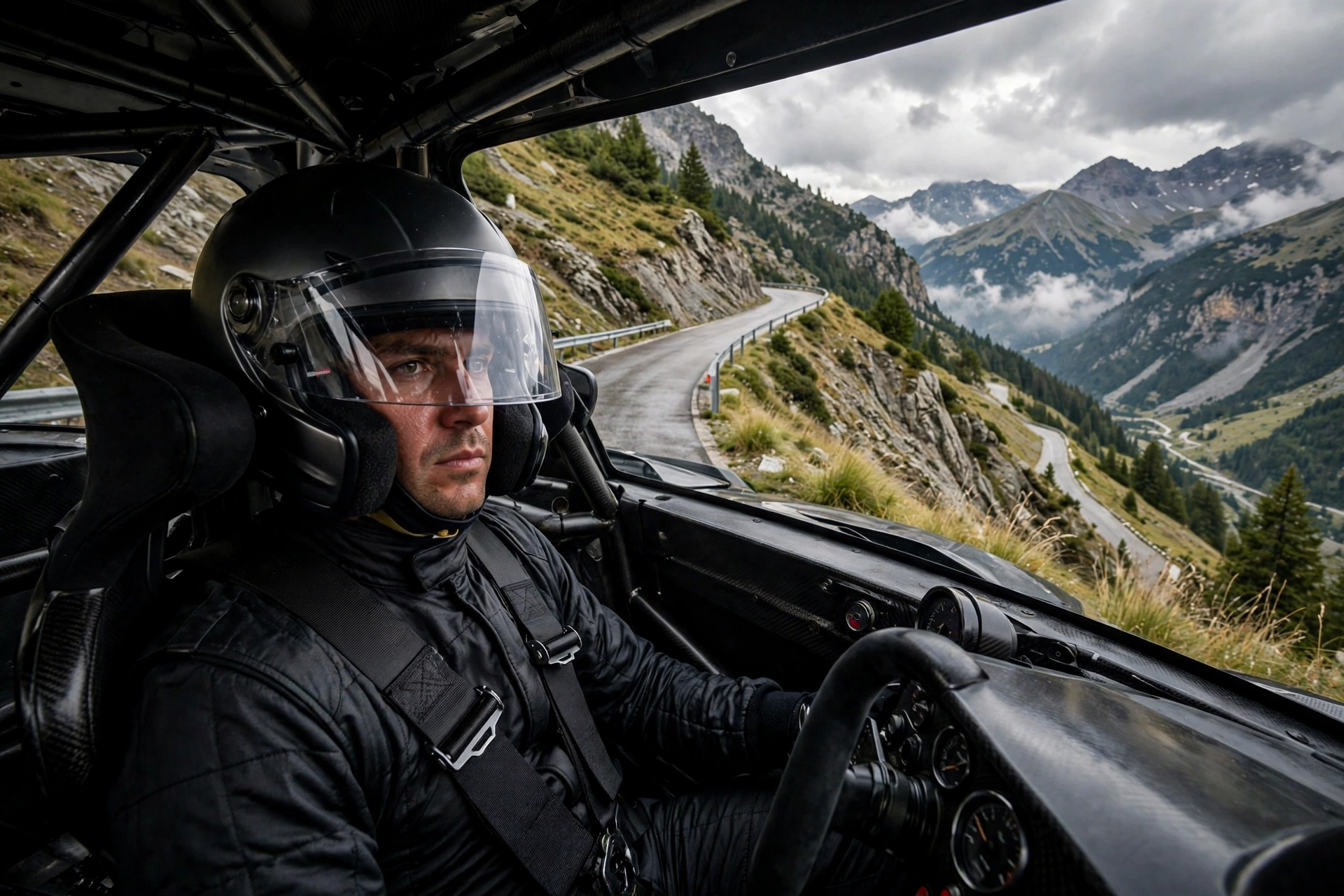
Hill climb drivers wear full face motorsport helmets. The helmet covers the whole head, including the chin and jaw, and has a visor that protects the eyes from wind, dust, and insects. The shell is hard and smooth, built to resist impacts and to work with the head and neck restraint that most hill climb drivers use.
These helmets are made to a motorsport standard, which means they have been tested for the kinds of impact and fire risk found in car racing. A road helmet or a karting helmet is not a substitute, even if it looks similar, because the testing and the requirements are different. Hill climb helmets are built for the specific conditions of racing in a closed car at speed.
Inside the helmet, padding holds it snug so it does not shift during a run. Hill climb courses are bumpy and steep, with hard braking into tight corners and strong acceleration out of them. A helmet that moves around would be a distraction when the driver needs to focus entirely on the road ahead.
Why Is Visibility So Important in Hill Climbing?
Visibility is everything in hill climbing, because the driver gets only one run at a time and there is no chance to learn the course by following another car. The driver must read the road as it comes: the camber, the surface changes, the places where the road narrows or the gradient steepens. A clear visor and a wide field of view are essential.
Visors come in different tints. A clear visor suits overcast days and tree-lined courses where the light changes quickly between shade and sun. A tinted visor can help on bright, open hillsides. Many drivers carry a spare visor so they can swap it if the weather changes between runs.
The helmet’s shape matters too. A visor aperture that is too narrow can hide the edge of the road on a tight corner, while a helmet that sits too low can block the view of the road surface just ahead of the car. Drivers usually try a helmet in the car, in the driving position, before committing to it.
How Does a Hill Climb Helmet Handle the Heat?
Hill climb runs are short, but the cockpit gets very hot. The car is working hard on a steep climb, the engine is close behind the driver, and the driver is wearing a fireproof suit as well as the helmet. Good ventilation matters, even for a run that lasts only a few minutes.
Most hill climb helmets have vents at the front and the top, with channels inside that move air across the head and across the inside of the visor. This airflow helps keep the driver cool and stops the visor from fogging up. A fogged visor on a narrow hill road would be dangerous, so ventilation is a safety feature, not just a comfort one.
Some drivers also use a helmet with a drinks system or a cooling insert for longer events, though these are less common in hill climbing than in endurance racing. In general terms, a well-ventilated helmet with a clear visor is enough for the short, intense runs of a hill climb event.
How Is a Hill Climb Helmet Different from a Circuit Racing Helmet?
In general terms, the helmets are very similar, because both are full face motorsport helmets made to the same standards. The main differences come from the way the cars are used. A hill climb car is often a modified road car or a single-seater, and the driver may be sitting in a tighter or more upright position than in a circuit car. The helmet needs to fit that position.
Another difference is the length of the event. A circuit race can last for hours, while a hill climb run lasts minutes. That means hill climb drivers can accept a helmet that is slightly heavier or less ventilated, if it fits well and gives a good view. Comfort over a long stint matters less than a clear view and a secure fit for a short, intense run.
The head and neck restraint is also important in hill climbing. The car may leave the road and hit a barrier or a bank, and the restraint limits how far the head can move in a sudden stop. The helmet must have the anchor points for the restraint, and the two must be tried together before the event.
If you want to understand how helmets manage the forces of an impact, reading about what MIPS is for helmets is a useful starting point. MIPS is a technology used in many modern helmets, and the basic idea — that a helmet should manage rotational forces as well as direct impacts — applies to motorsport helmets too.
What Should You Look for When Choosing a Hill Climb Helmet?
Fit comes first. The helmet should sit level, feel snug all round, and stay put when you shake your head. It should not press hard on your forehead or temples, and the visor should sit comfortably in front of your eyes. Try the helmet in the car, in the driving position, because a helmet that feels fine standing up may feel different when you are seated and belted in.
Next, check the standard. Make sure the helmet meets the standard required by the event or championship where you will compete. Different organisations have different rules, and a helmet that is fine for one event may not be accepted in another. Always check before you buy.
Finally, think about the visor and ventilation. A clear, scratch-free visor with a spare to hand will keep your view sharp, and good airflow will keep you cool and stop the visor fogging. In hill climbing, where the whole run depends on reading the road, these details make a real difference.
Frequently Asked Questions
Q: Can a hill climb driver use a motorcycle helmet?
A: In general terms, no. A motorcycle helmet is built for road use and tested to a different standard. A hill climb helmet must meet the motorsport standard required by the event.
Q: Do hill climb drivers wear a head and neck restraint?
A: In general terms, yes. Most hill climb drivers use a head and neck restraint device attached to the helmet, which limits how far the head can move forward in a sudden stop.
Q: How often should a hill climb helmet be replaced?
A: In general terms, a helmet should be replaced after any hard impact, if the shell or liner shows wear, or when the standard it meets is no longer accepted. Regular checks help catch problems early.

Olivia
Writer at Helmet Today, covering helmet reviews, fit and riding safety.