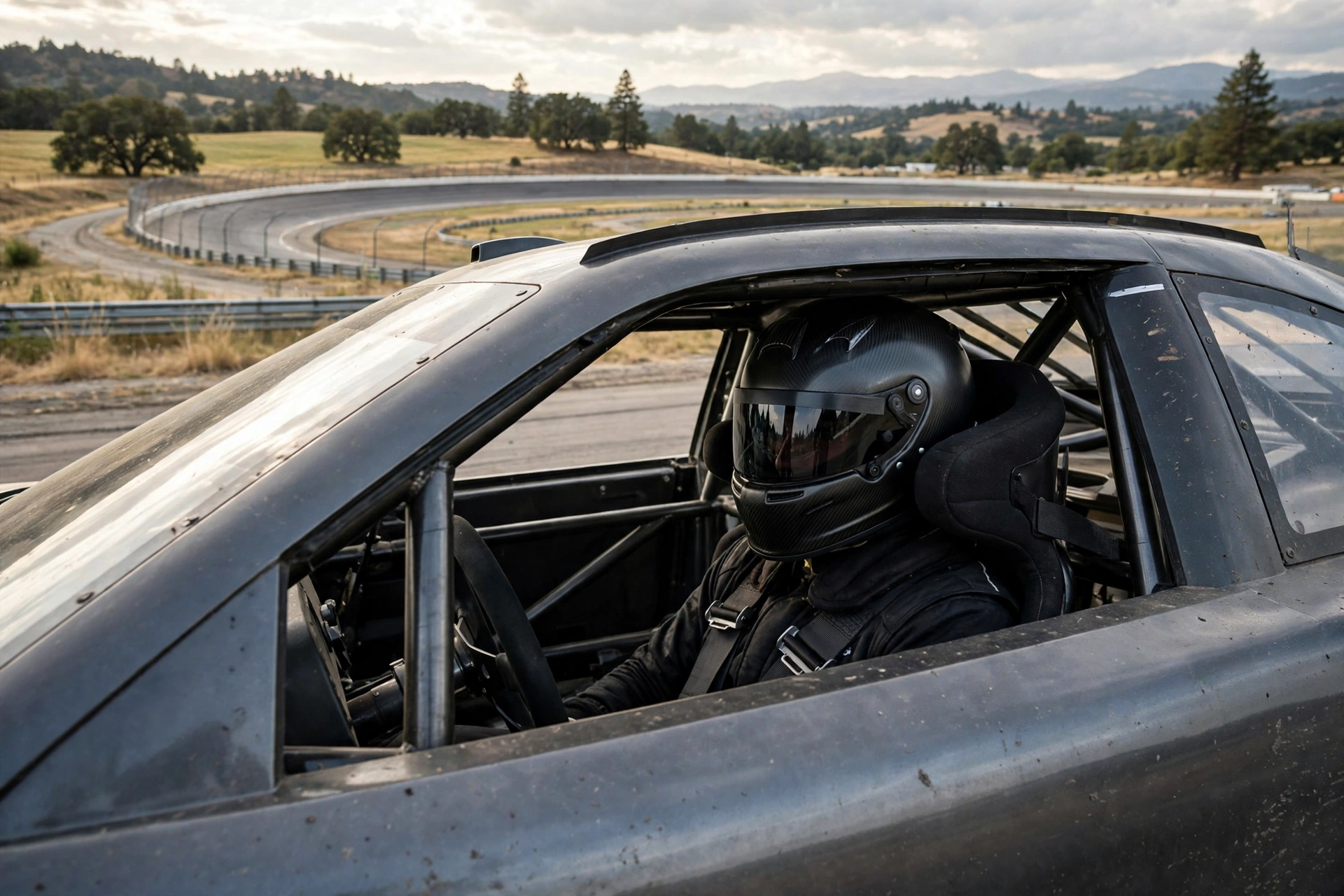
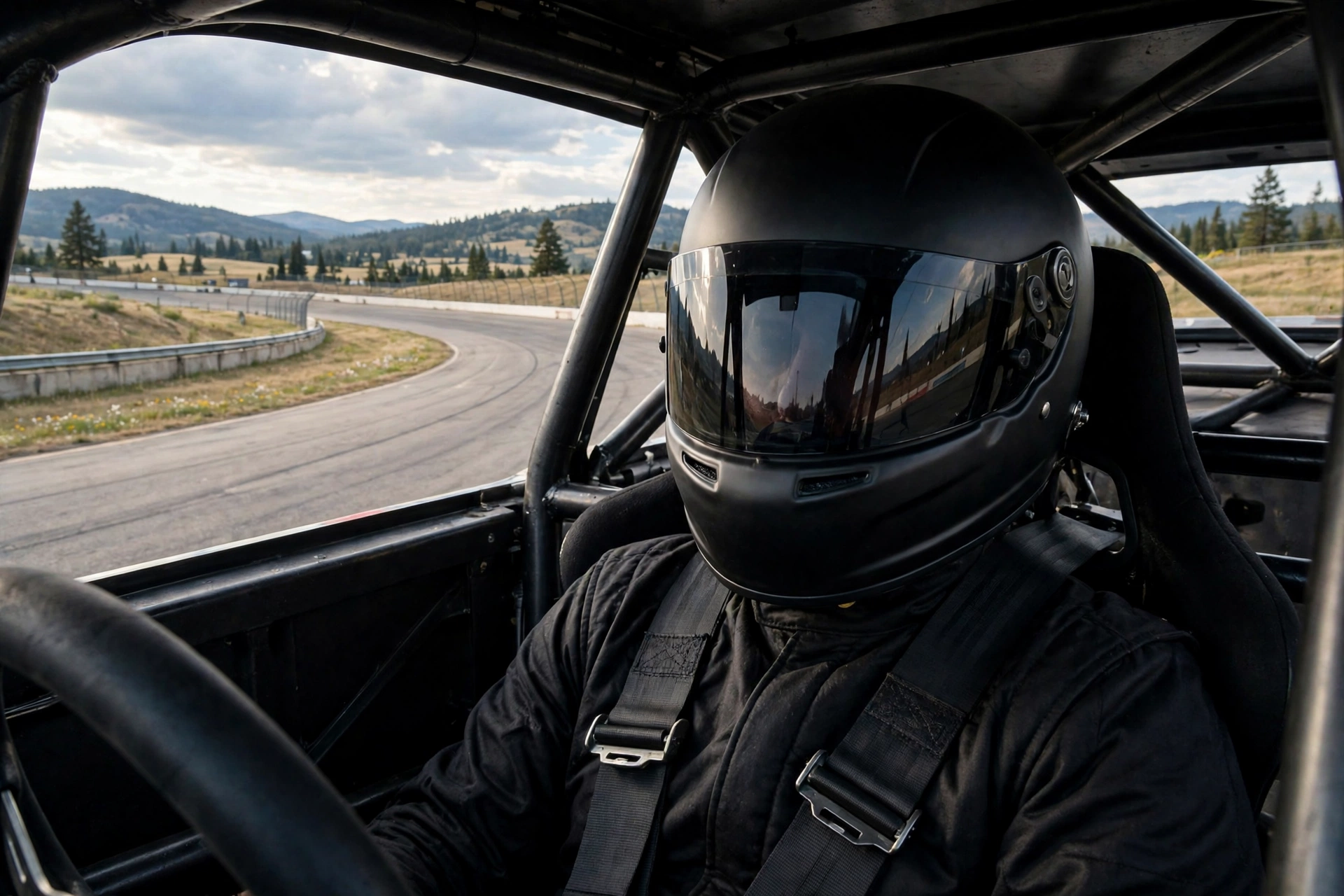
A stock car racing helmet is a full face motorsport helmet, built to protect the driver at high speed in a closed-wheel race car. Stock car racing takes place on oval circuits and road courses, where cars run close together at speed and contact between cars is part of the sport. The helmet is one of the most important pieces of the driver’s safety kit, alongside the seat, the belts, and the roll cage.
To a casual viewer, a stock car helmet looks like any other racing helmet: a full face shell, a visor, and a bold paint scheme. But the details matter. The helmet must work with the head and neck restraint system, fit inside the tight cockpit of a stock car, and give the driver a clear view of the cars around them. This guide explains what makes a stock car racing helmet different, and what drivers look for when choosing one.
What Kind of Helmet Do Stock Car Drivers Wear?
Stock car drivers wear full face helmets made for motorsport. The helmet covers the whole head, including the chin and jaw, and has a visor that protects the eyes from wind, dust, and debris. The shell is hard and smooth, built to resist impacts and to slide rather than catch if the driver’s head strikes part of the car.
These helmets are made to a motorsport standard, which means they have been tested for the kinds of impact and fire risk found in car racing. A road motorcycle helmet or a karting helmet is not a substitute, even if it looks similar, because the testing and the requirements are different. Stock car helmets are built for the specific conditions of racing in a closed car.
Inside the helmet, padding holds it snug so it does not shift during a race. Stock car racing involves heavy braking, fast cornering, and the constant vibration of a powerful engine, so a helmet that moves around would be a distraction and a hazard. The fit needs to be firm and stable for the whole length of a race.
Why Is the Visor Important in Stock Car Racing?
The visor protects the driver’s eyes and gives them a clear view of the track. At racing speeds, wind and dust would make it hard to see without one. The visor also protects against small debris kicked up by other cars, which is a real risk when cars are running nose to tail on an oval.
Visors come in different tints. A clear visor suits overcast days and night races under floodlights, while a tinted visor cuts glare on bright, sunny days. Many drivers carry a spare visor so they can swap it if the light changes during a long race. A scratched or dirty visor is a serious problem, so drivers keep spares close at hand.
The visor must also work with the helmet’s ventilation. A stock car cockpit gets very hot, and the driver’s breath can fog a visor quickly. Good airflow across the inside of the visor helps keep it clear, and many drivers use anti-fog treatments as well. A clear view is not a luxury in stock car racing — it is essential when cars are inches apart.
How Does a Stock Car Helmet Work with a Head and Neck Restraint?
A stock car helmet works together with a head and neck restraint device, which is worn over the shoulders and attached to the helmet. The device limits how far the head can move forward in a sudden stop, which reduces the strain on the neck. It is a standard part of the safety kit in stock car racing.
The helmet has anchor points on either side where the restraint’s tethers attach. These anchors must be fitted correctly, and the tethers must be the right length for the driver. If the tethers are too long, the device cannot do its job; if they are too short, the driver cannot move their head enough to see properly.
This is one reason why fit matters so much. The helmet, the restraint, the seat, and the belts all work as a system. A helmet that fits well on its own may not work well with a particular restraint, so drivers usually try the whole setup together before a race. Getting the system right is part of race preparation, not an afterthought.
What Makes a Stock Car Helmet Different from Other Racing Helmets?
The main difference is the environment. A stock car cockpit is enclosed, hot, and noisy, and the driver sits in a fixed position for a long time. The helmet needs strong ventilation to cope with the heat, and it needs to be comfortable enough to wear for hours without becoming a distraction.
Another difference is the type of racing. Stock cars run close together and often make contact, so the risk of a sudden stop or a spin is higher than in some other forms of motorsport. The helmet is built for those conditions, with a shell and liner designed to manage the forces of an impact inside a car.
Weight matters too. A heavy helmet adds strain to the neck over a long race, especially under braking and cornering. In general terms, drivers prefer a helmet that is as light as possible while still meeting the required standard. The balance between weight and protection is one of the key choices when buying a racing helmet.
To understand more about how helmets manage impact forces, it helps to read about what MIPS is for helmets. MIPS is a technology found in many modern helmets, and while stock car helmets follow their own motorsport standards, the same principle applies: a good helmet manages the forces of a crash, not just the direct blow.
What Should You Look for When Choosing a Stock Car Helmet?
Fit comes first. The helmet should sit level, feel snug all round, and stay put when you shake your head. It should not press hard on your forehead or temples, and the visor should sit comfortably in front of your eyes. A helmet that fits badly will be uncomfortable and may not protect you properly.
Next, check the standard. Make sure the helmet meets the standard required by the series or track where you will race. Different organisations have different rules, and a helmet that is fine for one series may not be accepted in another. Always check before you buy.
Finally, think about ventilation and the visor. A helmet with good airflow will be more comfortable in a hot cockpit, and a clear, scratch-free visor with a spare to hand will keep your view sharp all race long. Comfort and visibility are not extras in stock car racing — they are part of staying safe.
Frequently Asked Questions
Q: Can a stock car driver use a motorcycle helmet?
A: In general terms, no. A motorcycle helmet is built for road use and tested to a different standard. A stock car helmet must meet the motorsport standard required by the racing series.
Q: Do stock car drivers wear a head and neck restraint with their helmet?
A: Yes, in general terms. A head and neck restraint device attaches to the helmet and limits how far the head can move forward in a sudden stop, reducing strain on the neck.
Q: How often should a stock car helmet be replaced?
A: In general terms, a helmet should be replaced after any hard impact, if the shell or liner shows wear, or when the standard it meets is no longer accepted. Regular checks help catch problems before they matter.

Olivia
Writer at Helmet Today, covering helmet reviews, fit and riding safety.