Yes, in general terms, a child should wear a helmet for inline skating lessons. Inline skating involves speed, hard surfaces, and falls that are hard to predict, especially for a beginner who is still learning to balance, stop, and turn. A properly fitted helmet is the simplest protection a young skater can wear, and most lesson providers expect children to arrive with one.
Inline skating lessons are a great way for children to build balance, coordination, and confidence. The first few sessions, though, are when falls are most likely. A child who is learning to glide, brake, and change direction can lose balance without warning, and a hard rink floor or tarmac path does not forgive a fall. This guide explains what kind of helmet suits inline skating lessons, how it should fit, and what parents should check before the first class.
Do Children Need a Helmet for Inline Skating Lessons?
In general terms, yes. Inline skates put a child on a narrow line of wheels, which makes balance harder than walking or running. Beginners fall forwards, backwards, and sideways, and they often cannot break a fall cleanly because their hands are busy trying to steady themselves. A helmet protects the head in exactly those moments when a fall goes wrong, and it does so without getting in the way of learning.
Many lesson providers and rinks ask children to wear a helmet as a condition of taking part. Some provide helmets to borrow, but a borrowed helmet may not fit well, and fit is what makes a helmet work. A helmet that is too loose can shift in a fall, and one that is too tight becomes a distraction. If your child’s lesson provider supplies helmets, arrive early enough to find one that fits properly, or bring your own so the fit is settled before the lesson starts.
What Kind of Helmet Suits Inline Skating Lessons?
A multi-sport or skate-style helmet is usually the best match for inline skating lessons. These helmets cover more of the back and sides of the head than a typical road cycling helmet, which suits the way skaters tend to fall. They are also designed for repeated low-speed impacts of the kind beginners have while learning, rather than the single hard impact a cycling helmet is built around. Look for a helmet that meets a recognised safety standard for your region, and check the label inside the shell to confirm which standard it meets.
Avoid using a helmet made for a different activity just because it is already in the cupboard. A climbing helmet, for example, is built for falling objects rather than falls onto a hard floor, and a thin novelty helmet offers little real protection. If your child already owns a well-fitting skate-style helmet from scootering or skateboarding, that is usually fine for inline skating too, provided it still fits and has never taken a hard knock. When in doubt, ask the lesson provider what they recommend, since they see beginners every week and know what works on their surface.
How Should a Kids Inline Skating Helmet Fit?
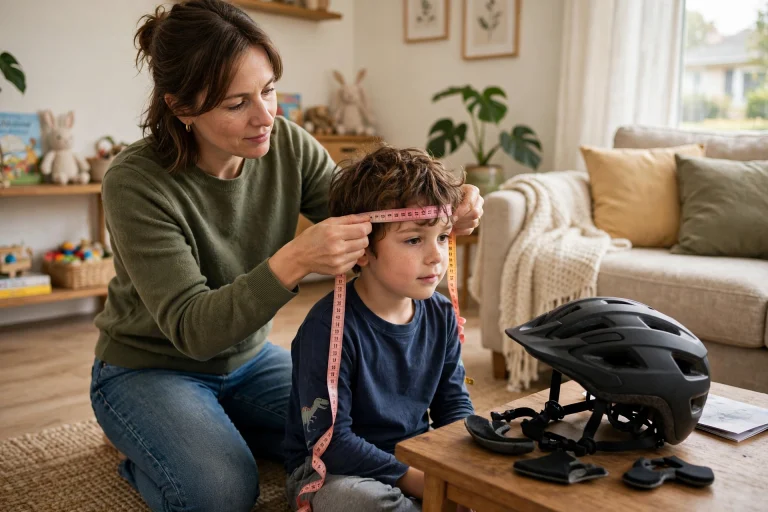
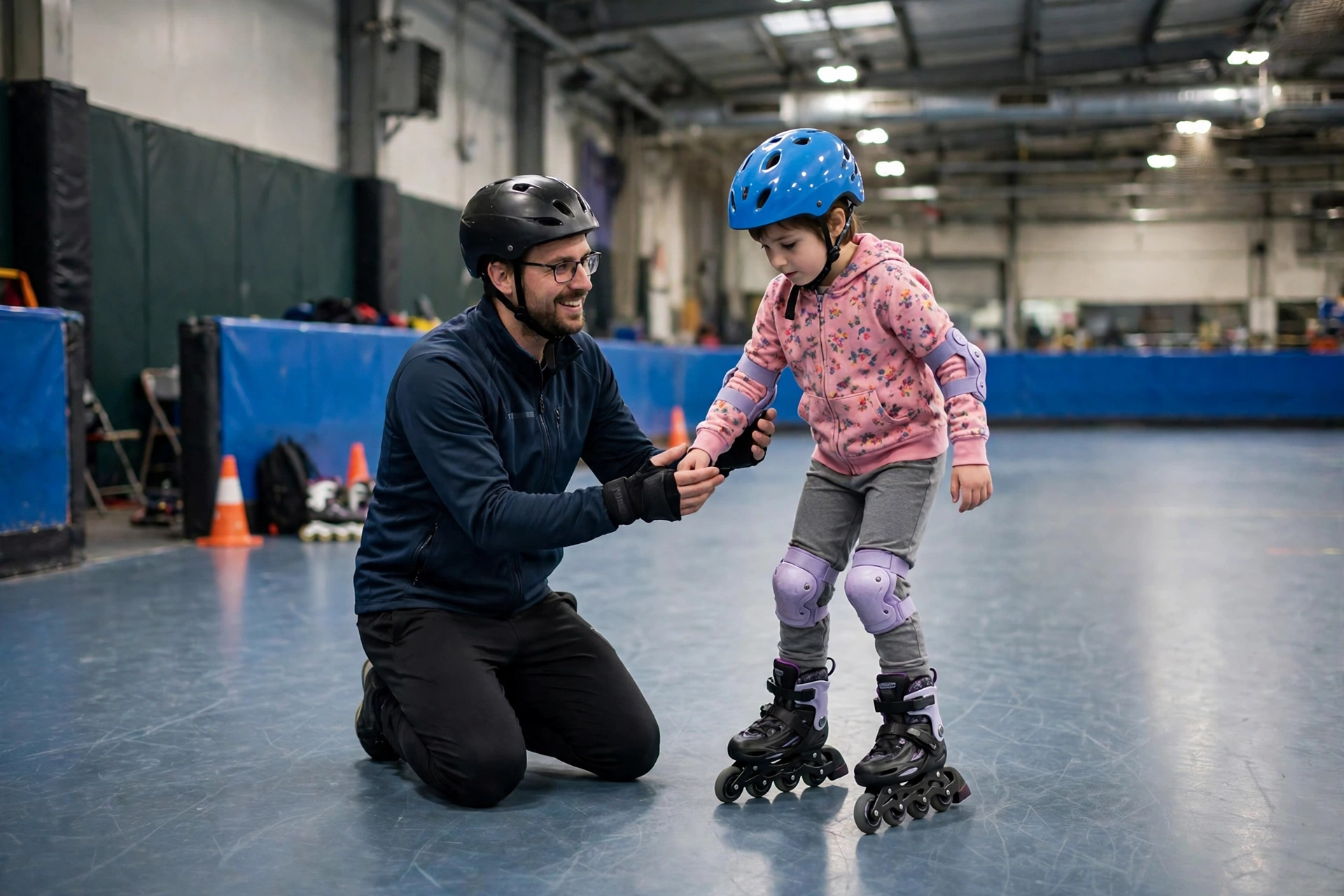
Fit is the single most important factor after choosing the right type of helmet. The helmet should sit level on your child’s head, low enough to cover the forehead, without tilting back or sliding forward. It should feel snug all around, with no pressure points that throb after a few minutes, and it should not rock from side to side when your child shakes their head gently. If the helmet moves easily, it is too loose, whatever the size label says.
Check the straps every time your child puts the helmet on. The side straps should form a neat shape under each ear, and the chin strap should be snug enough that only one or two fingers fit between the strap and the chin. Do the strap up before every session, even a short practice, because an unfastened helmet can come off in the very fall it is meant to protect against. If you are learning about helmet technology, reading about what MIPS is for helmets can help you understand one of the features you may see listed on the box.
What Else Should Parents Check Before the First Lesson?
Before the first lesson, check the helmet itself as well as the fit. Look over the shell for cracks, dents, or deep scratches, and press the inner foam gently to check it has not gone soft, crumbly, or compressed in one spot. A helmet that has already taken a hard knock should be replaced, even if it looks fine from the outside, because the foam inside may have done its job already. Also check that the straps and buckle still fasten firmly and that any fitting pads are clean and in place.
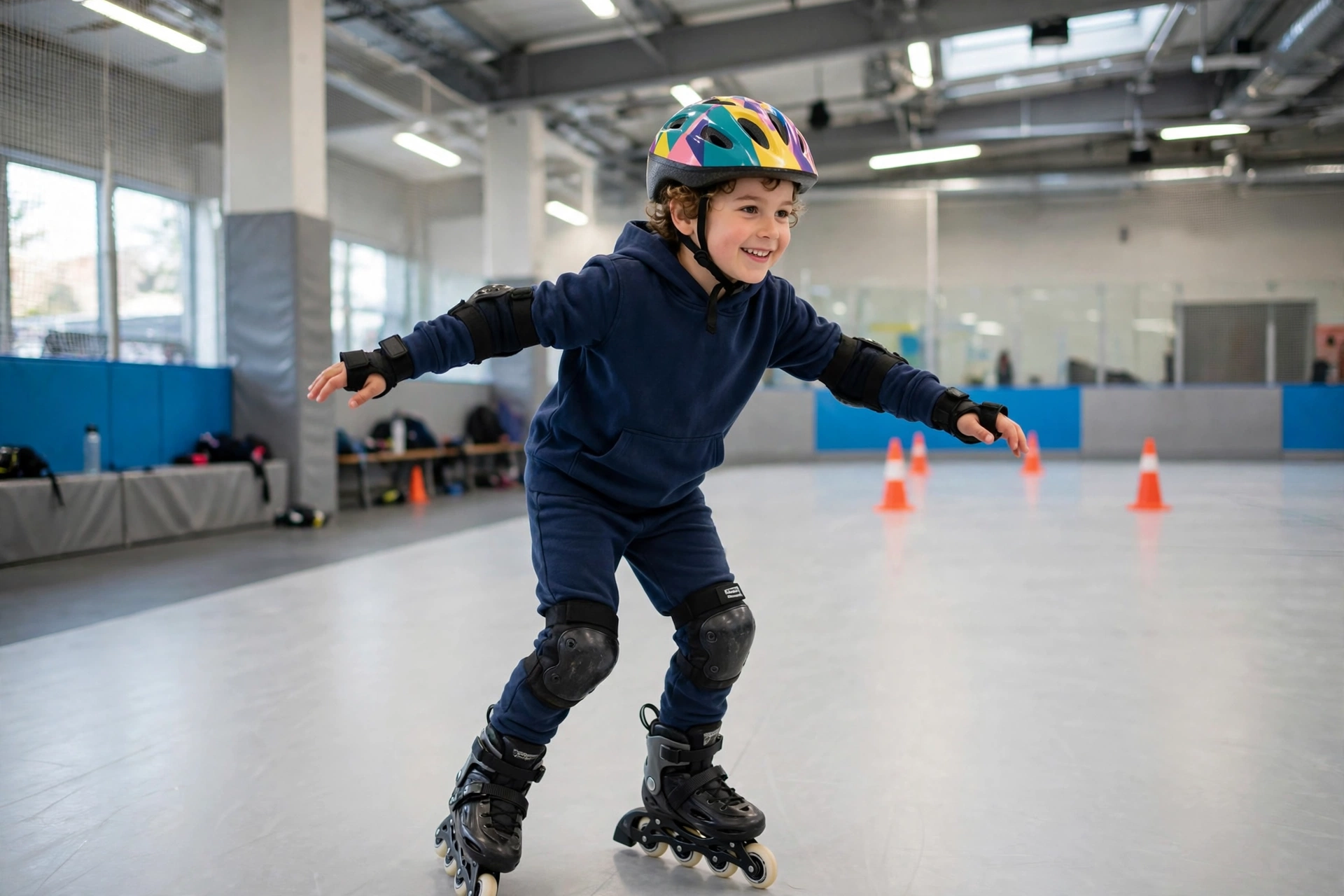
Think about the rest of your child’s kit too. Wrist guards, knee pads, and elbow pads are a sensible addition for inline skating lessons, because beginners put their hands out when they fall. Make sure your child wears comfortable clothing they can move in, and that their skates are fitted properly with the buckles and laces done up. A child who is comfortable and well protected is far more likely to enjoy the lesson and want to come back for the next one.
How Can You Help a Child Get Used to Wearing a Helmet?
Some children resist helmets at first, often because the helmet feels strange or because nobody else seems to be wearing one. Letting your child choose the colour or design of their own helmet can make a real difference, because a helmet they picked feels like theirs rather than a rule imposed on them. Try the helmet on at home before the first lesson, so the first time they wear it is not in front of a group of strangers.
Keep the tone light and matter of fact. A helmet is simply part of the kit, like the skates themselves, not a sign that skating is dangerous. Praise your child for wearing it without fuss, and wear a helmet yourself if you skate alongside them. Children copy what adults do far more readily than what adults say, and a parent in a helmet normalises the habit in a way no lecture can.
Frequently Asked Questions
Q: Can my child use a bike helmet for inline skating lessons?
A: In general terms, a bike helmet offers some protection, but a skate-style helmet usually suits inline skating better because it covers more of the back and sides of the head. If a bike helmet is all you have, check it fits well and ask the lesson provider whether they accept it.
Q: Does my child need a helmet if the lesson is on a soft indoor floor?
A: Yes. Even a smooth indoor rink floor is hard enough to cause a head injury in a bad fall, and beginners fall often. A helmet is a sensible precaution at every lesson, whatever the surface.
Q: How often should a child’s inline skating helmet be replaced?
A: Replace it after any hard knock, if the foam inside looks compressed or damaged, or when your child outgrows it. In general terms, a helmet that no longer fits snugly cannot protect properly, so check the fit regularly as your child grows.

Olivia
Writer at Helmet Today, covering helmet reviews, fit and riding safety.