In general terms, the right helmet for school cycling is one that fits your child properly, meets a recognised safety standard, and is comfortable enough that they will wear it every day without a fuss. The best helmet is not the most expensive one, or the one with the brightest colours — it is the one your child actually keeps on for the whole ride to school.
Cycling to school is a daily routine, not a special event, so the helmet has to work in all weathers, survive being stuffed into a school bag or hung on a hook, and fit a child who is growing fast. This guide covers what parents should check, from fit and safety labels to getting a reluctant child to wear their helmet every day.
What Makes a Good Helmet for School Cycling?
A good school cycling helmet is comfortable, visible, and tough enough for daily use. Comfort matters most, because a helmet that pinches, itches, or feels heavy will end up left at home. Look for a helmet with soft, washable padding, a simple retention system your child can adjust, and enough ventilation to keep them cool on a warm morning.
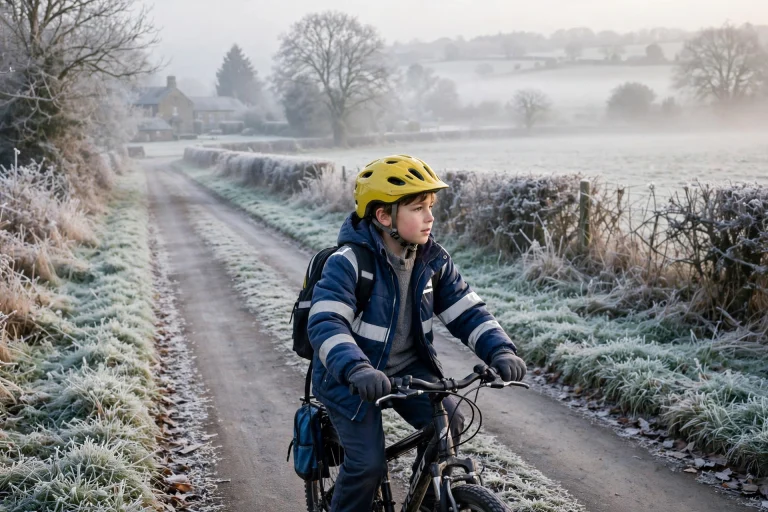
Visibility is important on the school run, which often happens in busy traffic at rush hour. A brightly coloured helmet, or one with reflective details, is easier for drivers to spot. Some helmets have a mount for a rear light, which is a useful addition in winter, when mornings and afternoons are dark.
Durability matters too, because a school helmet gets knocked around. It will be dropped in the playground, hung on a fence, and squeezed into a locker. A helmet with a hard outer shell stands up to this better than a very light, thin-shelled racing helmet.
How Should a Kids Helmet Fit?
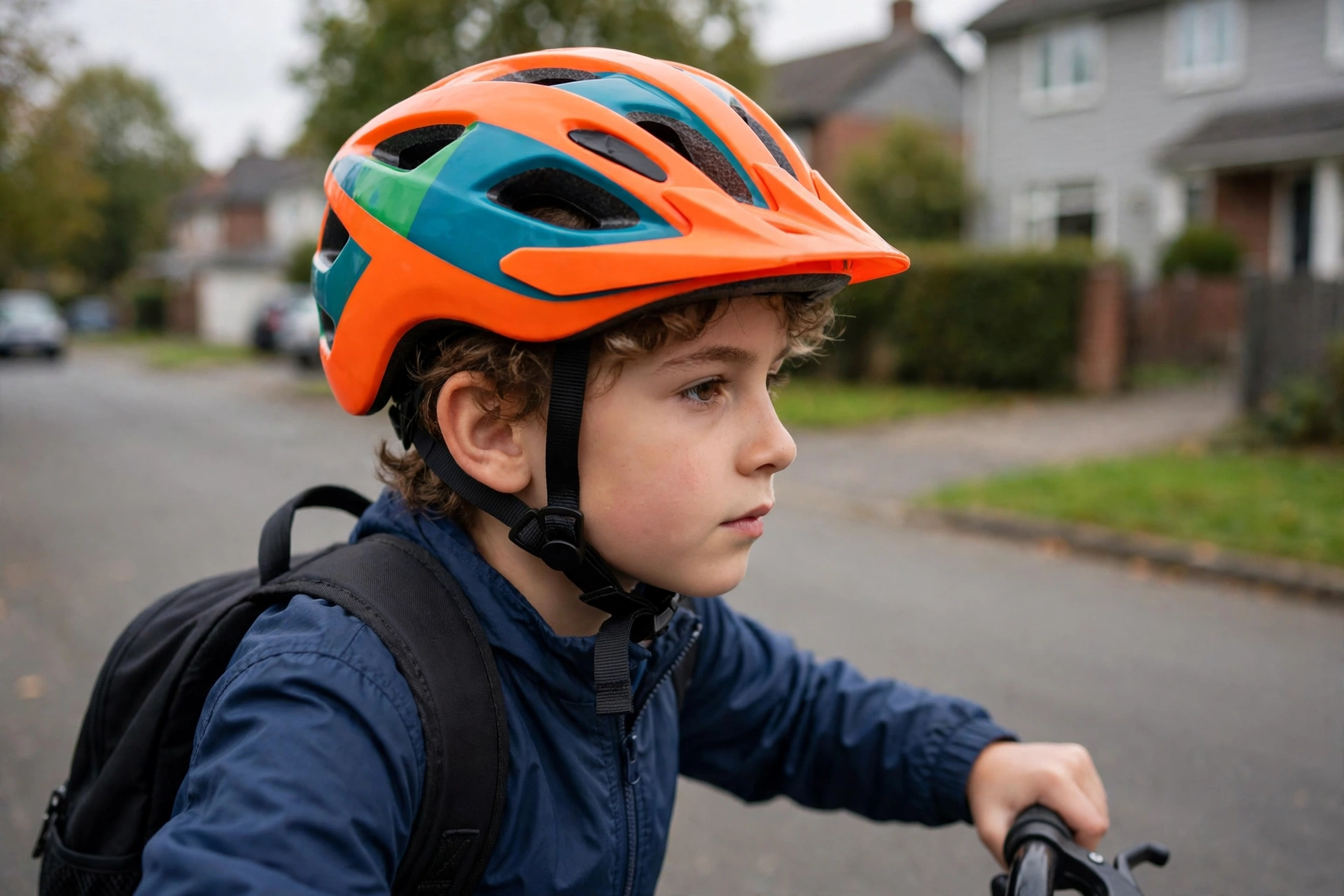
Fit is the most important thing to check, and it is worth taking your child to try helmets on rather than ordering online. The helmet should sit level on the head, low enough to cover the forehead, without tilting back. It should feel snug all around, with no pressure points, and it should not rock from side to side or slide forward when your child shakes their head.
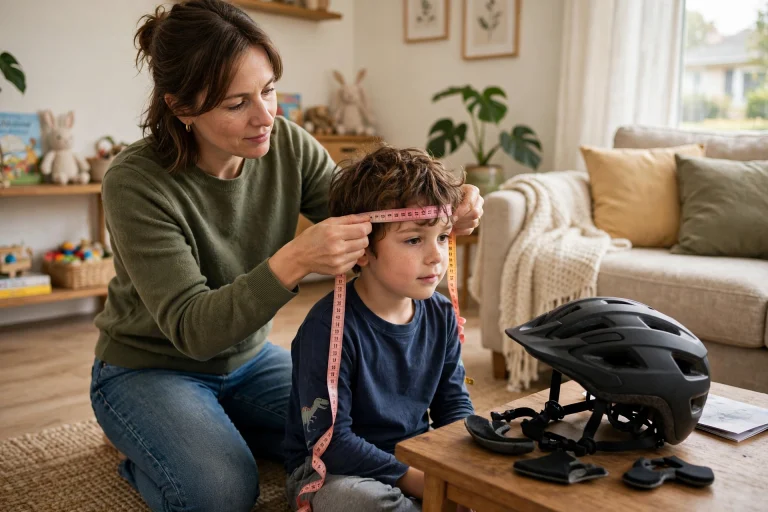
Measure your child’s head before you shop. Wrap a tape measure around the widest part of the head, just above the eyebrows and ears, and compare the result with the maker’s size chart. Sizing varies between makers, so the tape measurement is a guide, not a guarantee — always try the helmet on if you can.
Use the retention system at the back of the helmet to fine-tune the fit, and adjust the side straps so they form a neat V around the ears. The chin strap should sit snugly under the chin, with room for about two fingers between the strap and the chin. Check the fit regularly, because children grow quickly, and a helmet that fitted in September may be too small by spring.
What Safety Labels Should Parents Look For?
In general terms, a child’s cycling helmet should meet a recognised bicycle helmet safety standard for your region, and the label inside the helmet will say which standard it meets. Check for this label before you buy, and be cautious of very cheap helmets sold without clear certification, especially from sellers you do not know.
The label is not the only thing to check. Look at the helmet itself: the shell should be smooth and undamaged, the foam liner should be firmly attached with no cracks or dents, and the straps should be securely stitched with no fraying. If any of these are wrong, choose a different helmet, even if the label looks right.
Some helmets carry extra features that can help. Rotational impact protection, such as a low-friction layer inside the helmet, is available on some children’s models. If you are learning about helmet technology, reading about what MIPS is for helmets can help you understand one of the features you may see listed on the box. It is not essential, but it is worth considering if two helmets you like are otherwise similar.
How Do You Get a Child to Wear Their Helmet Every Day?
The best way to get a child to wear a helmet is to let them choose it. Take them to the shop, let them try on several helmets, and let them pick the colour and style they like best, as long as it fits properly and meets the safety standard. A helmet they chose themselves is far more likely to be worn than one that was imposed on them.
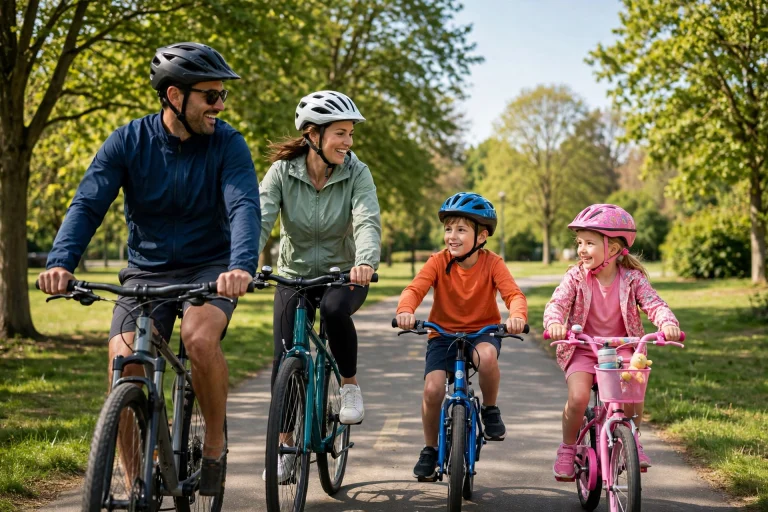
Make the helmet part of the routine, not a negotiation. Keep it by the front door, next to the bike, so putting it on becomes as automatic as putting on shoes. Praise them for wearing it, and wear your own helmet when you ride with them — children copy what they see far more than what they are told.
If your child complains that the helmet is uncomfortable, take the complaint seriously. Check the fit, adjust the straps and pads, and consider a different model if the problem persists. A child who says a helmet hurts is usually right, and fixing the fit is far more effective than insisting they put up with it.
When Should You Replace a School Cycling Helmet?
Replace a child’s helmet after any crash in which it took an impact, even if the damage is not visible. The foam inside a helmet is designed to absorb impact by compressing, and once it has done that, it may not protect as well a second time. If your child has had a fall and the helmet hit the ground, replace it.
Also replace the helmet if it no longer fits. Children grow quickly, and a helmet that is too small will sit high on the head and leave the forehead exposed. Check the fit at the start of each school term, and be ready to move up a size when the current helmet feels tight or the retention system is at its limit.
Finally, replace a helmet if it is damaged or worn out. Cracks in the shell, dents in the foam, frayed straps, or a buckle that no longer fastens properly are all signs that the helmet has reached the end of its useful life. A helmet that has been dropped hard onto concrete should also be checked carefully, and replaced if there is any doubt about its condition.
Frequently Asked Questions
Q: What if my child refuses to wear a helmet to school?
A: Let them choose the helmet themselves, check that it fits comfortably, and make wearing it part of the daily routine. Wearing your own helmet when you ride together helps, and so does explaining, in simple terms, that a helmet protects their head if they fall.
Q: Is a second-hand helmet safe for school cycling?
A: In general terms, it is risky, because you cannot know whether it has been in a crash or how old it is. If you do use a second-hand helmet, check it carefully for cracks, dents, and worn straps, and confirm it meets a recognised safety standard — but a new helmet is the safer choice.
Q: Does a school bag affect how a helmet fits?
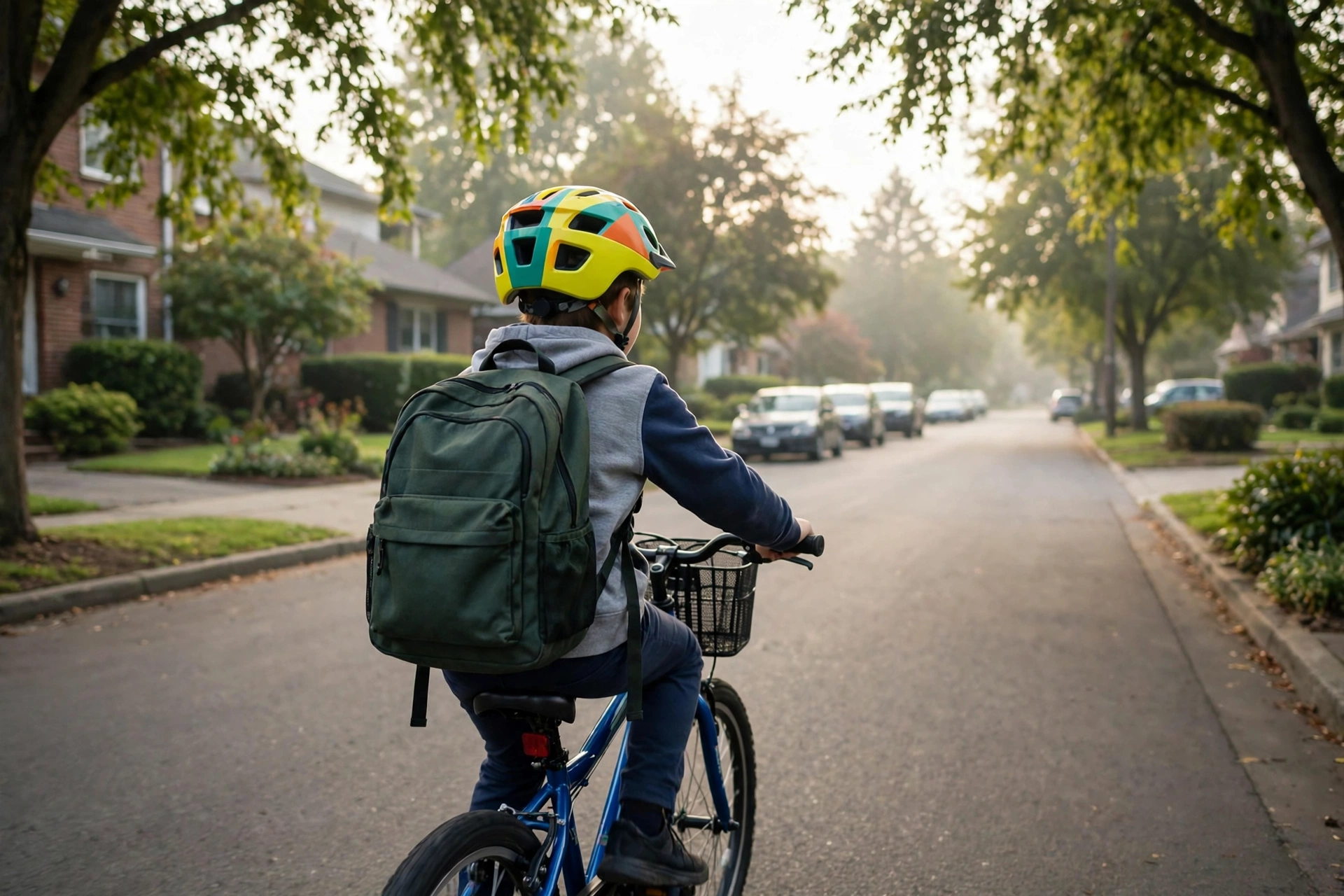
A: A heavy backpack can pull a child upright and change their riding position, but it should not change the fit of the helmet itself. Make sure the helmet sits level and snug with the bag on, and consider a pannier or basket if the bag is very heavy.

Olivia
Writer at Helmet Today, covering helmet reviews, fit and riding safety.