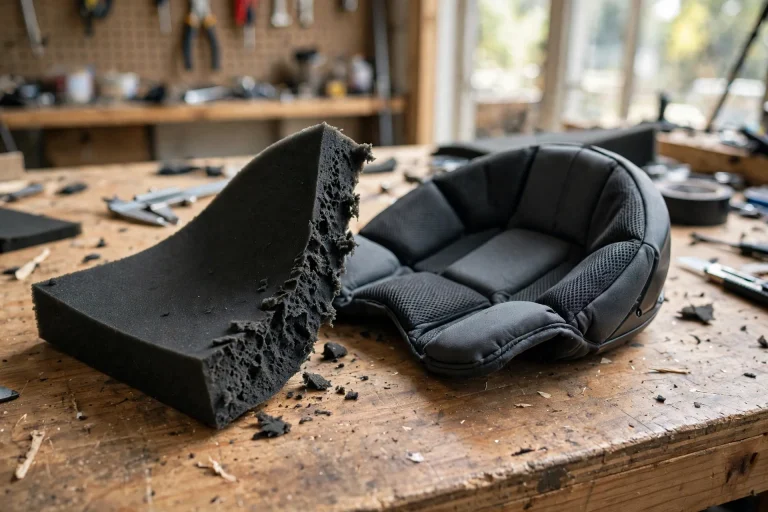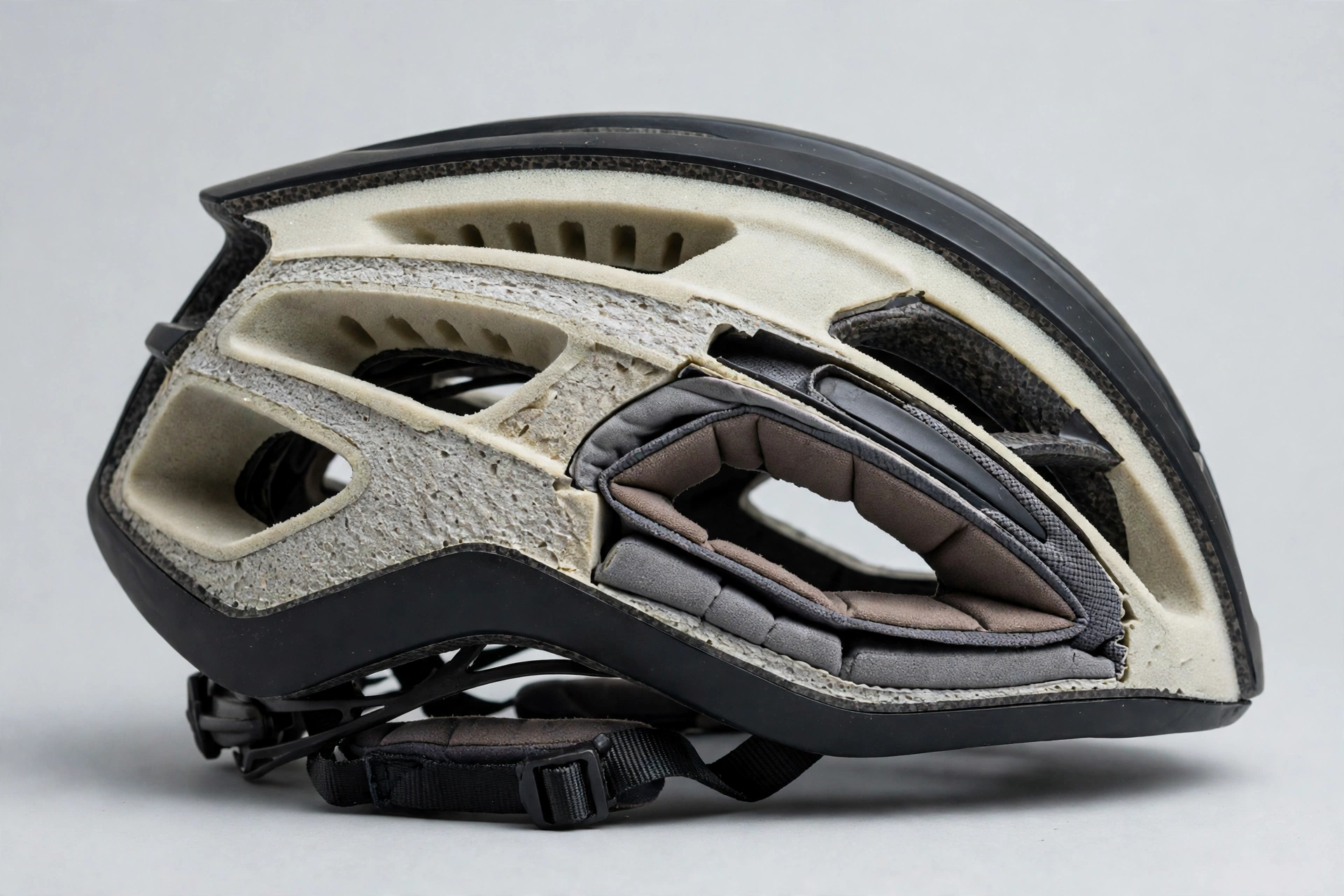
MIPS Air Node is a low-friction layer inside a helmet that is designed to reduce the rotational forces reaching the head in an angled impact, and it is a lighter, more breathable version of the MIPS slip-plane system. It sits between the helmet’s liner and the rider’s head, and in a crash it allows a small amount of movement so the head does not twist as sharply with the helmet. In general terms, it is the same idea as the original MIPS system, made with a lighter material and more airflow.
What Is MIPS?
MIPS stands for Multi-directional Impact Protection System, and it is a safety technology that deals with rotational motion in a crash. Most real crashes are not straight-on impacts: the head usually hits at an angle, which makes the brain twist inside the skull as well as move in a straight line. That twisting, or rotational motion, can strain the brain, so MIPS adds a low-friction layer inside the helmet that lets the shell move slightly relative to the head, reducing how much of that twist reaches the brain.
The original MIPS layer is a thin plastic sheet that sits between the helmet’s liner and the padding. In an impact, the sheet allows a small sliding movement, usually only a few millimetres, which is enough to cut down the rotational forces. To learn more about the system in full, reading about what MIPS is for helmets is a good place to start, since it explains how the slip plane works and why angled impacts matter. In general terms, MIPS is an extra layer of protection that works alongside the foam liner, not instead of it.
How Is MIPS Air Node Different From Standard MIPS?
MIPS Air Node is different from standard MIPS mainly in its material and its shape. Instead of a thin plastic sheet, Air Node uses a soft, flexible layer made from a light, rubber-like material that is shaped to fit the inside of the helmet. The layer is designed to be lighter than the standard sheet and to allow more air to flow through the helmet, which can make the helmet feel cooler. The movement it allows is the same idea: a small slide that reduces rotational forces in an angled impact.
The softer material also means the layer can sit closer to the head without feeling stiff or uncomfortable, and it may be easier to fit into helmets that have more ventilation. In general terms, Air Node is a refinement of the same concept rather than a completely different technology. A helmet with Air Node should still be checked for fit and certification in the same way as any other helmet, since the layer is only one part of how the helmet protects the head.
How Does MIPS Air Node Work in a Crash?
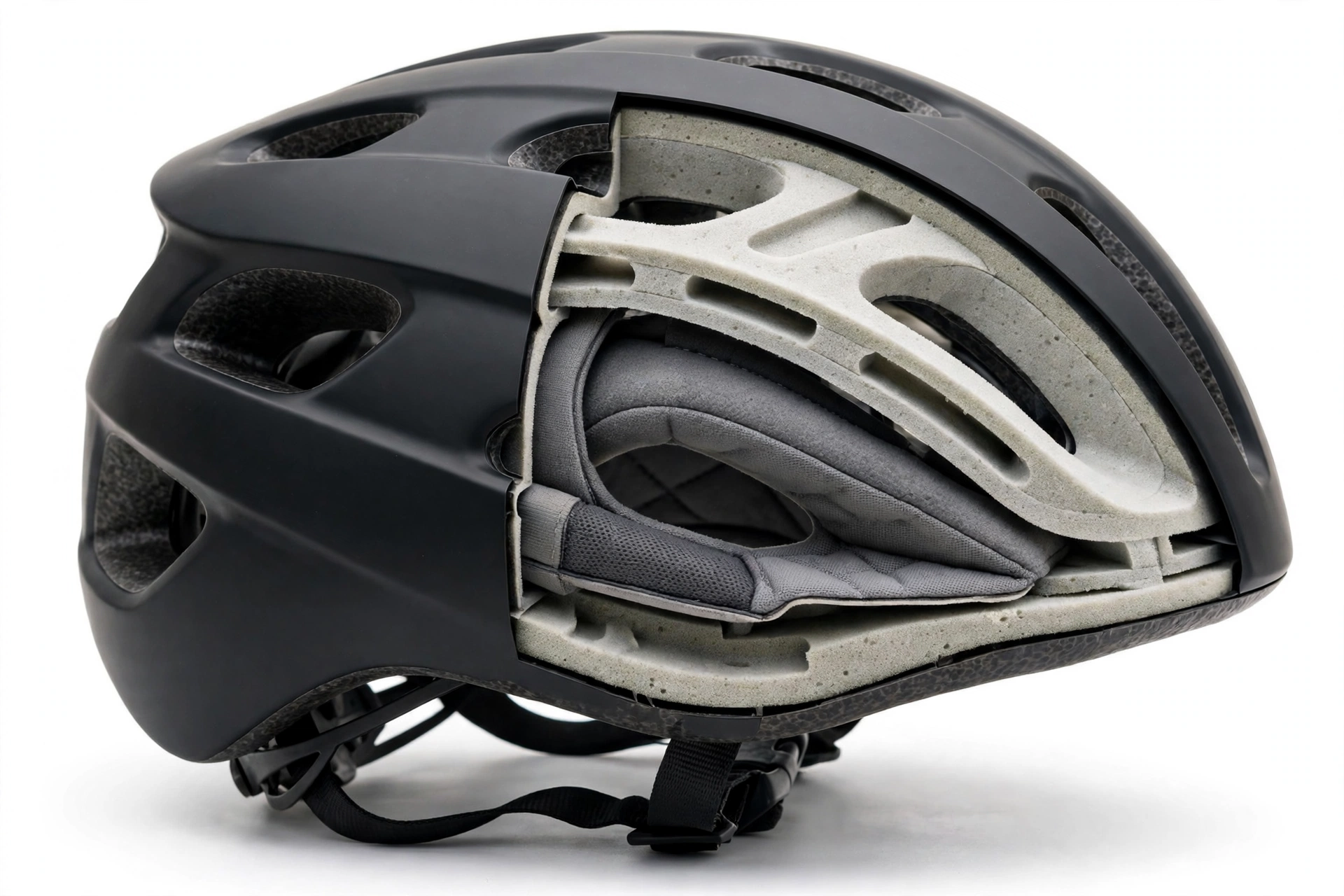
In a crash, MIPS Air Node works by letting the helmet shell move slightly relative to the head when the impact comes at an angle. The low-friction layer sits between the liner and the head, and when the shell is forced to twist by the impact, the layer allows a small sliding movement instead of passing all of that twist straight to the head. That small movement, only a few millimetres, can reduce the rotational forces that reach the brain, which is the main job of the system.
The foam liner still does the job of absorbing the straight-line force of the impact by compressing, while the Air Node layer deals with the twisting part. In general terms, the two work together: the foam slows the head down, and the slip layer lets the helmet move a little so the head does not have to twist with it. After a crash, the helmet should be checked and usually replaced, since the liner and the layer may have been damaged even if the outside looks fine.
Which Helmets Use MIPS Air Node?
MIPS Air Node is used in some bicycle helmets and in a growing number of helmets for other sports, usually in models where low weight and good airflow matter. It tends to appear in road cycling and mountain biking helmets, where riders care about ventilation on long climbs and about keeping the helmet light. In general terms, it is a feature found in mid-range and higher-end helmets rather than in the cheapest models, because the layer adds cost and complexity to the build.
Not every helmet with MIPS uses Air Node: many still use the standard plastic sheet, and some use other versions of the system designed for different sports. The name should be shown on the helmet or in its description, so riders can check which version is fitted. In general terms, the presence of any MIPS layer is a sign that the maker has thought about rotational forces, and the exact version matters less than the helmet’s overall fit and certification.
Does MIPS Air Node Make a Helmet Cooler?
MIPS Air Node is designed to allow more airflow than the standard MIPS sheet, and in general terms it can help a helmet feel cooler. The standard sheet is a thin piece of plastic that can block some of the air moving through the helmet’s vents, while the Air Node layer is shaped with openings that let air pass through more freely. For riders who ride in warm weather or climb long hills, that extra airflow can make a noticeable difference to comfort.
Even so, the layer is only one part of how cool a helmet feels. The number and size of the vents, the shape of the air channels, and how the helmet sits on the head all matter more than the slip layer on its own. In general terms, a helmet with Air Node and poor ventilation will still feel hot, while a well-vented helmet without it may feel cooler. Riders who care about cooling should look at the ventilation as a whole rather than judging it by the slip layer alone.
Should You Choose a Helmet With MIPS Air Node?
Choosing a helmet with MIPS Air Node comes down to the same checks as any helmet: fit, certification, and comfort. The Air Node layer is a useful extra, but it matters far less than whether the helmet fits snugly, covers the head properly, and carries the safety certification for the kind of riding you do. If two helmets fit equally well and one has Air Node, the lighter layer and better airflow may tip the balance, especially for warm-weather riding.
It is also worth trying the helmet on for several minutes, since a layer that feels fine at first may press after a while. The helmet should not rock when the rider shakes their head, and the straps should sit comfortably. In general terms, MIPS Air Node is a sensible choice for riders who want the extra rotational protection and value low weight and good ventilation, as long as the helmet itself fits well and is certified for their sport.
Is MIPS Air Node the same as MIPS?
It is a version of MIPS, not a different system. Air Node uses a lighter, softer layer with more airflow, but it works on the same idea of letting the helmet move slightly to reduce rotational forces.
Does MIPS Air Node replace the foam liner?
No. The foam liner absorbs the straight-line force of an impact, while the Air Node layer deals with twisting forces. The two work together inside the helmet.
Can I add MIPS Air Node to my existing helmet?
No, it is built into the helmet during manufacturing. It cannot be added afterwards, so if you want it, you need a helmet that comes with it fitted.

Olivia
Writer at Helmet Today, covering helmet reviews, fit and riding safety.