In general terms, a fire helmet should be replaced after a serious impact, after visible heat damage, when its shell or suspension is worn beyond repair, or when it reaches the end of the service life recommended by its manufacturer. There is no single calendar date that applies to every helmet, because use, storage, and exposure vary, but waiting until a helmet obviously fails is waiting too long.
Replacing a helmet can feel wasteful, especially when the damage is not obvious, but a helmet is a safety device, not a keepsake. Its job is to absorb energy and resist heat once, or over a limited working life, and a helmet that has done that job may not be able to do it again. Knowing the signs that point to replacement helps crews make that call confidently.
When Does an Impact Mean Replacement?
Any serious impact is a reason to take a helmet out of service and assess it. That includes a fall from height onto a hard surface, a blow from falling debris, a vehicle collision while wearing the helmet, or any incident where the helmet struck something hard enough to leave a mark. Even if the shell looks intact, the liner may have compressed, and a compressed liner cannot absorb a second impact as effectively.
Smaller knocks are part of normal firefighting, and a helmet is designed to handle routine bumps. The distinction is one of severity: a helmet that has absorbed a blow strong enough to crack, dent, or deform the shell, or to leave the wearer with a headache or dizziness, has done serious work and should be replaced. When in doubt, err on the side of replacement and ask a competent person to inspect the helmet.
It is also worth remembering that helmets can be damaged without the wearer noticing. A helmet dropped from the appliance onto concrete, or knocked off a shelf onto a hard floor, may have taken a significant impact even though no one was wearing it. Report such drops and have the helmet inspected, rather than quietly putting it back into service.
What Heat Damage Should You Look For?
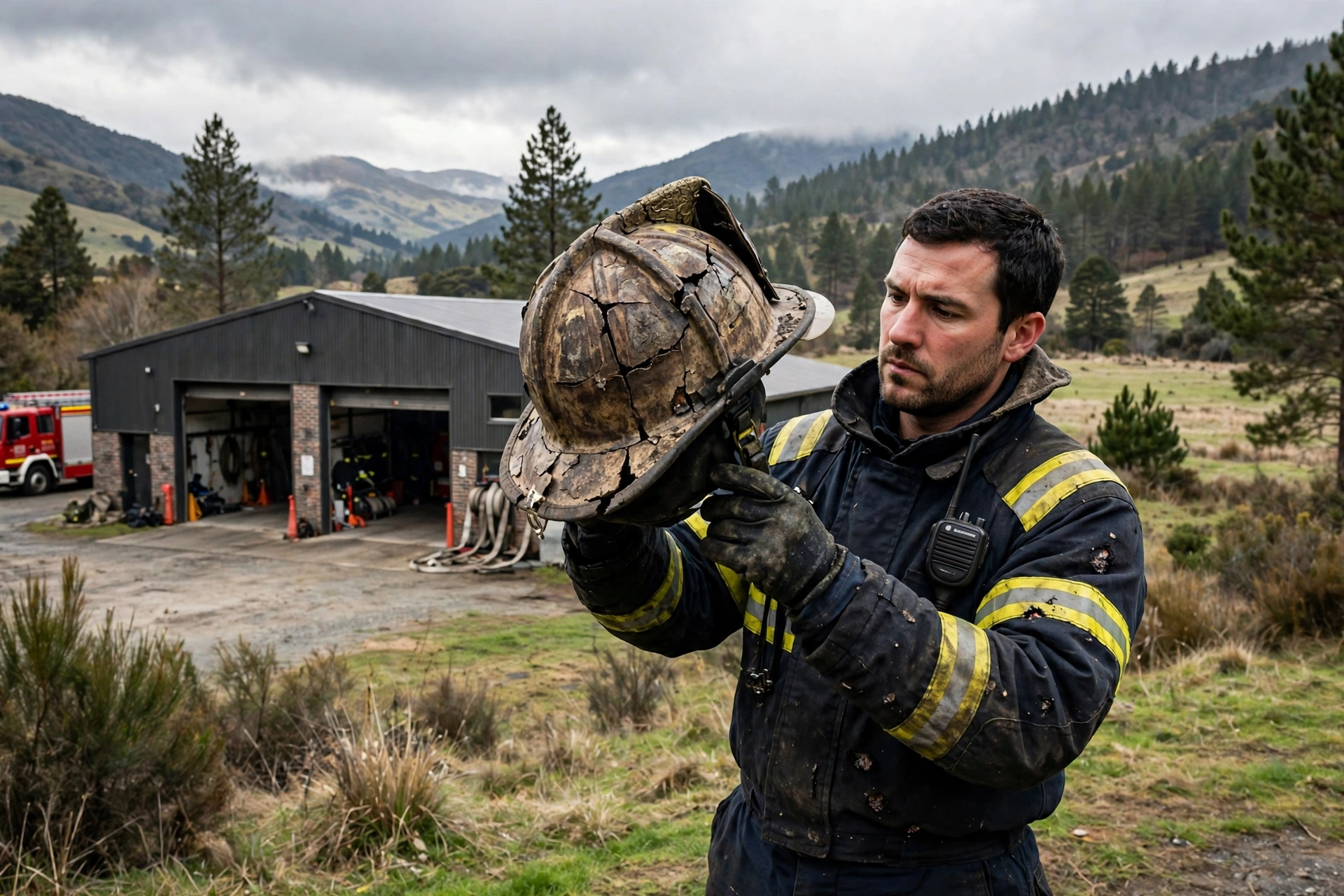
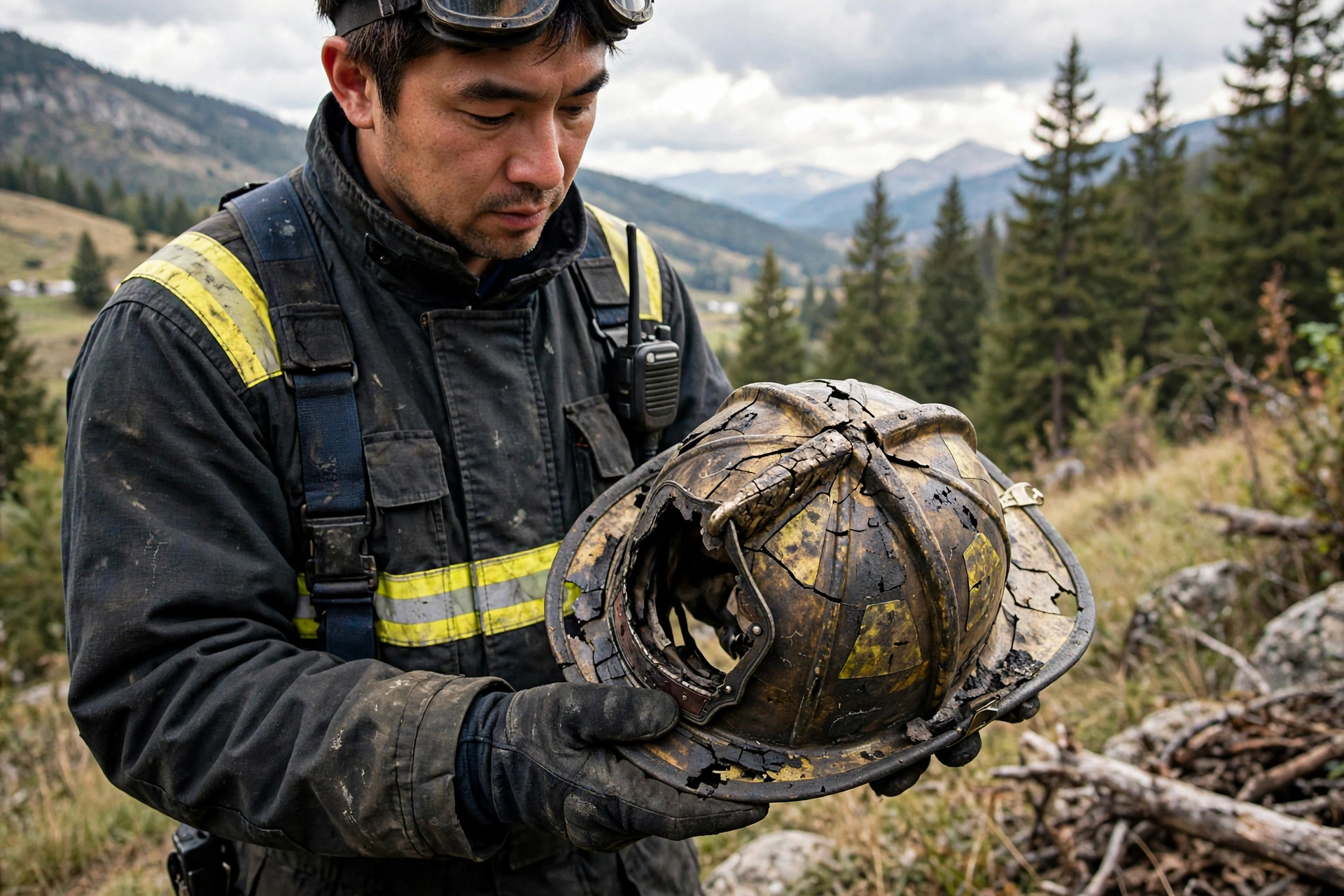
Heat damage is the other major reason to retire a fire helmet. Look for blistering, bubbling, discolouration, or softening of the shell, and for warping or distortion of the brim or crown. Check the liner and suspension for brittleness, melting, or loss of flexibility, and inspect face shields and visors for crazing or distortion caused by heat.
A helmet that has been exposed to extreme heat may look only slightly changed on the outside while its materials have weakened internally. That is why any helmet worn in a particularly severe fire, or found to have been exposed to direct flame contact, should be inspected by someone competent to judge heat damage, and replaced if there is any doubt.
Routine exposure to heat during normal firefighting does not automatically mean replacement, since fire helmets are designed for that environment. The concern is exposure beyond the helmet’s rated limits, or repeated severe exposure over time, which can gradually degrade materials. Keeping a record of major incidents helps track that cumulative exposure.
Does a Fire Helmet Have a Set Lifespan?
Many manufacturers recommend a service life for their helmets, often expressed in years from the date of manufacture or first use, and many departments set their own replacement schedules based on that guidance. In general terms, a structural fire helmet that is used regularly may be expected to last for a number of years, but the exact figure depends on the model, the frequency of use, and the conditions it faces.
A helmet used daily in a busy urban department will age faster than one used occasionally in a quiet rural service, even if both are the same age. Ultraviolet light, chemicals, cleaning products, and storage conditions all affect lifespan, as does the number of incidents attended. A calendar date is therefore a guide, not a guarantee: a helmet within its recommended life can still need replacement after damage, and a helmet beyond it may still look sound but should be assessed carefully.
Check the manufacturer’s documentation for your helmet model, and follow your department’s replacement policy if it sets a stricter schedule. If neither gives a clear figure, ask the supplier or the department’s equipment officer. Keeping the manufacture date and the issue date recorded for each helmet makes this tracking much easier.
What Wear and Tear Means Replacement, Not Repair?
Some parts of a helmet are designed to be replaced: liners, suspension systems, chin straps, visors, and reflective panels can all be swapped when worn, and doing so extends the helmet’s useful life. The shell, however, is not repairable in the same way. A cracked, dented, or heat-damaged shell cannot be patched back to full strength, and a helmet with shell damage should be retired.
Suspension systems also have limits. If the suspension no longer holds the helmet securely, if adjustment mechanisms slip, or if straps are frayed beyond safe use, replacement parts may fix the problem, but if the shell’s attachment points are damaged, the helmet itself is finished. Similarly, a helmet that no longer fits correctly, even with new liners and adjustments, should be replaced rather than tolerated.
Corrosion, chemical damage, and contamination are other reasons to retire a helmet. Exposure to certain chemicals can weaken shell materials, and contamination that cannot be cleaned off, for example after a hazardous materials incident, may mean the helmet cannot safely return to service. In such cases, follow the department’s decontamination and disposal procedures.
How Should a Retired Helmet Be Disposed Of?
A retired helmet should be marked or destroyed so that it cannot drift back into service by mistake. Cutting the chin strap and marking the shell as retired are common steps, and some departments keep retired helmets for training or display, clearly labelled as non-operational. A helmet used for training should never be mistaken for a service helmet, so labelling matters.
Finally, replacing a helmet is also an opportunity to check the fit and the accessories. A new helmet should be fitted properly, with the hood and breathing apparatus, before it goes on the appliance, and any lamps, visors, or communications fittings should be transferred or replaced as needed. A new helmet that fits badly protects no better than the old one it replaces, which is why fit and impact performance go together, as explained in this guide to what MIPS means for helmets.
Frequently Asked Questions
Q: How often should a fire helmet be replaced?
A: In general terms, follow the manufacturer’s recommended service life and your department’s policy, and replace sooner after serious impact or heat damage. Frequency of use and exposure affect lifespan, so a calendar date alone is not enough.
Q: Can a cracked fire helmet be repaired?
A: No, not in general terms. A cracked shell cannot be restored to full strength, so a helmet with shell damage should be retired. Liners, straps, and visors can be replaced, but the shell cannot be patched.
Q: Should a helmet be replaced after every fire?
A: No. Fire helmets are designed for repeated use in fires, and routine exposure does not require replacement. Replace after serious impact, visible heat damage, or when the helmet reaches the end of its recommended service life.

Olivia
Writer at Helmet Today, covering helmet reviews, fit and riding safety.