For a kids helmet for child seat on bike rides, the rule is simple: if your child rides in a child seat, they should wear a properly fitted helmet, because the seat protects their body in a fall but does nothing for their head. A child in a rear or front seat sits higher than you, cannot brace or roll the way a falling rider does, and depends entirely on you for balance — which is exactly why the helmet matters more in a seat, not less. Fit it level, snug, and buckled before every ride.
The confusion is understandable: the seat has a harness, a high back, sometimes even a headrest, and it feels protective. Parents reasonably ask whether a helmet on top of all that is overkill, whether it pushes a small child’s head forward uncomfortably, and what the law actually says. This guide works through the rules, the headrest problem, and how to fit a helmet that works with the seat instead of against it.
Does a Child in a Bike Seat Legally Need a Helmet?
In general terms, many US states and many countries require helmets for child passengers on bikes, not just for riders — children carried in seats or trailers are commonly covered by the same child helmet laws, and some places set the requirement by the passenger’s age rather than by who is pedaling. The details vary a lot by jurisdiction, so check your local rule rather than assuming.
Even where no law applies, the safety logic is strong. A child seat raises your child’s head well above yours, and in the most common seat accident — the bike tipping over while mounting, dismounting, or standing — the child falls from that height with their body strapped in, unable to put a hand out. The harness prevents ejection; the helmet is what protects the head in that fall.
Treat the legal question as the floor, not the ceiling: if the law is silent in your area, fit the helmet anyway. It is the same reasoning behind helmets in trailers and balance-bike helmets for toddlers — low speed does not mean low height.
How Is a Child Seat Different From a Trailer for Helmets?
A trailer keeps a child low to the ground inside a frame that can act like a roll cage, and many parents reasonably treat a trailer helmet as optional on quiet paths. A child seat is the opposite geometry: the child is up high, exposed, and strapped to a bike that can fall sideways with them aboard.
That difference changes the recommendation. In a seat, the helmet is doing real work in the most likely crash scenario — the slow tip-over — because the child’s head has the furthest to fall and the least ability to react. If you would helmet a child on their own bike at walking speed on a driveway, the child in the seat deserves at least the same.
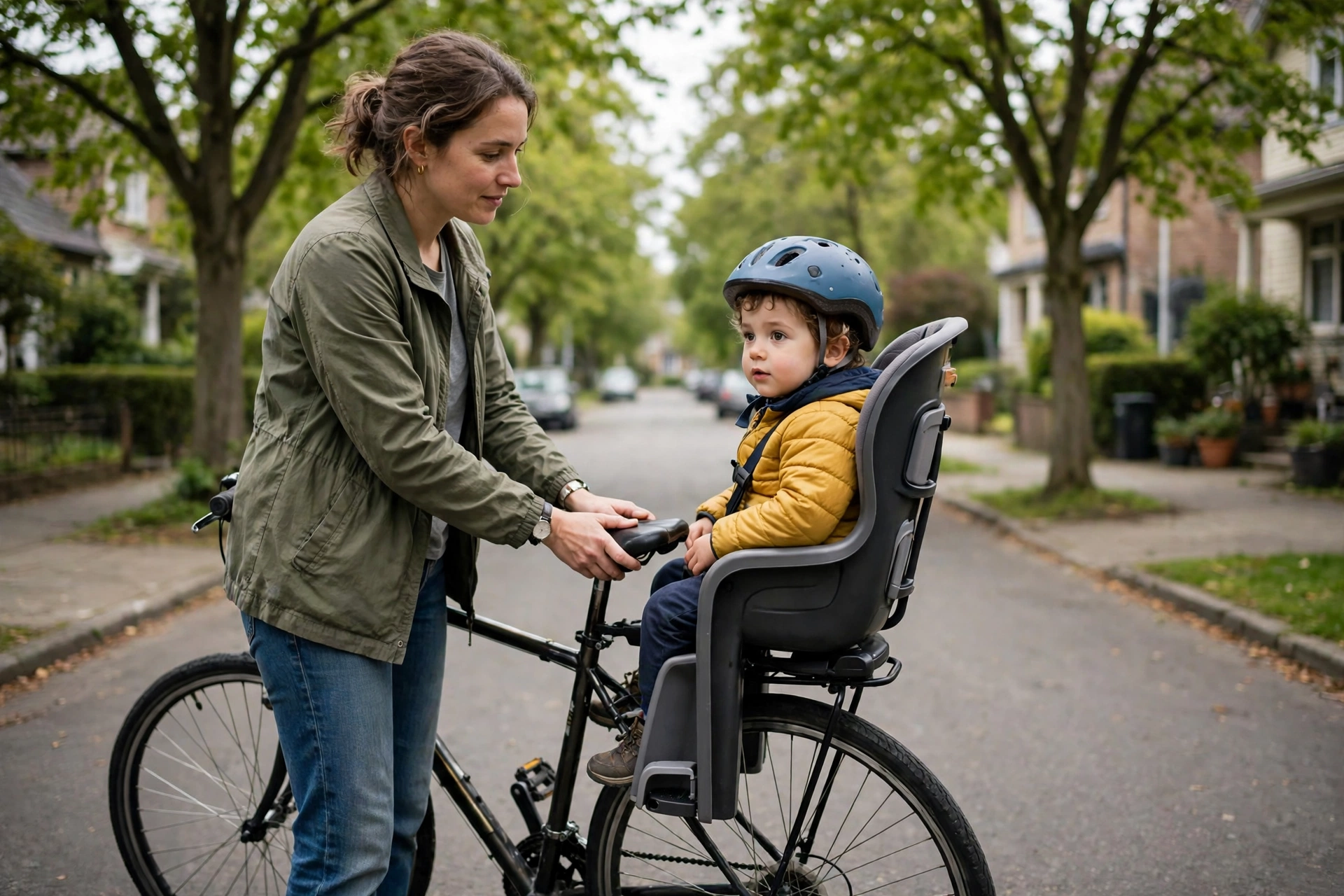
The seat style matters too. Front-mounted seats put a smaller child between your arms, where your own body offers some shielding in a tip-over but the child is still high and exposed. Rear seats put the child behind you, fully exposed to a sideways fall. Neither design removes the case for a helmet; the rear seat makes it strongest.
Will a Helmet Push My Child’s Head Forward in the Seat?
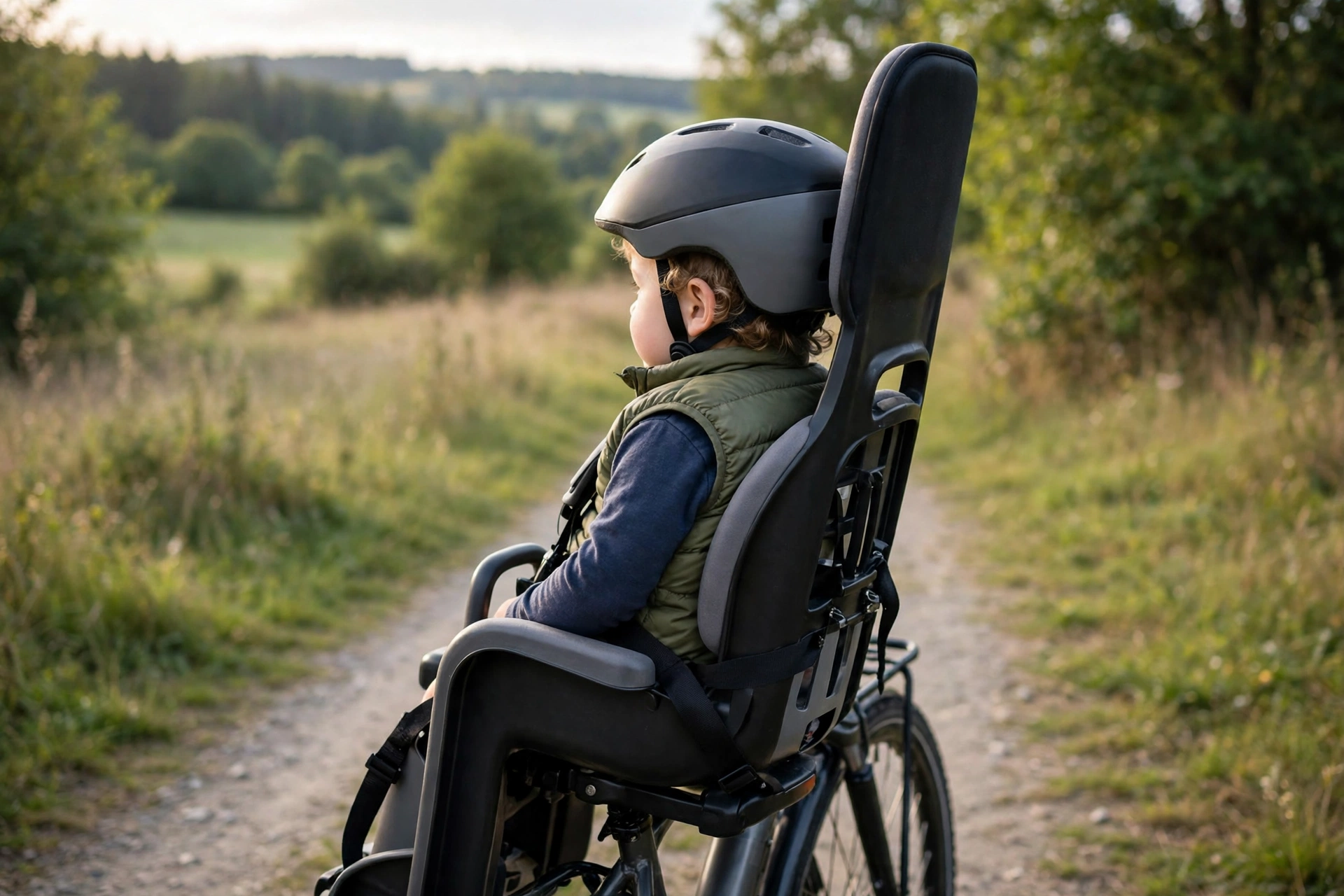
This is the legitimate practical problem: many child seats have a high back or headrest, and the back of a helmet can push against it, tilting a small child’s head forward — especially children under two, whose neck strength is still developing and who may fall asleep in the seat. A chin-on-chest position is genuinely bad for a sleeping toddler, so solve the geometry rather than skipping the helmet.
First, look at the helmet’s back profile. Helmets designed for toddlers and seat use often have a flatter back, made to rest against a seat back without levering the head forward. A standard skate-style helmet with a rounded, protruding back is the worst match for a high-back seat; a flatter-backed toddler model is the fix most parents land on.
Second, recline if your seat allows it. Many rear seats have adjustable recline precisely because children sleep in them. A slight recline plus a flat-backed helmet usually restores a neutral head position. Third, check the fit with your child actually seated and strapped in before riding — helmet on, head against the seat back, and watch for the chin dropping. If the head still tips forward after trying a flatter helmet and recline, that is a sign your child may be too young for that seat setup, and a trailer or waiting is the safer answer.
How Should the Helmet Fit With the Seat and Harness?
Fit the helmet on its own first: level, front edge about two finger widths above the eyebrows, snug all around with straps forming a V under the ears and the chin strap at one-finger snugness. Then sit your child in the seat, route the seat harness, and re-check — the harness and seat back should not push the helmet up, back, or sideways.
Order matters for comfort: helmet on and fastened first, then into the seat and harness. Putting the helmet on a child who is already harnessed in invites a rushed, crooked fit. Give the helmet a gentle wiggle test once everything is set: it should move with the head, not slide around it.
Re-check every few rides. Growing children, swapped clothing layers, and straps that creep looser all change the fit, and the seat’s harness should be re-snugged whenever the helmet fit is adjusted. Some parents also look at added protection systems — the rotational liner explained in our guide to what MIPS is and how it works — but for seat passengers, fit and a compatible back profile matter more than any feature list.
When Might You Reasonably Skip the Helmet in a Seat?
Honestly: almost never, once a child is old enough to be in the seat at all. In general terms, babies under about one year should not ride in bike seats at all — their necks are not ready for the jolting or for supporting a helmet’s weight — and no helmet solves that; the answer for under-ones is not a helmetless ride, it is waiting.
For a child of seat age, the exceptions are narrow: a genuine fit impossibility you are actively solving (wrong helmet shape against the seat back, a medical consideration your pediatrician has raised) on a one-off, walking-pace move — and even then the honest reading is that the ride should probably wait until the fit works. “It’s only a short ride” describes exactly the tip-over scenario the helmet exists for.
If your child fights the helmet in the seat specifically, treat it as a comfort problem to fix — check for the head-push-forward issue, strap pinching, and heat — rather than a preference to surrender to. Most seat-helmet battles end once the geometry is fixed.
Frequently Asked Questions
Q: At what age can a baby ride in a bike seat with a helmet?
A: In general terms, most guidance puts it at around 12 months — when a child can sit unsupported and hold their head up steadily with a helmet on. Check your seat manufacturer’s minimum age and your pediatrician’s advice; younger babies should wait.
Q: The seat has a high back and headrest. Doesn’t that protect the head?
A: It supports the head; it does not absorb impact the way a helmet’s crushable foam does. The headrest also does nothing in a sideways tip-over beyond the seat’s edge. Support and impact protection are different jobs.
Q: What type of helmet is best for a child seat passenger?
A: A certified toddler helmet with a flatter back profile, so it rests against the seat back without pushing the head forward, fitted level and snug. Try it in the actual seat before riding — the helmet-seat combination is what you are fitting, not the helmet alone.

Olivia
Writer at Helmet Today, covering helmet reviews, fit and riding safety.