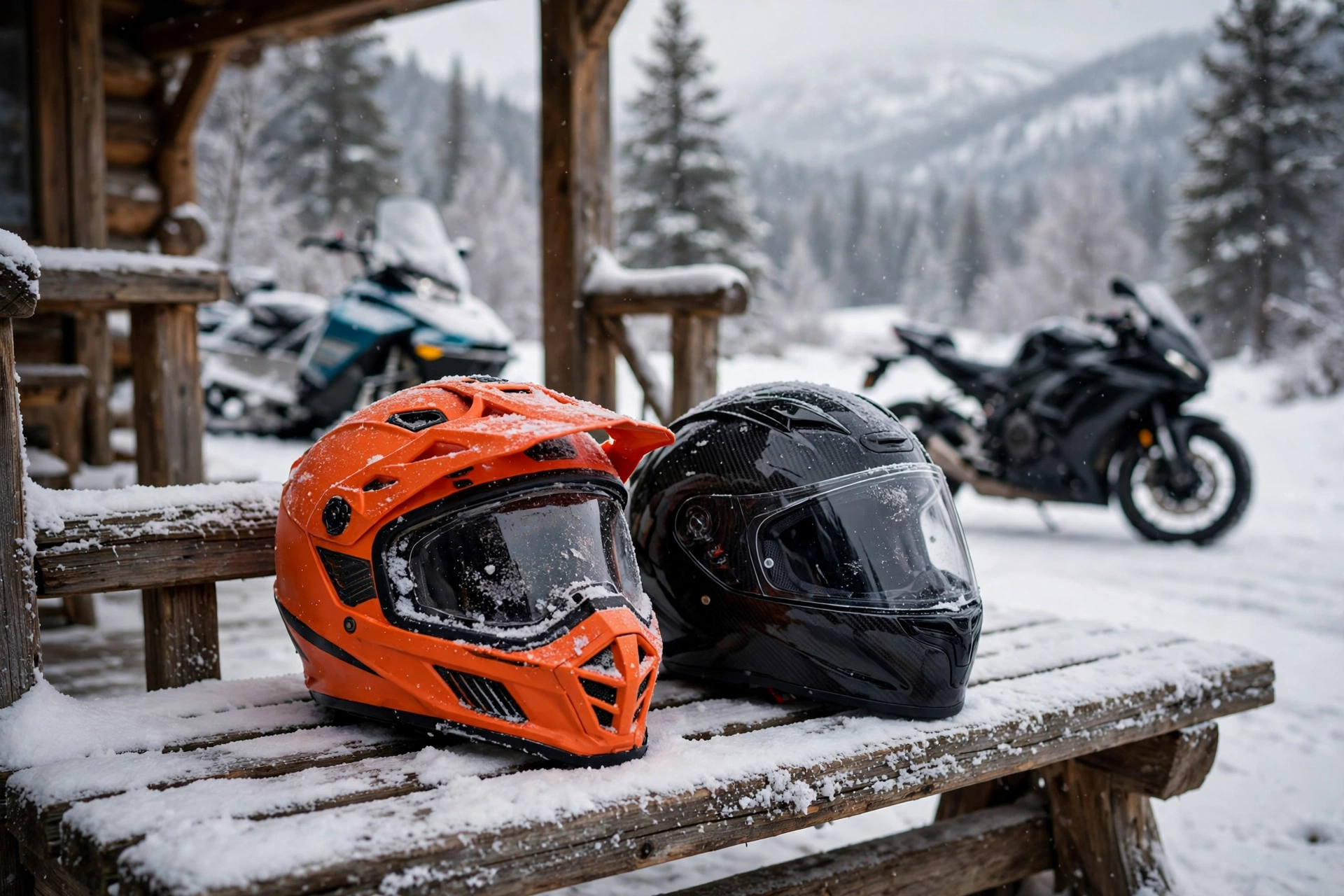
The difference is cold-weather equipment: a snowmobile helmet adds a fog-resistant dual-lens or heated shield, a breath box to route your breath out, closable vents, and insulation, while a motorcycle helmet is built to dump heat and airflow for warm-road riding. Underneath, both are certified full-face helmets doing the same protective job — the snowmobile version is simply winterised.
Because they look alike, riders often try to use one for both jobs. Here is what actually differs, and what happens when you cross them over.
What Is Different About the Shield and Breath Management?
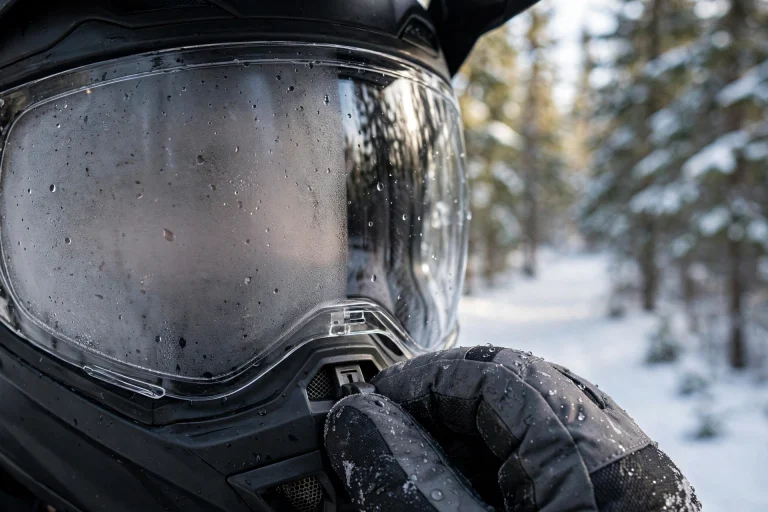
This is the biggest gap. A snowmobile helmet’s shield is usually a dual-lens design — two panes with an insulating air gap — or an electrically heated shield, because a normal shield fogs solid within minutes in winter. A breath box inside the chin bar seals around your nose and mouth and ducts exhaled air out of the helmet.
A motorcycle helmet expects airflow to do the fog work. Its single shield stays clear because air streams over and through the helmet at road speed — airflow that simply is not there at snowmobile pace in still, sub-zero air, and that becomes a liability when it leaks freezing wind onto your face.
Chin curtains make the same point in miniature. Snowmobile helmets seal the bottom of the helmet against your neck to keep cold air and snow dust out; many motorcycle helmets leave that area open as part of their cooling design.
How Do Insulation and Vents Differ Between the Two?
A motorcycle helmet is a cooling device: large vents, channels through the liner, and liners designed to move sweat and heat away. A snowmobile helmet keeps the vent hardware but makes it genuinely closable, reduces the leak paths, and often adds thicker, warmer cheek and neck padding.
The practical result shows in wind chill. At speed on a sled, any uncontrolled vent or gap becomes a jet of very cold air on skin, causing distraction, watering eyes, and in real cold a frostnip risk on exposed patches. Snowmobile helmets are built to be sealed units; motorcycle helmets are built to breathe.
Weight and noise differ slightly too. Extra seals, double shields, and heated elements add a little weight to the snowmobile version, while a well-sealed helmet is generally quieter in winter wind — but the headline remains temperature management, not comfort features.
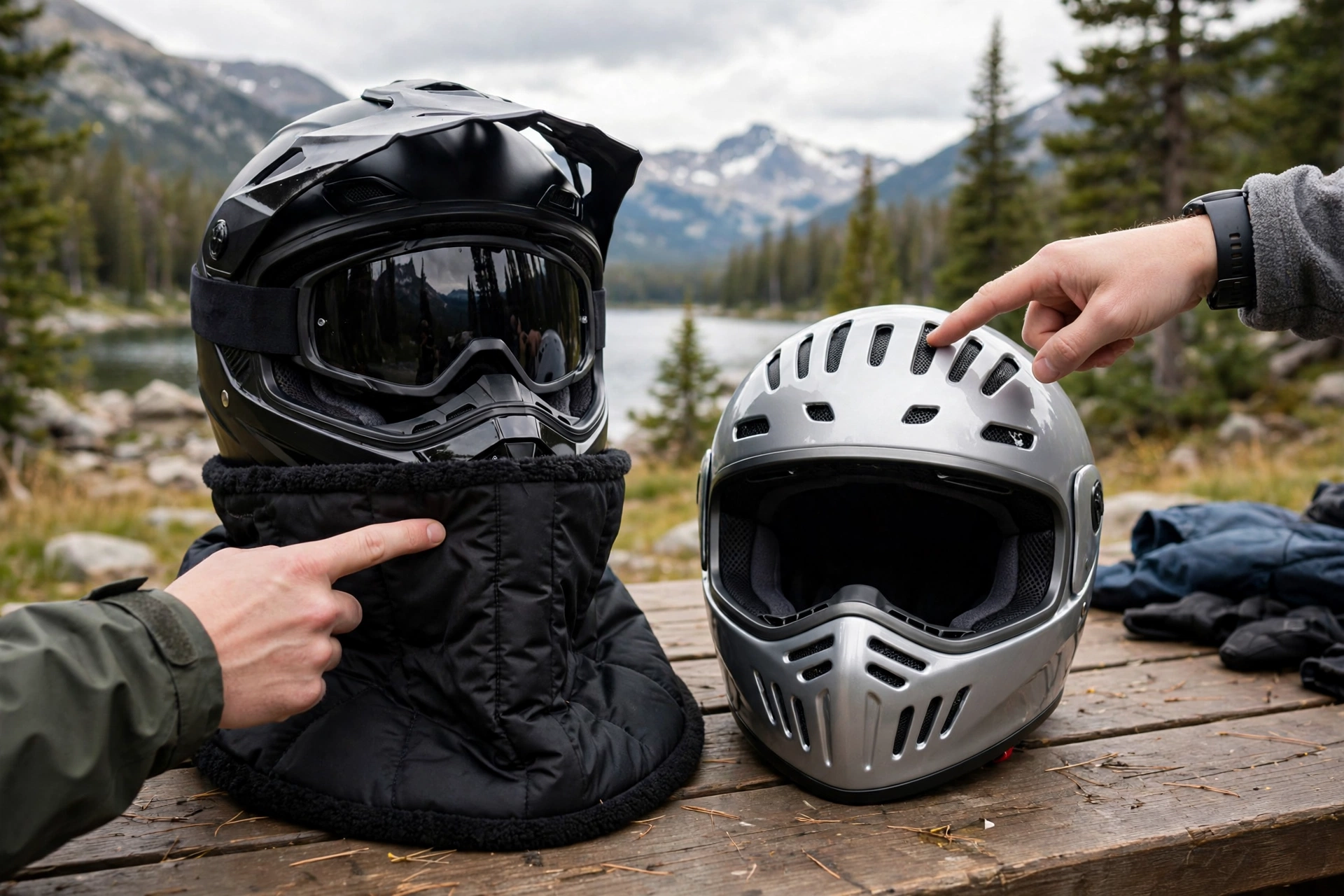
Can You Use a Motorcycle Helmet on a Snowmobile?
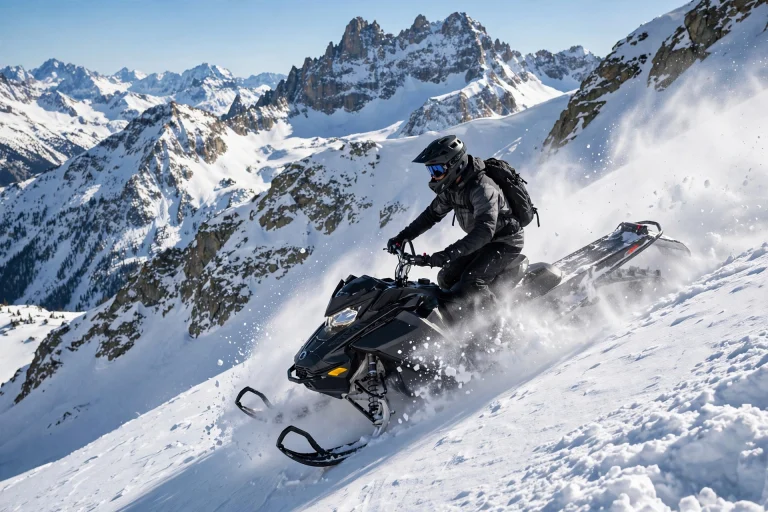
You can, and many riders start out doing exactly that — but expect fog and cold to be your day’s main enemies. The single shield will mist unless you crack it open, and cracking it open admits freezing air and snow dust directly onto your face and eyes.
Workarounds help at the margins: a balaclava for the cold, anti-fog treatments for the shield, stopping to clear the lens, keeping speeds and effort steady. In mild weather on short rides these can be enough. In proper cold they turn every stop into a visor-cleaning exercise and every restart into a fogged first kilometre.
If you ride all winter, the honest advice is that a snowmobile helmet is not a luxury version of the same thing — it is the version designed so you can see. Vision is a safety feature, and it is the one the motorcycle helmet cannot give you in January.
Can You Use a Snowmobile Helmet on a Motorcycle?
Yes, with the opposite problem: heat. A sealed, insulated snowmobile helmet on a summer road is a hot, sweaty place, and a dual-lens shield that cannot open far enough for airflow makes it hotter. Many riders swap to the single-lens shield some helmets offer for summer, or remove the breath box, which helps — but the insulation remains.
Check the certification label before assuming a snowmobile helmet is road-legal equipment where you live: in general terms, road use requires a helmet meeting the applicable road standard, and most quality snowmobile helmets carry mainstream certifications — but verify the label on your own helmet rather than guessing.
One caution applies both ways: protection technology does not season. The liner systems inside, including rotational-impact protection like MIPS where fitted, work the same in July and January — it is the comfort and vision systems that are specialised, and those decide how well you ride.
There is also a third style worth knowing about before you judge either helmet: the motocross-style sled setup, an off-road helmet worn with goggles instead of a shield. Mountain and aggressive riders often prefer it for its light weight and the way goggles handle hard breathing, accepting more face exposure in exchange. It underlines the real lesson of the comparison — in winter, the eye and breath system is the design, and the shell underneath is shared with the road.
Which Helmet Should You Buy If You Ride Both?
Buy for the season you ride most, and consider a convertible approach for the other: some helmets accept both a dual-lens winter shield and a single-lens summer shield, plus a removable breath box, which covers three seasons credibly in one shell.
If your split is even and your winters are serious, two helmets is not extravagance — it is the correct tool twice. A winterised sled helmet and a vented road helmet will each out-perform a compromise in their own season, and both will be in good condition because neither is being misused.
Whichever you choose, fit is the constant: snug, level, no pressure points, with the shield or goggle setup matched to the weather you will actually meet. A warm helmet you can see out of, that fits, beats a theoretically perfect one that fails any of those tests.
Frequently Asked Questions
Q: Is a snowmobile helmet safer than a motorcycle helmet?
A: Neither is inherently safer — both are full-face helmets built to mainstream certifications. The snowmobile helmet adds cold-weather vision and warmth equipment; protection comes from the shell, liner, and fit in both cases.
Q: Why does my motorcycle helmet fog so badly on my sled?
A: Its single shield is chilled from outside while your breath wets the inside, and snowmobile speeds do not provide the airflow a road helmet relies on. A dual-lens shield and breath box are the real fix.
Q: Can I fit a dual-lens shield to my motorcycle helmet for winter?
A: Only if the maker offers one for your exact model — shields are model-specific. A Pinlock-style insert is the other common option. If neither exists, a dedicated snowmobile helmet is the better answer.

Olivia
Writer at Helmet Today, covering helmet reviews, fit and riding safety.