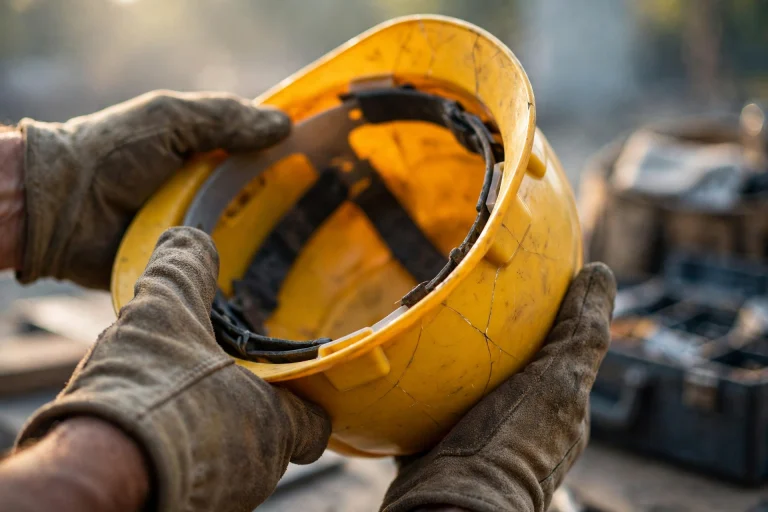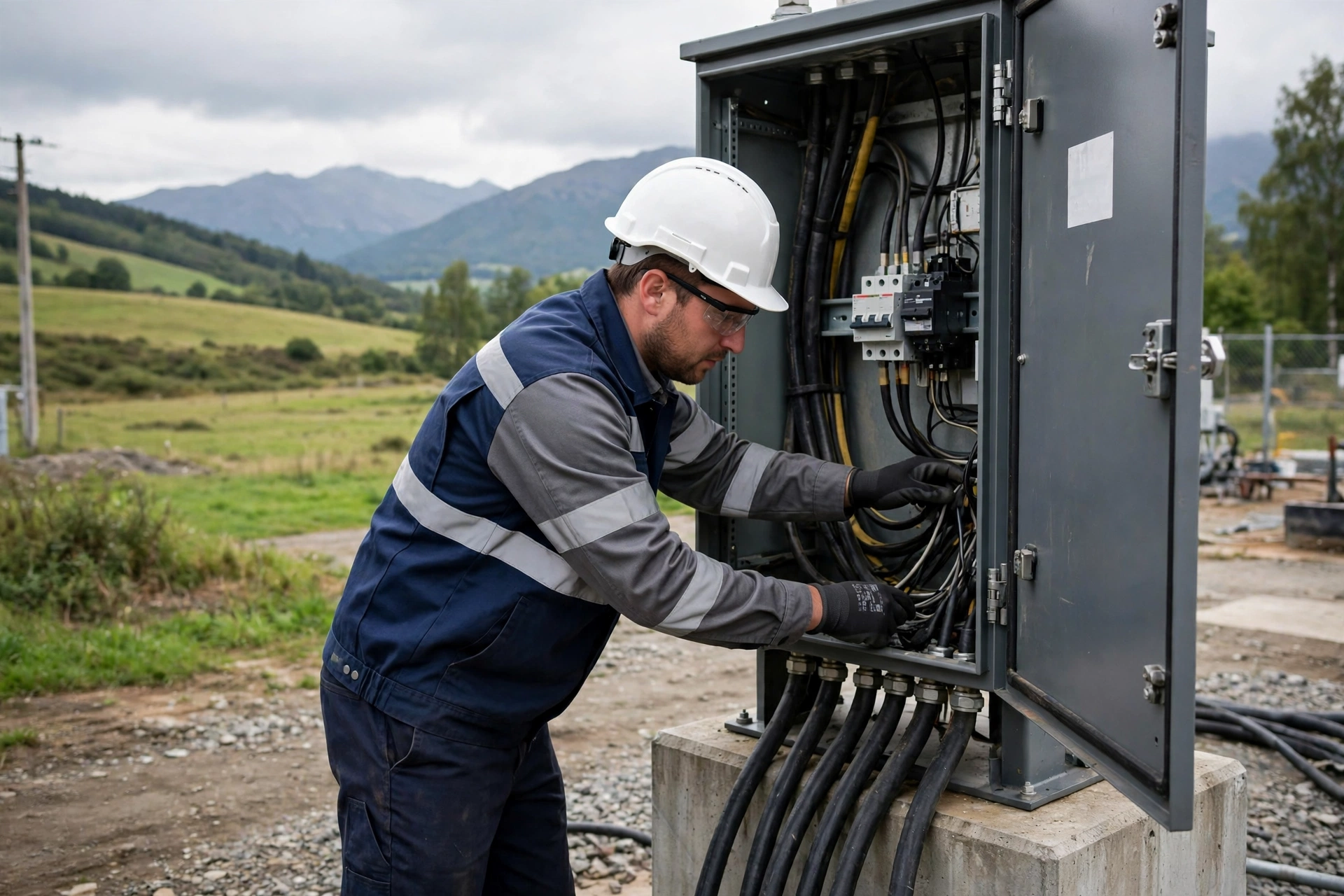
Hard hat classes describe electrical insulation. Class G (General) hats are tested to reduce the risk of contact with lower-voltage conductors, Class E (Electrical) hats are tested to a much higher level for work around higher voltages, and Class C (Conductive) hats offer no electrical insulation at all. In general terms, the class says nothing about impact strength — that is the hat’s type — and the right class depends on the electrical hazards in your work.
Every certified hard hat is marked with both a type and a class, and the class is the half of the specification people most often overlook. This guide explains what G, E and C actually mean, how to check which class a hat belongs to, and how to choose for the work in front of you.
What Does Class G Mean on a Hard Hat?
Class G stands for General. These hats are tested to withstand a limited level of electrical voltage without passing a dangerous current to the wearer’s head, which makes them the general-purpose choice for most construction and industrial work where incidental contact with low-voltage conductors is possible but electrical work is not the main task.
That limited rating is the key point. A Class G hat reduces risk around lower voltages; it is not the hat for deliberate work on or near high-voltage equipment. Think of it as sensible background protection for general trades rather than specialist electrical protection.
Because most sites involve some wiring, temporary power and tools, Class G is the most common class in everyday use. If a hard hat is handed to you on a general construction site without any discussion of class, there is a good chance it is a Class G — but you should still check the label rather than assume.
What Does Class E Mean on a Hard Hat?
Class E stands for Electrical. These hats are tested at far higher voltages than Class G — in general terms, they are built for utility workers, electricians and others whose work brings them close to high-voltage conductors, and they provide the highest level of electrical insulation available in a hard hat.
The testing behind Class E involves subjecting the hat to a much more demanding electrical test than Class G, and the hat’s materials and construction are chosen so that nothing conductive bridges the shell. That is also why accessories matter: adding metal fittings or drilling a Class E hat can compromise what it was tested to do.
Even a Class E hat is only one part of electrical safety. It is not a substitute for safe working distances, insulated tools, gloves rated for the work, or de-energizing circuits before working on them. Treat it as the last layer, not the plan.
What Does Class C Mean on a Hard Hat?
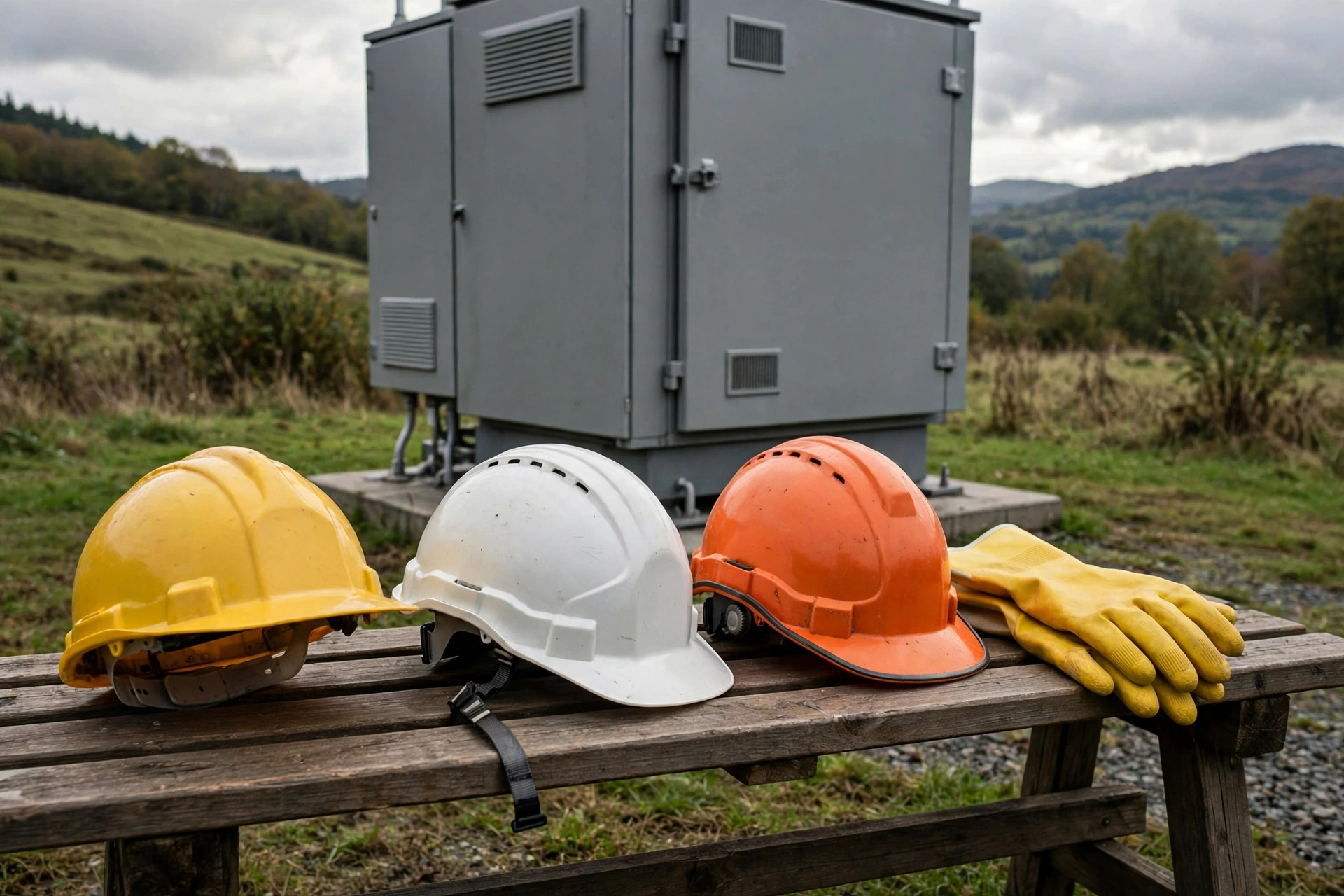
Class C stands for Conductive, and it is the class that catches people out. Class C hats provide no electrical insulation whatsoever. They are typically made with ventilation in mind — many are vented designs, and some are made of metal or contain conductive parts — and they are intended for work where there is no electrical hazard at all and comfort in heat is the priority.
A Class C hat still gives impact protection to the standard its type rating describes. The shell and suspension do their mechanical job. What it cannot do is protect you if your head contacts a live conductor, because there is no tested insulation standing in the way.
For that reason, Class C hats should never be used where there is any realistic chance of contacting electrical sources — including construction sites with temporary power, overhead lines or unfinished wiring. If there is doubt about whether electrical hazards exist, the answer is not Class C.
How Can You Check Which Class Your Hard Hat Is?
Read the label inside the hat. Certified hard hats are marked with their type and class, usually printed under the brim or on a sticker inside the shell, alongside the standard the hat meets and the manufacturer’s details. The label might say, for example, “Type 1, Class G” — two separate facts about one hat.
Do not try to judge class by appearance. A vented hat is often Class C and an unvented hat is often G or E, but vents alone do not determine the class, and similar-looking hats from the same maker can belong to different classes. The printed marking is the only reliable guide.
If the marking has worn away or the hat has no label, treat its class as unknown and do not use it around electrical hazards. Pass it to your safety officer or supervisor; a hat that cannot be identified cannot be matched to a task.
How Do You Choose the Right Hard Hat Class?
Start from the hazards, as your employer’s risk assessment will. If your work is electrical, or regularly brings you near high-voltage equipment, Class E is the appropriate choice. For general construction and industrial work with the usual background presence of lower-voltage wiring and tools, Class G is the common and sensible default. Class C is only for situations where electrical contact is genuinely not a possibility and heat comfort is the driving concern.
Then combine class with type: the class answers the electrical question, the type answers the impact-direction question, and you need both answers to be right for your job. Finally, remember that condition overrides specification — a cracked or badly aged Class E hat protects nobody, and a hat that has itself taken an electrical contact should be retired and replaced.
Other helmets make their own trade-offs between hazards. Cycling helmets, for instance, put everything into impact and rotational protection — see our explanation of how MIPS works in a helmet — because electricity is not part of their world. Hard hats have to answer one more question than that, and the class letters G, E and C are how they answer it.
Frequently Asked Questions
Q: Which hard hat class is best?
A: There is no single best class — only the right class for the hazard. Class E gives the most electrical insulation, Class G suits most general work, and Class C gives none and is only for work with no electrical risk. Match the class to your risk assessment.
Q: Can a Class G hard hat be used for electrical work?
A: Class G hats are tested only to a limited, lower-voltage level, so in general terms they are not the choice for deliberate work on or near higher-voltage equipment. That work calls for Class E head protection as part of a full electrical safety setup.
Q: Are vented hard hats always Class C?
A: Not always, but vents usually mean the hat cannot be electrically rated, so vented hats are commonly Class C. Never rely on the vents to tell you — check the printed type and class label inside the hat.

Olivia
Writer at Helmet Today, covering helmet reviews, fit and riding safety.