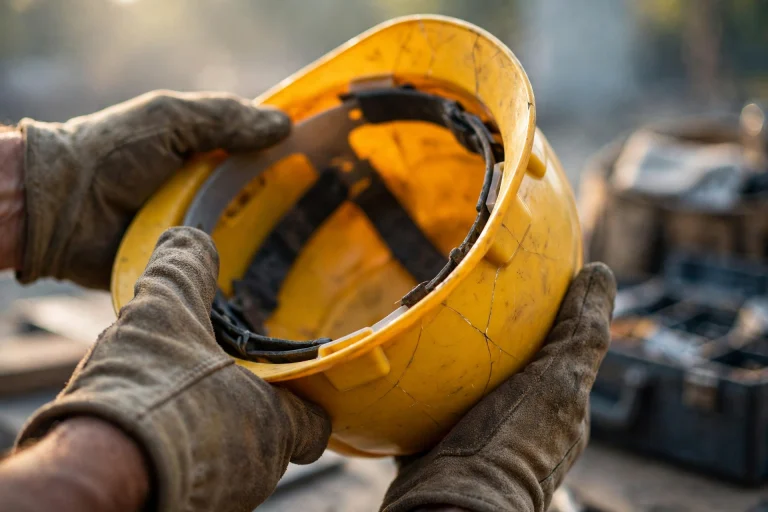
Bump caps are made for jobs where the only head hazard is you bumping your own head against a fixed, low object — mechanics working under vehicles, warehouse and logistics staff under racking and shelving, food production and brewery workers, pest control and facilities staff in crawl spaces, and aircraft and baggage crews working around low fuselage structures. In general terms, they suit controlled indoor workplaces with no falling-object risk, which is exactly the limit of what they are tested to handle.
A bump cap is not a failed hard hat; it is a different tool that workers actually wear because it looks and feels like an ordinary cap. Used in the right jobs, it prevents a steady stream of minor cuts and bruises. This guide walks through the jobs it genuinely suits, the features that matter in them, and the boundary where a hard hat takes over.
Why Do Mechanics and Vehicle Technicians Wear Bump Caps?
Few workplaces offer as many things to hit your head on as a workshop. Vehicle lifts, exhaust systems, suspension parts, open bonnets and the undersides of cars on ramps all sit at exactly head height for someone working beneath or around them, and mechanics rise up into them dozens of times a day.
The injuries involved are almost always the same kind: a scalp cut from a sharp bracket, a bruise from a suspension arm, a graze from a rough casting. They are painful, they bleed impressively, and they are precisely what a bump cap’s hidden shell is designed to soften. The hazard stays still and the worker provides the motion — the textbook bump cap scenario.
Because the cap looks like normal workwear, technicians keep it on all day, including in the office and the parts department, which is the quiet advantage of the format: protection that is worn beats stronger protection left on a hook.
Which Warehouse and Logistics Jobs Suit Bump Caps?
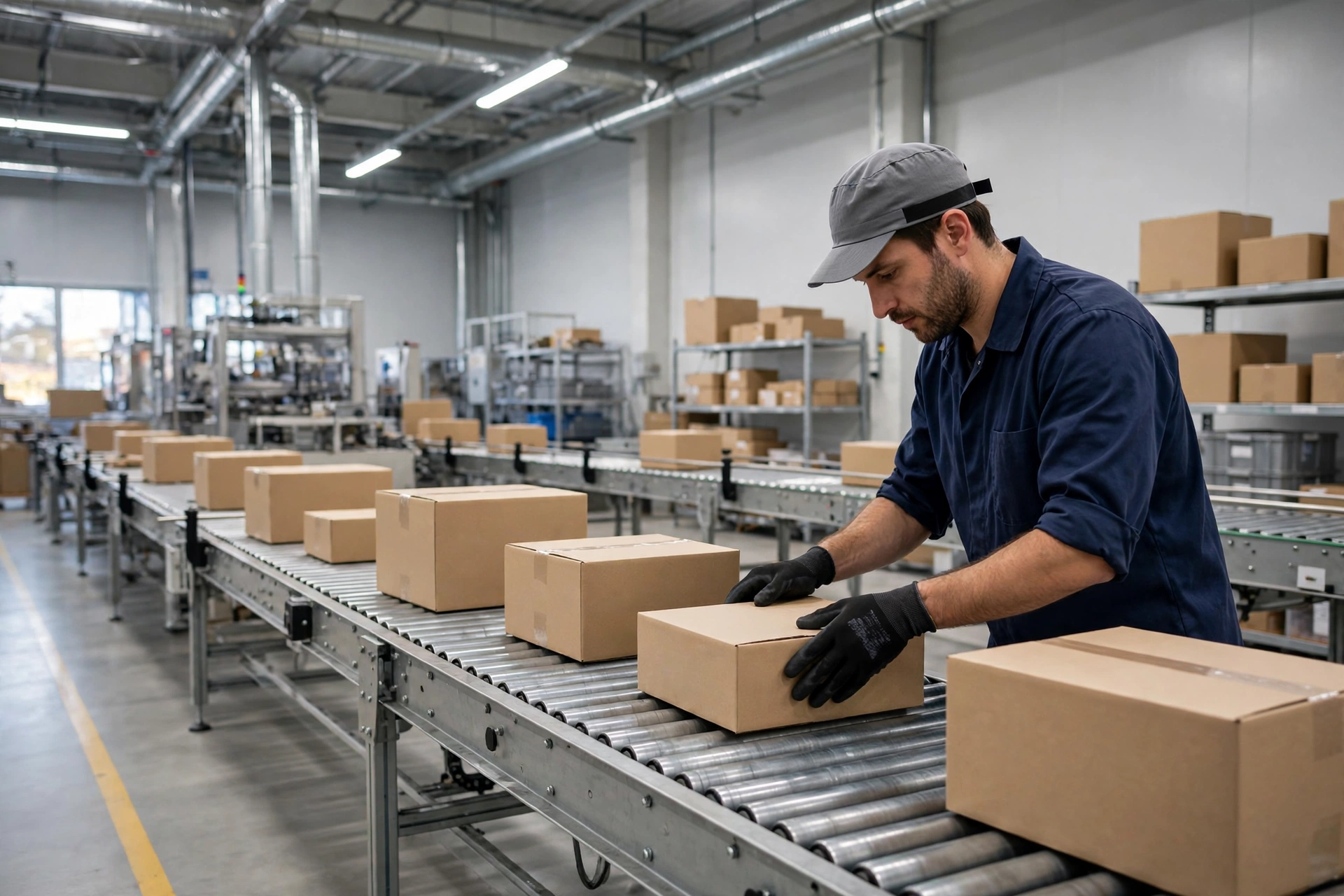
Warehousing is full of head-height steelwork: racking beams, mezzanine edges, conveyor frames, roller doors and the undersides of loading equipment. Order pickers, maintenance staff and supervisors walking the floor bump into these structures often enough that many distribution centers issue bump caps as standard for floor work.
The condition that makes this legitimate is control of the overhead risk. In a well-run warehouse, loads are stored securely, forklifts work in defined lanes, and nobody works beneath suspended or raised loads. Where that control exists and the risk assessment says the remaining hazard is walking into fixed structures, a bump cap is a reasonable and widely used answer.
The moment the picture changes — work under racking being loaded from above, construction or racking installation going on overhead, maintenance on live storage systems — the assessment changes with it, and a hard hat becomes the right equipment. Many sites draw that line area by area, with signage at the door of each zone.
Where Else Are Bump Caps the Right Tool?
Food and drink production is a major user. Breweries, dairies and food factories have low pipework, tank fittings, valves and machine frames everywhere, and they favor bump caps for a second reason: a cap format fits hygiene rules, works with hair coverings, and does not look out of place in a production environment where hard hats can feel excessive for the actual risk.
Facilities and service work follows the same pattern. Pest control technicians in roof voids and crawl spaces, meter readers and inspectors moving through plant rooms and basements, plumbers and HVAC engineers under floors and around boiler equipment — all of them work head-first into tight spaces full of joists, pipes and brackets, with nobody dropping anything on them.
Aviation ground work is another classic case. Baggage handlers and cargo loaders work under fuselages and inside holds where the structure above is fixed, low and unforgiving, and several airlines and handling companies have long issued bump caps for exactly that geometry of risk.
What Features Matter When Choosing a Bump Cap for a Job?
Start with the insert. Bump caps use either a full inner shell or a lighter foam-and-plastic insert; the full shell gives better all-round coverage for the knocks, while lighter inserts suit work where heat and comfort are the bigger problem. Some models add side padding, which helps in the very tight spaces where heads turn as much as they rise.
Fit and retention decide whether the cap stays on when it matters. A cap that slips down over your eyes in a crawl space is a hazard of its own, so look for a secure adjustment and a shape that suits being worn for a full shift, including with glasses or ear defenders where the job needs them.
Ventilation, washable fabrics and hi-vis colors are worth weighing by environment. Food sites may need caps that can be laundered frequently; hot plants argue for vented designs; yards and loading bays argue for bright colors — even though a bump cap zone should not have vehicle strike risk, being visible is never a drawback.
Where Does the Bump Cap’s Job List End?
The list ends wherever the energy stops coming from your own movement. Falling objects, swinging loads, work at height, electrical hazards and construction activity all demand a certified hard hat, because those forces are an order of magnitude beyond a cap insert. Our companion article on when a bump cap is not enough protection walks through those limits in detail.
It also ends where rules say it ends. Even in a genuinely low-risk job, an employer’s assessment or a client’s site rules can require hard hats, and their word governs. Bump caps flourish where an assessment has honestly concluded the hazard is minor knocks only.
Judged that way, the bump cap deserves more respect than it gets. Other protective headwear solves the same wearing problem in different ways — cycling helmets use foam liners and, in some models, rotational protection systems, as our guide to what MIPS is in a helmet explains — but all of them, bump caps included, share one rule: wear the protection that matches the hazard you actually face, and wear it all the time you face it.
Frequently Asked Questions
Q: Are bump caps classed as PPE?
A: Yes, bump caps are sold and used as personal protective equipment for minor head knocks, and some are tested to a specific bump cap standard. They are simply rated for a much smaller hazard than a hard hat, which is a different and heavier class of PPE.
Q: Can delivery drivers and couriers use bump caps?
A: For the loading and vehicle checks where the hazard is low tail-lifts, door frames and racking, a bump cap can suit the risk. Where the work enters construction sites or areas with overhead activity, a hard hat will be required instead.
Q: Do bump caps come in hi-vis versions?
A: Yes, many models are made in bright colors with reflective details for yards, warehouses and ground crews. Visibility helps, but it does not extend the cap’s protection — the impact rating stays the same whatever the color.

Olivia
Writer at Helmet Today, covering helmet reviews, fit and riding safety.