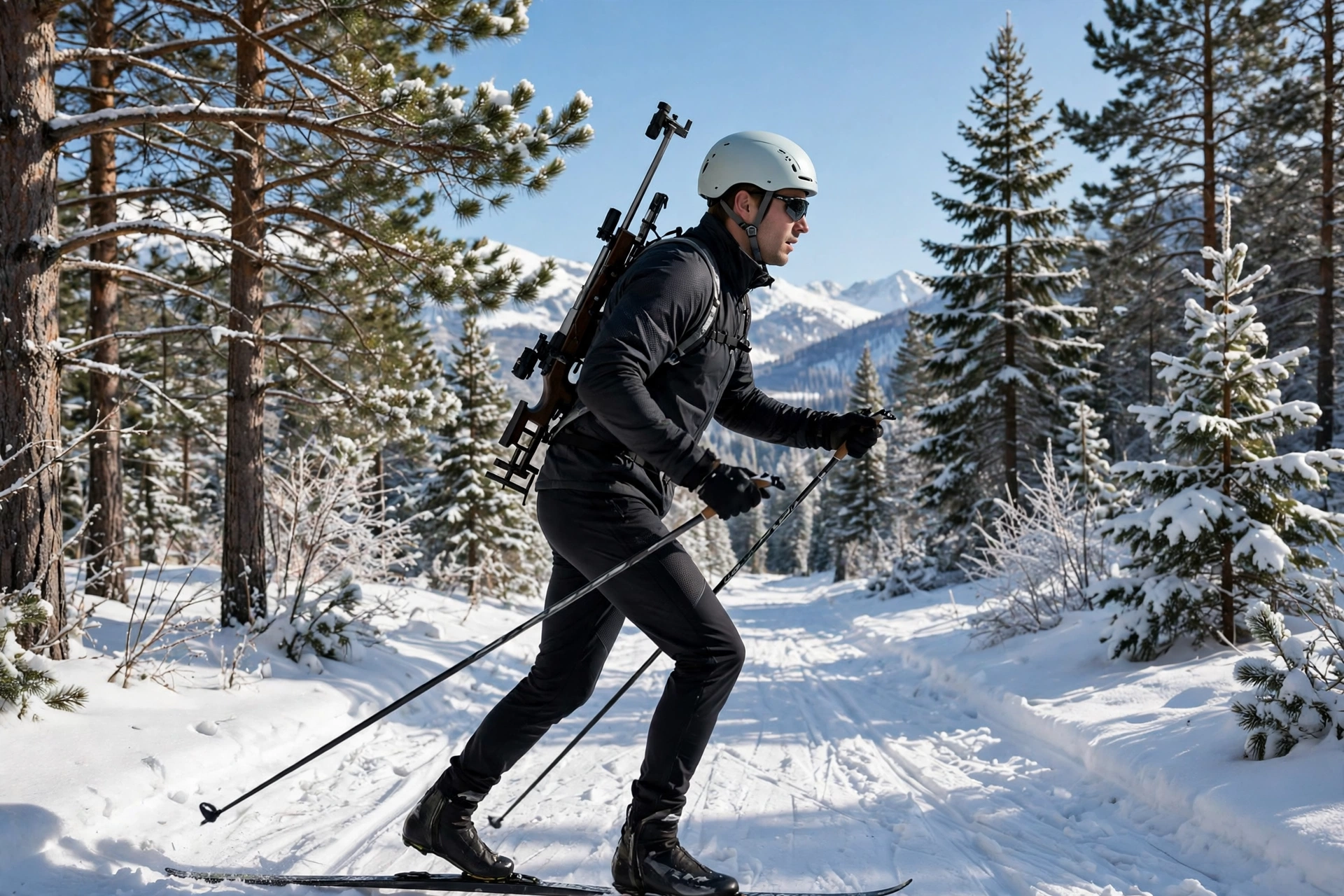
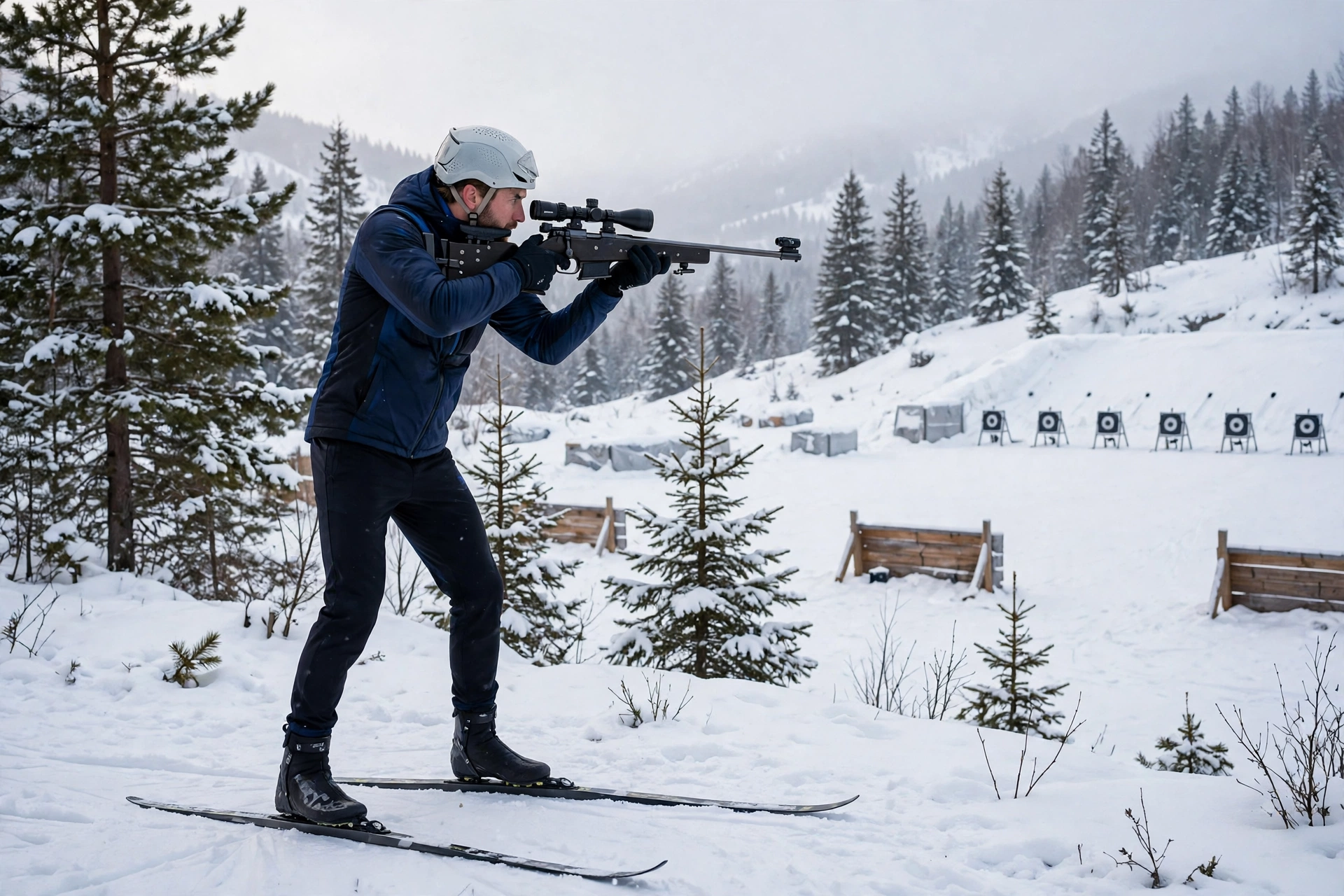
A helmet for biathlon is a light winter helmet worn to protect the head and keep it warm while skiing and shooting, and in general terms a well-fitting, insulated ski helmet with good ear coverage is what most biathletes look for. Biathlon combines cross-country skiing with rifle shooting, so the helmet has to work for fast skiing in the cold as well as for lying still and aiming at a target.
Biathlon is a winter sport in which athletes ski a course, stop at a shooting range, and fire at targets before skiing on. The skiing is fast and physical, the shooting needs a steady hand and a clear view, and the whole race takes place outdoors in snow and cold. A helmet will not stop a fall from happening, but it can reduce the force of a knock to the head if a skier comes off on a downhill stretch or catches an edge on the snow. In general terms, that is the main reason biathletes wear one, whether they are racing, training, or simply practising on a ski trail.
What is biathlon?
Biathlon is a winter sport that brings together two very different skills: cross-country skiing and rifle shooting. Athletes ski around a course, then arrive at a range where they shoot at a set of small targets, either lying down or standing up. A missed shot usually means a penalty, such as extra distance to ski, so accuracy matters as much as speed on the skis.
What kind of helmet do biathletes wear?
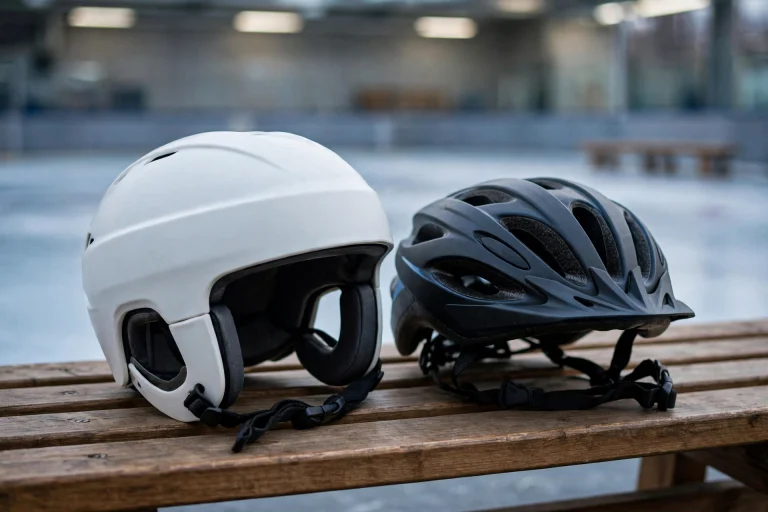
In general terms, biathletes wear a light ski helmet, often a cross-country style helmet with ear coverage and ventilation, rather than a heavy downhill helmet. Cross-country skiing is hard physical work, so a helmet that is too warm or too heavy can become uncomfortable over a long race. A light helmet with vents that can be opened or closed lets the skier manage warmth, while ear coverage helps protect against the cold and wind.
How should a helmet for biathlon fit?
A helmet for biathlon should sit level on the head, low enough at the front to cover the forehead, and snug all round without pressing painfully on the temples or the top of the head. It should not tip forward over the eyes or slide back when you nod, and it should stay in place when you shake your head gently from side to side. A helmet that moves around during a race is a distraction, and it may not be in the right place when a fall happens.
The chin strap should be snug enough that you can fit only a finger or two between the strap and your chin. Try the helmet on with the layers you will actually wear in the cold, such as a thin balaclava or a headband, and check the fit again with goggles or glasses in place. The helmet should not press the goggles down onto the nose or push them up onto the forehead. If the helmet has an adjustable fit system at the back, use it to fine-tune the fit, and check it again after a few minutes of skiing, because a helmet that feels fine while standing still can feel different once you are warm and moving.
What features matter in a helmet for biathlon?
Warmth matters, because biathlon takes place outdoors in winter, often in wind and falling snow. A helmet with ear coverage and a warm lining helps keep the head and ears comfortable, and a windproof front can make a real difference on a cold downhill stretch. At the same time, ventilation matters, because cross-country skiing is hard work and a skier can overheat; vents that can be opened on a climb and closed on a fast descent give useful control over temperature.
Weight and comfort matter too. A light helmet is easier to wear for a long race, and a comfortable lining helps the helmet sit well without creating pressure points. Visibility is also worth thinking about: the helmet should leave a clear view in all directions, including down at the skis and across to the shooting range, without its edge blocking the line of sight. Some helmets include a system designed to reduce rotational forces in a fall, such as MIPS, and it is worth asking about when choosing a helmet. Finally, check that the helmet works with a rifle strap and a backpack or race bib, so that nothing pulls the helmet out of position during the race.
Do you need a different helmet for biathlon training and racing?
In general terms, most biathletes use the same helmet for training and racing, because the conditions and the demands are much the same. Training sessions can be longer and slower than a race, and they may take place in colder or rougher weather, but the helmet still needs to be light, warm, and secure. Some athletes keep a second helmet for very cold days, with a warmer lining or more ear coverage, while others simply add a thin layer underneath their usual helmet.
How do you look after a biathlon helmet?
After skiing, wipe the shell clean and let the helmet dry naturally, away from direct heat. Do not leave it in a hot car or next to a radiator, as heat can damage the materials inside over time. Snow and sweat can dampen the lining, so if the lining is removable, take it out and let it dry fully before putting it back, following the maker’s instructions for washing. The vents should be cleared of snow and ice, and the chin strap should be left to dry rather than packed away damp.
What is a helmet for biathlon?
A helmet for biathlon is a light winter ski helmet worn to protect the head and keep it warm while cross-country skiing and shooting in cold conditions.
Can you wear a normal ski helmet for biathlon?
In general terms, yes, a light cross-country ski helmet is a good choice. A heavy downhill helmet may feel too warm and too heavy for the skiing part of the race, so a lighter helmet with vents is often better.
When should a biathlon helmet be replaced?
Replace it after a hard fall, if the shell or lining is damaged, or if the strap and buckle are worn. A helmet that has protected you in a fall has done its job and should not be relied on again.

Olivia
Writer at Helmet Today, covering helmet reviews, fit and riding safety.