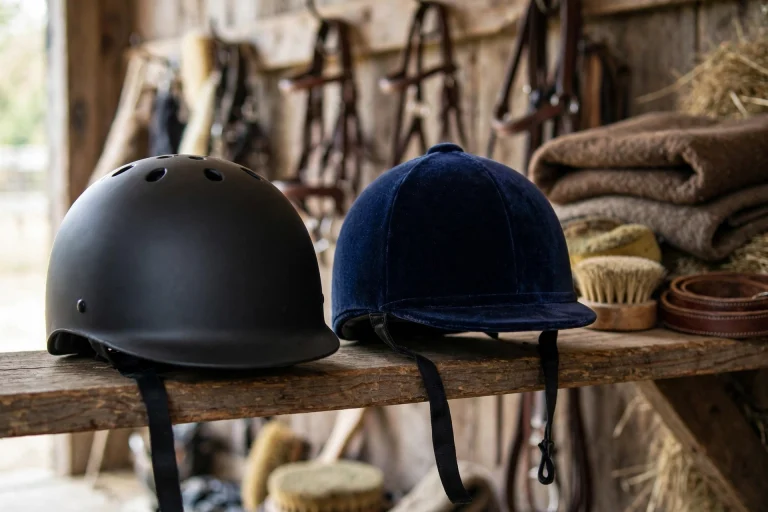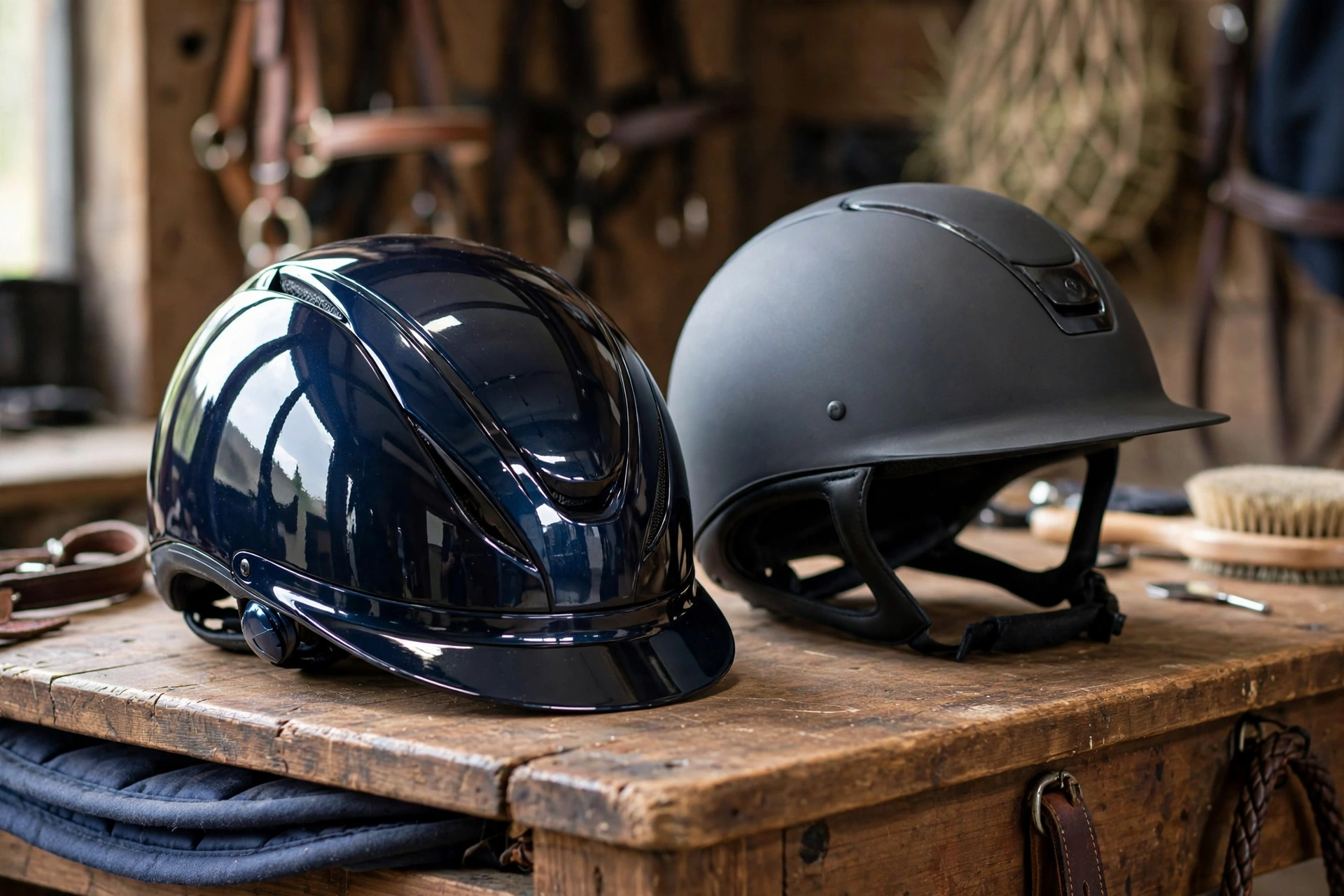
Not necessarily: an expensive riding helmet is not automatically safer than a budget one, because every certified helmet — at any price — has passed the same safety standard, and the standard does not rank them. What extra money usually buys is fit refinement, lighter weight, better ventilation, materials, finish, and sometimes added features — all worth having, but none of them a higher grade of basic protection. Buy the certified helmet that fits you best; let your budget decide the comforts, not the safety.
This guide explains what certification does and does not tell you, where the money actually goes, and how to spend a small budget wisely.
What Does Certification Guarantee at Any Price?
In North America, a riding helmet sold as ASTM/SEI certified has been tested against ASTM’s F1163 standard and certified by SEI; in Europe and Britain, helmets are certified against standards such as PAS 015 or VG1. These are pass-or-fail tests covering impact absorption, harness strength, and related requirements. A budget helmet carrying genuine certification has passed exactly the same tests as a premium helmet carrying the same marks.
That is the foundation everything else stands on, and it cuts both ways. It means a rider on a tight budget is not buying measurably “less safety” by choosing the inexpensive certified model. It also means a rider paying a premium is not buying a certified-superior level of protection — no such grade exists in the standards. Both helmets cleared the same bar.
The practical check follows: whatever the price, look inside for the label naming the standard and the certifying body. A cheap helmet with a genuine label is safety equipment; an expensive helmet without one — sold as fashion or “not for riding” — is not, however impressive the shell looks.
Where Does the Extra Money Actually Go?
Mostly into how the helmet feels across thousands of hours of wear. Premium helmets typically offer a lighter shell, more sophisticated ventilation with channels through the liner, finer fit systems with more adjustment, removable washable liners in better fabrics, and finishes — leather, matte coatings, subtle branding — that survive yard life looking smart. Fit ranges improve too: more shell sizes and shapes, so more riders get a truly exact fit rather than a padded approximation.
That last point is the one place money can touch safety indirectly. A helmet that fits your particular head shape perfectly protects as designed; a badly fitting premium helmet does not. If the expensive model happens to be the one that truly fits you, it is the safer purchase for you — because of the fit, not the price tag.
Extra money also buys features beyond the standard, most notably rotational-impact liners. Understanding what MIPS is for helmets helps here: those systems address twisting forces the baseline tests cover less directly, and they appear first — though not only — at higher price points. That is a genuine protective extra; it just is not what most of the price difference between any two helmets represents.
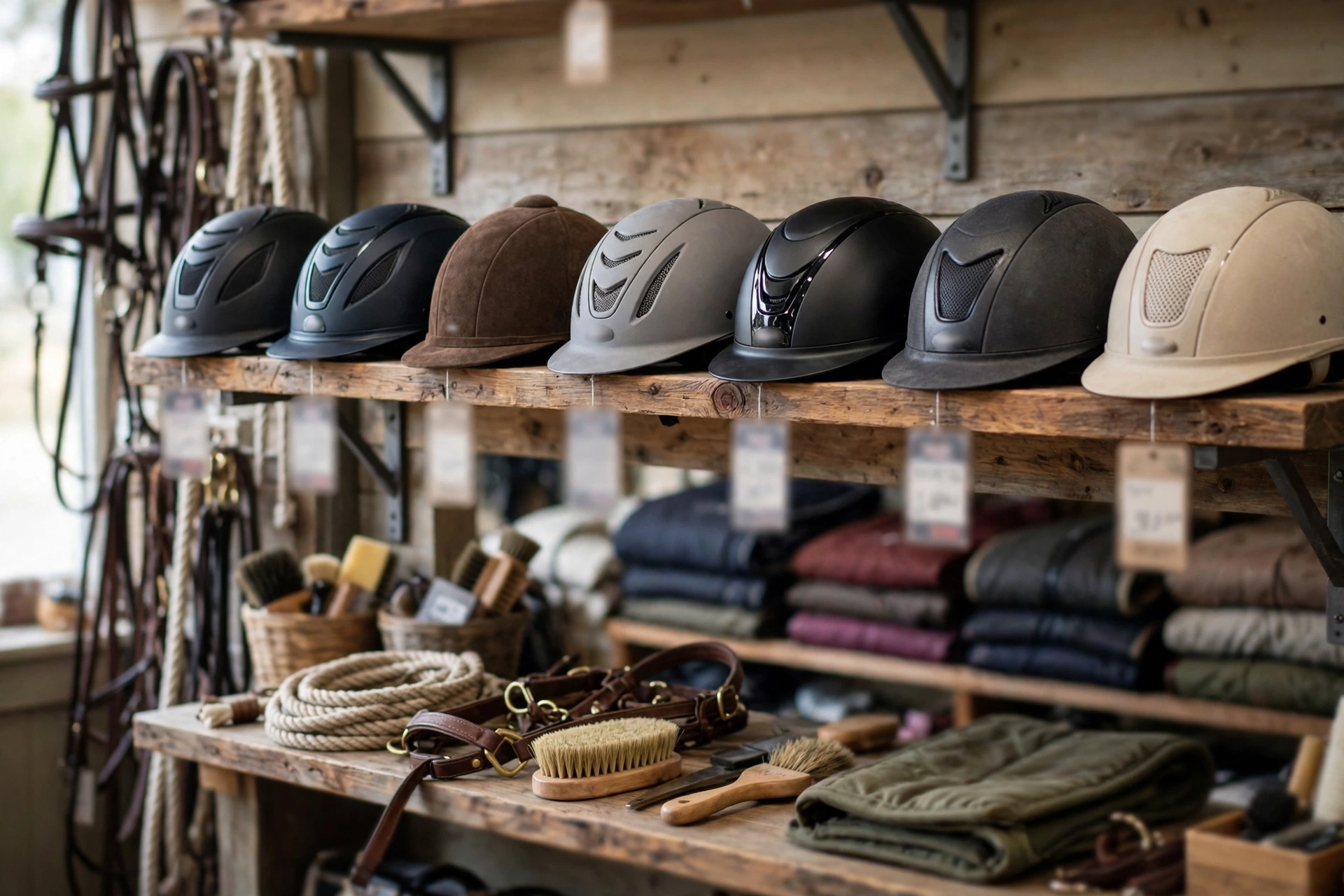
Do Expensive Helmets Last Longer?
Not in the ways that matter. The impact foam inside every riding helmet ages with heat, sweat, and knocks, and the replacement guidance is the same at every price: retire a helmet after roughly five years of use in general terms, and immediately after any fall or significant impact, because the foam may be compressed invisibly. A premium helmet’s nicer liner and shell finish may look fresher at year four, but its protective life is governed by the same foam ageing as a budget one.
There is one longevity point worth noting: a helmet you find comfortable gets worn, fastened, and cared for. Riders soldier on miserably in uncomfortable helmets, or quietly leave them off for “just a quick ride.” If a mid-range helmet’s comfort is what makes you wear it every single ride, that behavioural effect is worth more than any laboratory difference.
Second-hand is where price logic must stop entirely. A used premium helmet at a bargain price is a worse buy than a new budget certified helmet, because its fall history is unknown and its protection may already be spent. Helmets are one of the few products where new-and-cheap beats used-and-fancy.
How Should You Spend a Limited Helmet Budget?
Prioritise in this order: certification, then fit, then — with whatever remains — comfort features and extras. Try on several certified helmets across price points, in your size, with your riding hairstyle, and do the shake test on each. The best helmet for you is the one that sits level and snug with no pressure points; if that turns out to be the budget model, you have spent wisely, not cheaply.
Leave room in the budget for replacement. A rider who buys the mid-range helmet can afford to replace it promptly after a fall; a rider who stretched to the flagship may be tempted to keep wearing a crashed helmet “because it cost so much.” That temptation is a real, if unglamorous, safety factor — the replaceable helmet gets replaced.
And skip the false economies at the edges: never pay extra for an uncertified “designer” helmet, and never let a sale price talk you into the wrong size. A helmet’s job description has one line — be on your head, fitted, when you fall — and price is not in it.
So Which Should You Buy?
Buy the certified helmet that fits you best and that you will happily wear every ride. If two fit equally well, the more expensive one may well be the nicer ownership experience — lighter on a long hack, cooler in summer, smarter at a show — and those are legitimate reasons to pay more. Just do not pay more believing the label inside promises more protection; it promises the same protection, delivered in a more refined package.
If your budget is small, take heart from how the system works: certification exists precisely so that a modestly priced helmet from a reputable maker is real safety equipment. Spend your care on fit and your discipline on wearing it fastened, and you have captured nearly all the safety there is to buy at any price.
The riders best protected in any yard are not the ones with the most expensive helmets. They are the ones whose certified helmets fit, are fastened, are in date — and are actually on their heads.
Frequently Asked Questions
Q: Is a cheap certified helmet really as safe as an expensive one?
A: In terms of the standard both had to pass, yes — certification is pass or fail, and a budget ASTM/SEI or PAS 015 helmet passed the same tests as a premium one. Expensive helmets add comfort, fit refinement, ventilation, and sometimes extras like rotational liners, but not a higher certified grade of protection.
Q: What is the minimum I should spend on a riding helmet?
A: There is no meaningful price floor — there is a certification floor. Buy the least expensive helmet that is genuinely certified, from a reputable seller, and fits you properly. Avoid unbranded helmets with no named standard on the label, however cheap, and avoid second-hand helmets at any price.
Q: Does MIPS make an expensive helmet worth the extra?
A: It can — a rotational liner is a real feature aimed at a real injury mechanism, and if the MIPS model fits you and the premium is manageable, it is a sensible upgrade. But it ranks behind certification and fit: a well-fitting certified helmet without MIPS beats a poorly fitting one with it.

Olivia
Writer at Helmet Today, covering helmet reviews, fit and riding safety.