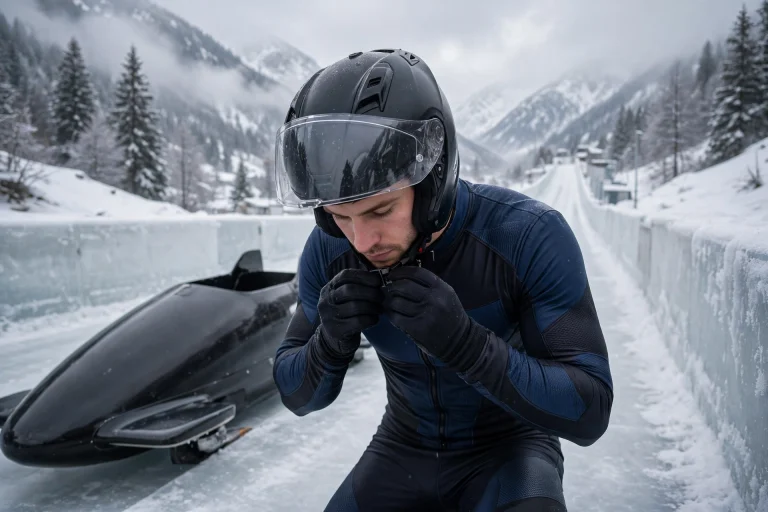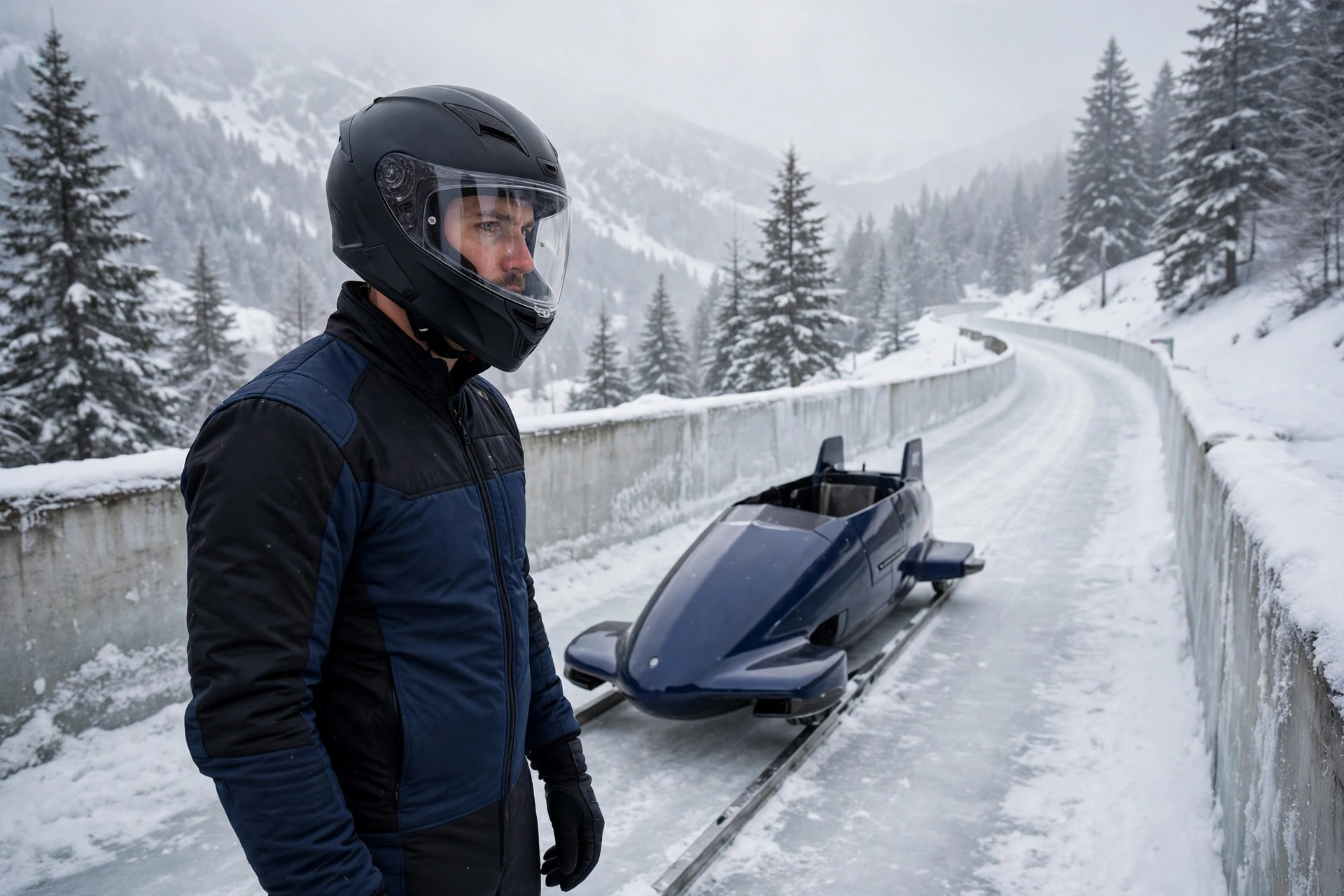
Yes, bobsledders wear helmets — every athlete on the sled wears one for every run, from the first training slide to race day. A bobsled helmet is a full face helmet with a visor, designed to protect the head at the very high speeds a bobsled reaches on an ice track. It is not optional kit: it is part of the standard equipment for the sport, alongside the sled itself.
Bobsled is one of the fastest sliding sports in the world. A four-person sled can travel at speeds that would feel alarming in a car, let alone while lying or sitting inches from the ice. This guide explains what kind of helmet bobsledders wear, why it looks the way it does, and what makes it different from other winter helmets.
What Kind of Helmet Do Bobsledders Wear?
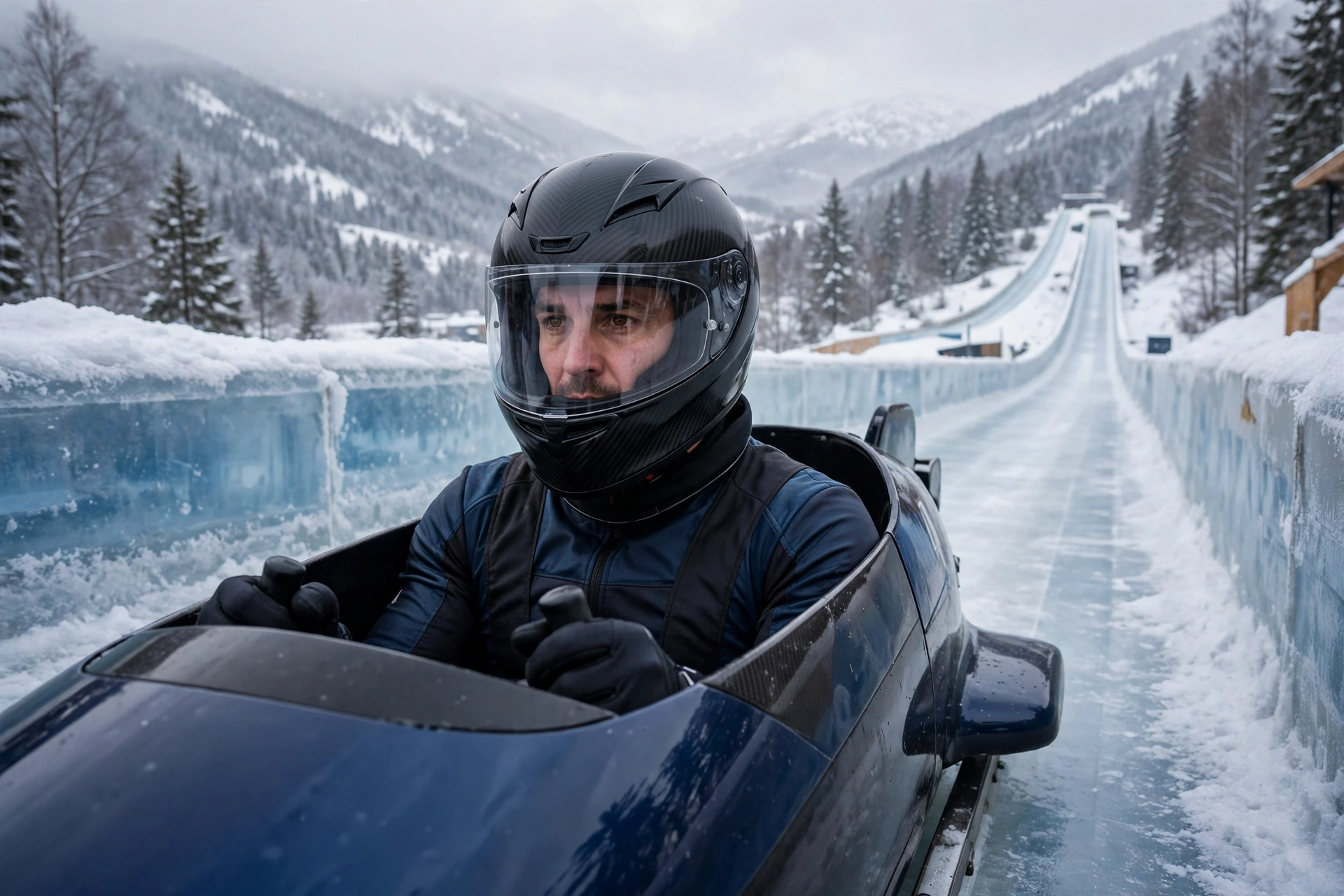
Bobsledders wear full face helmets made for sliding sports. The helmet covers the whole head, including the chin and jaw, and has a clear visor that sits in front of the eyes. The shell is hard and smooth, which helps the helmet slide rather than catch if it ever touches the ice. Inside, padding holds the helmet snug so it stays in place through the bumps and vibration of a run.
The design is closely related to the helmets used in skeleton, another sliding sport on the same ice tracks. In fact, many sliding helmets are made to suit both sports. The key features are the same: full face coverage, a visor, a snug fit, and a smooth outer shell. A ski helmet or bike helmet is not a substitute, because those helmets are built for different kinds of impact and different conditions.
Why Does a Bobsled Helmet Have a Visor?
The visor on a bobsled helmet does several jobs at once. First, it shields the rider’s eyes from the wind at high speed. At the speeds a bobsled reaches, bare eyes would water constantly, and that would make it hard to see the track ahead. Second, it keeps out ice crystals, spray, and cold air kicked up by the sled.
Third, the visor helps with aerodynamics. A smooth visor presents a clean surface to the airflow, which matters in a sport where small differences in drag can affect times. In general terms, the visor is shaped to sit close to the face so it does not create extra drag, while still giving a wide field of view so the driver can see the curves of the track.
Visors also come in different tints. A clear visor suits dull days and indoor tracks, while a tinted visor can cut glare on bright, sunny days. Riders choose the tint that gives them the clearest view of the ice, because reading the track correctly is part of driving the sled well.
Do All Four Crew Members Wear Helmets?
Yes, all four crew members wear helmets: the driver, who steers from the front, and the three push athletes behind. During the push start, the crew run alongside the sled and then load in, one by one. Each of them wears a helmet from the moment they step onto the track.
The driver is the one who needs to see the track, but the other crew members need protection too. Once the sled is moving at full speed, everyone on board is travelling at the same speed, and a crash or a hard bump affects the whole crew. The brakeman, who sits at the back and pulls the brake at the end of the run, also needs a helmet, even though they do not steer.
In two-person bobsled, the same rule applies: both the driver and the brakeman wear helmets. There is no seat on a bobsled where a helmet is unnecessary, because the whole crew shares the same run and the same risks.
How Does a Bobsled Helmet Differ from a Ski Helmet?
A bobsled helmet and a ski helmet may look similar at a glance, but they are built for different jobs. A bobsled helmet is a full face design with a fixed visor, while most ski helmets are open face with separate goggles. The full face coverage matters in bobsled because the rider’s head is much closer to the ice, and the speeds are higher.
The shells are different too. A bobsled helmet has a smooth, hard outer shell that is designed to slide on ice, while a ski helmet is designed around falls onto snow, where the surface gives way more. The fit is also tighter on a sliding helmet: it must not shift at speed or under the forces of a run, whereas a ski helmet allows a little more room for comfort and ventilation on long days.
If you are learning about how helmets handle different kinds of impact, reading about what MIPS is for helmets can help you understand one of the technologies used in modern helmet design.
What Should You Look for in a Bobsled Helmet?
Fit comes first. A bobsled helmet should sit level, feel snug all round, and stay put when you shake your head. It should not press hard on your forehead or temples, and the visor should sit comfortably in front of your eyes without fogging up too quickly. Because the helmet is worn for short, intense runs rather than all day, a firm fit matters more than plush comfort.
Next, check the visor. It should be clear, scratch-free, and easy to see through in the conditions you will slide in. Some helmets allow the visor to be swapped for a different tint, which is useful if you slide in changing light. Also check the strap: it should fasten securely under the chin and hold the helmet firmly in place.
Finally, make sure the helmet meets the standard required by the track or competition you are entering. Different organisations may have their own rules, so check before you buy. A helmet that meets the right standard, fits well, and gives a clear view is the right starting point for the sport.
Frequently Asked Questions
Q: Do bobsledders wear helmets during the push start?
A: Yes. Helmets are worn from the moment the crew step onto the track, including during the running push start, not just once the sled is moving.
Q: Can a bobsledder use a motorcycle helmet instead?
A: In general terms, no. Motorcycle helmets are built for road use and are heavier and shaped differently. A sliding helmet is designed for the speeds, positions, and ice-track conditions of bobsled.
Q: Do bobsled helmets have to be replaced after a crash?
A: In general terms, yes — a helmet that has taken a hard impact should be checked and usually replaced, even if the damage is not visible on the outside. The liner inside can be damaged in ways you cannot see.

Olivia
Writer at Helmet Today, covering helmet reviews, fit and riding safety.