Yes, in general terms, most amateur boxers still wear headguards in competition — but the rules depend on the level of the bout, the age of the boxer, and the governing body running the event. Women, youth boxers, and most club-level and regional bouts still require headguards. At the very top of the sport, elite senior men have boxed without headguards in international competition in recent years, which is where much of the confusion comes from.
If you are starting out in amateur boxing, or you are a parent of a young boxer, the short answer is simple: expect to wear a headguard. This guide explains who has to wear one, who does not, how the rules have changed, and what kind of headguard is used in amateur competition.
Why Do Amateur Boxers Wear Headguards?
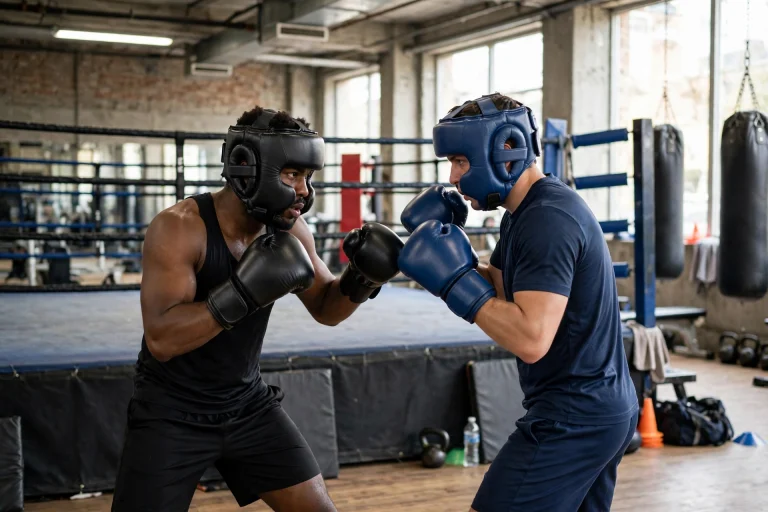
Amateur boxing uses headguards to reduce the risk of cuts, bruises, and swelling around the head. A padded headguard covers the forehead, temples, cheeks, and the back of the head, and it spreads the force of a punch across a wider area. That does not make a punch harmless, but it does lower the chance of a bout being stopped because of a cut or a swollen eye.
There is also a practical reason: amateur bouts are short, often three rounds, and they are scored on clean, landed punches. A headguard keeps the action going by cutting down on stoppages for minor facial injuries. Coaches and officials generally see headguards as a way to keep the sport accessible — a boxer is more likely to keep training if every hard sparring session does not leave them with a split eyebrow.
It is worth being honest about what a headguard cannot do. It does not prevent concussion, and it does not make the head immune to the force of a punch. The padding absorbs some impact, but the head still moves when it is hit. Headguards are one layer of protection, alongside good coaching, sensible matchmaking, and a referee who stops a bout when a boxer is in trouble.
Which Amateur Boxers Still Have to Wear a Headguard?
In general terms, the boxers who must wear a headguard in competition are women at all levels, youth and junior boxers, and men competing at club, regional, and most national levels below the elite tier. If you box at a local club show or a regional championship, you will almost certainly be wearing a headguard when you step through the ropes.
The main exception is elite senior men competing under the rules of the international governing body. At that level, the headguard was removed for senior men in international competition, so Olympic and world championship bouts at the top tier are now fought bareheaded. Even so, many national federations still require headguards for senior men in their own domestic competitions, so a boxer can find the rule changes depending on the event.
Age matters too. Junior and youth categories are treated more cautiously, and headguards remain compulsory for young boxers. If you are unsure which rules apply to your bout, the simplest step is to ask your coach or check the competition entry information before the event. Turning up with the wrong equipment is a problem you do not want on fight day.
How Have the Rules Changed in Recent Years?
For many years, every amateur boxer wore a headguard in competition — it was one of the clearest differences between amateur and professional boxing. Then the international governing body decided to remove headguards for elite senior men, arguing that the change would reduce the number of stoppages caused by head clashes and improve visibility for the boxers.
The change was controversial. Some people in the sport welcomed it, saying that bareheaded boxers could see punches coming more clearly and move their heads more freely. Others worried that removing headguards would increase cuts and facial injuries, and that the change sent the wrong message about safety to young boxers watching the sport.
What has not changed is the position for everyone else. Women, juniors, and the great majority of amateur boxers still compete with headguards, and there has been no general move to remove them at those levels. In practice, the top-tier exception affects a small number of elite boxers, while the everyday amateur experience — club shows, school competitions, regional championships — still includes a headguard.
What Kind of Headguard Is Used in Amateur Competition?
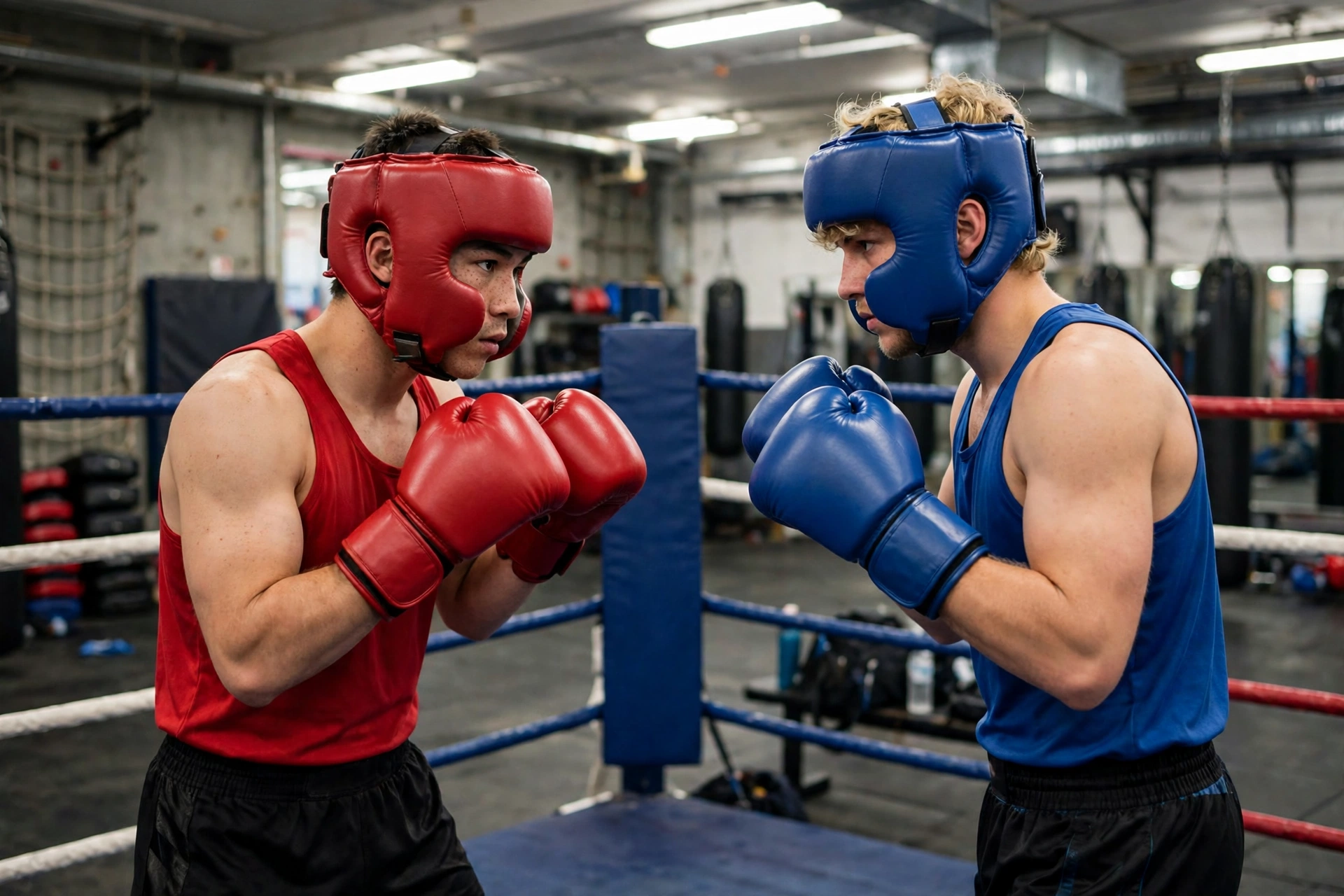
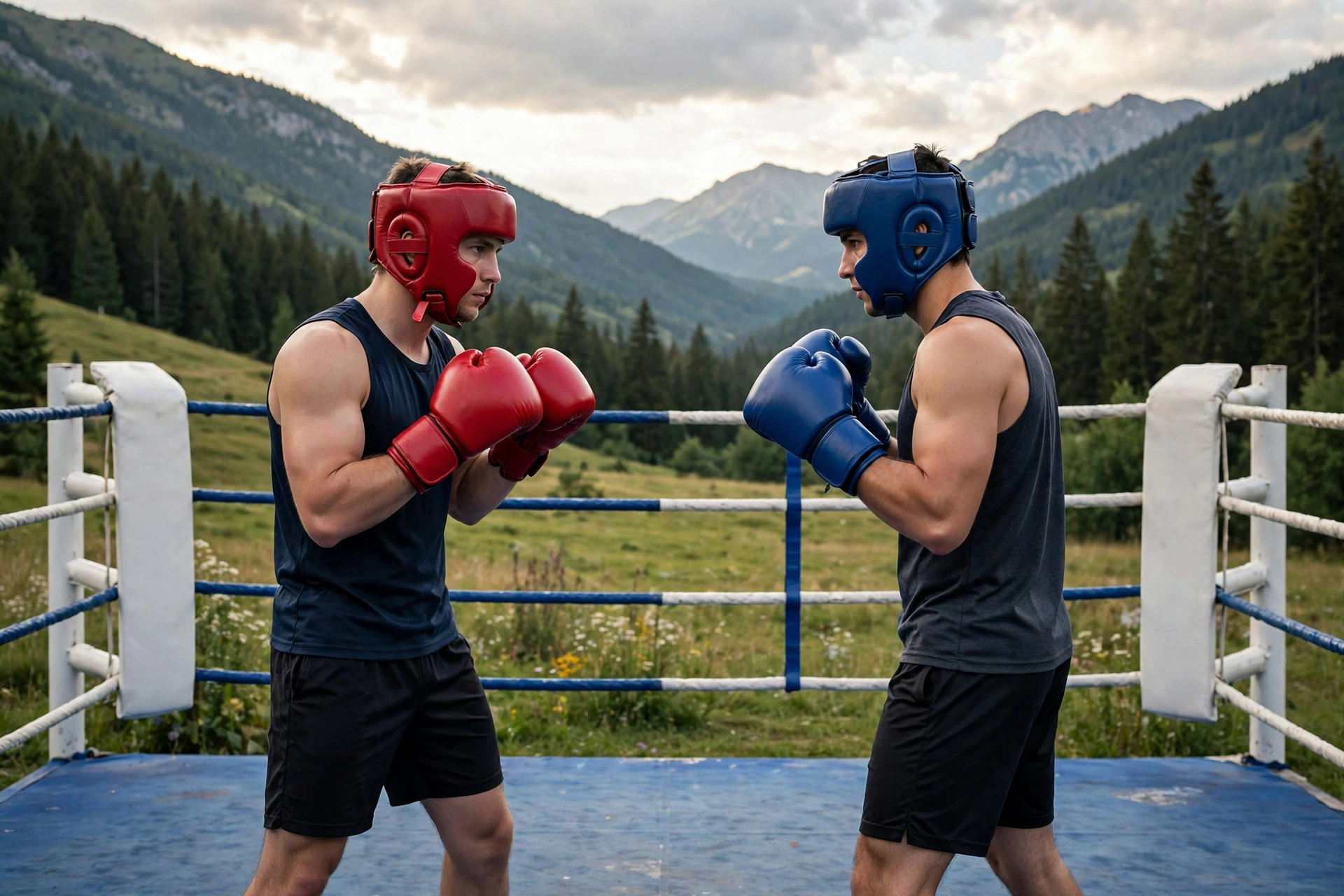
Competition headguards are not the same as the ones you might buy for casual training. At sanctioned events, boxers usually wear a headguard approved by the governing body, and in some competitions the headguards are supplied by the event organiser, with one boxer wearing red and the other blue to match their corner. This keeps the equipment standard across both boxers and avoids any advantage from a personal headguard.
An amateur competition headguard is typically an open-face design, which leaves the face visible so judges can see scoring punches clearly. It covers the forehead, the sides of the head, the ears, and the back of the head, with padding that is firm but not so thick that it changes the size of the target. The chin strap keeps it in place, and the fit should be snug enough that it does not shift when the boxer moves.
For training, boxers often use a different headguard — sometimes a fuller model with more cheek protection, since sparring involves more rounds and more contact than a short competition bout. If you are learning about helmet technology, reading about what MIPS is for helmets can help you understand one of the safety features you may see listed on protective headgear.
Do Headguards Actually Make Boxing Safer?
The honest answer is that headguards help with some risks and not with others. They are good at reducing cuts, bruising, and swelling, and they can soften the kind of glancing blows that open up the skin. That is a real benefit, especially in a sport where a cut can end a bout early and keep a boxer out of training while it heals.
Where the evidence is less clear is concussion. A padded headguard does not stop the brain moving inside the skull when the head is struck, so it cannot be treated as a guarantee against head injury. Some researchers have even suggested that a bigger, padded target can change how boxers fight, although that is a debated point rather than a settled fact.
The sensible way to think about it is that a headguard is one part of a wider safety system. Good coaching, matched opponents, well-run sparring, and a referee who acts quickly all matter at least as much. A headguard on a boxer who is badly matched or overtrained does not make the bout safe on its own.
Frequently Asked Questions
Q: Do amateur boxers still wear headguards in competition?
A: In general terms, yes. Women, youth boxers, and most men below elite level still wear headguards. The exception is elite senior men at top international events, where headguards have been removed.
Q: Do Olympic boxers wear headguards?
A: It depends on the category. Elite senior men box without headguards at the top international level, while women and youth categories still wear them. The rules can vary by event, so check the competition regulations.
Q: Can I wear my own headguard in an amateur bout?
A: In general terms, many competitions supply approved headguards in red and blue, and boxers must use the one provided. For training you can use your own, but always check the event rules before competition day.

Olivia
Writer at Helmet Today, covering helmet reviews, fit and riding safety.