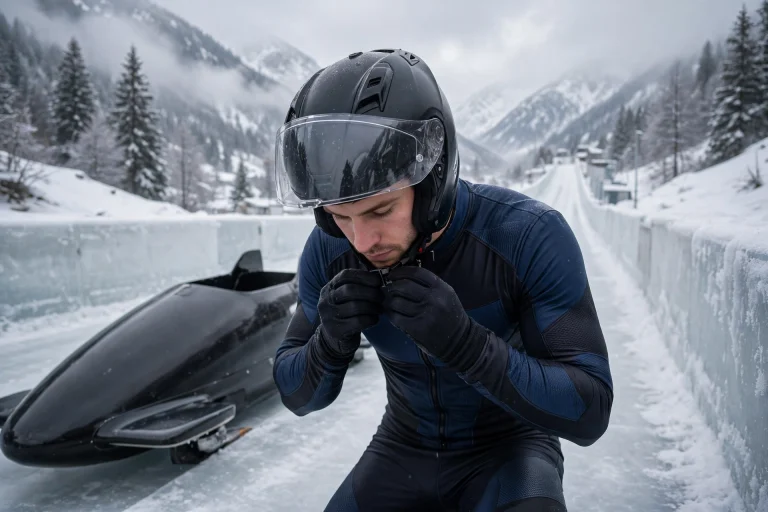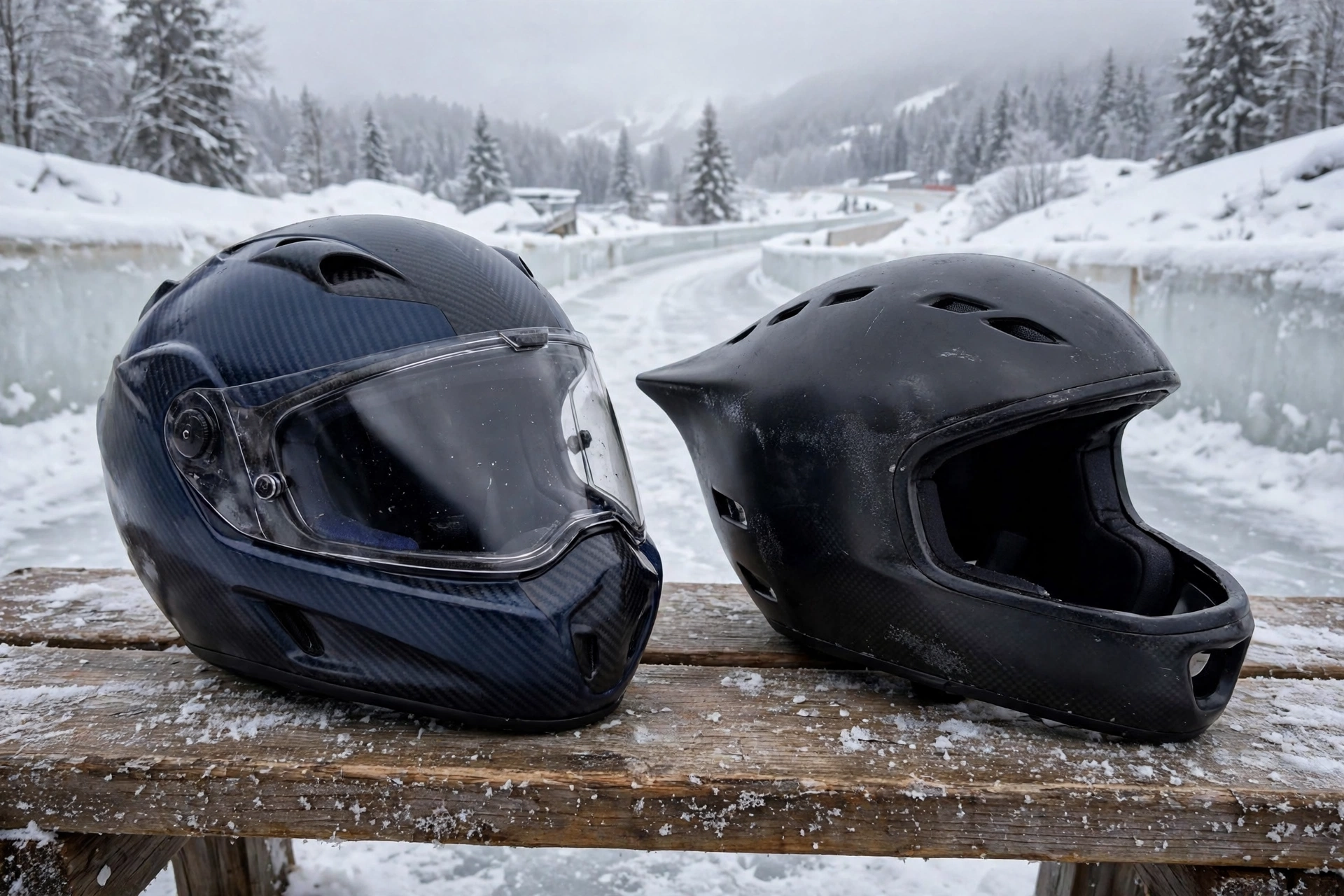
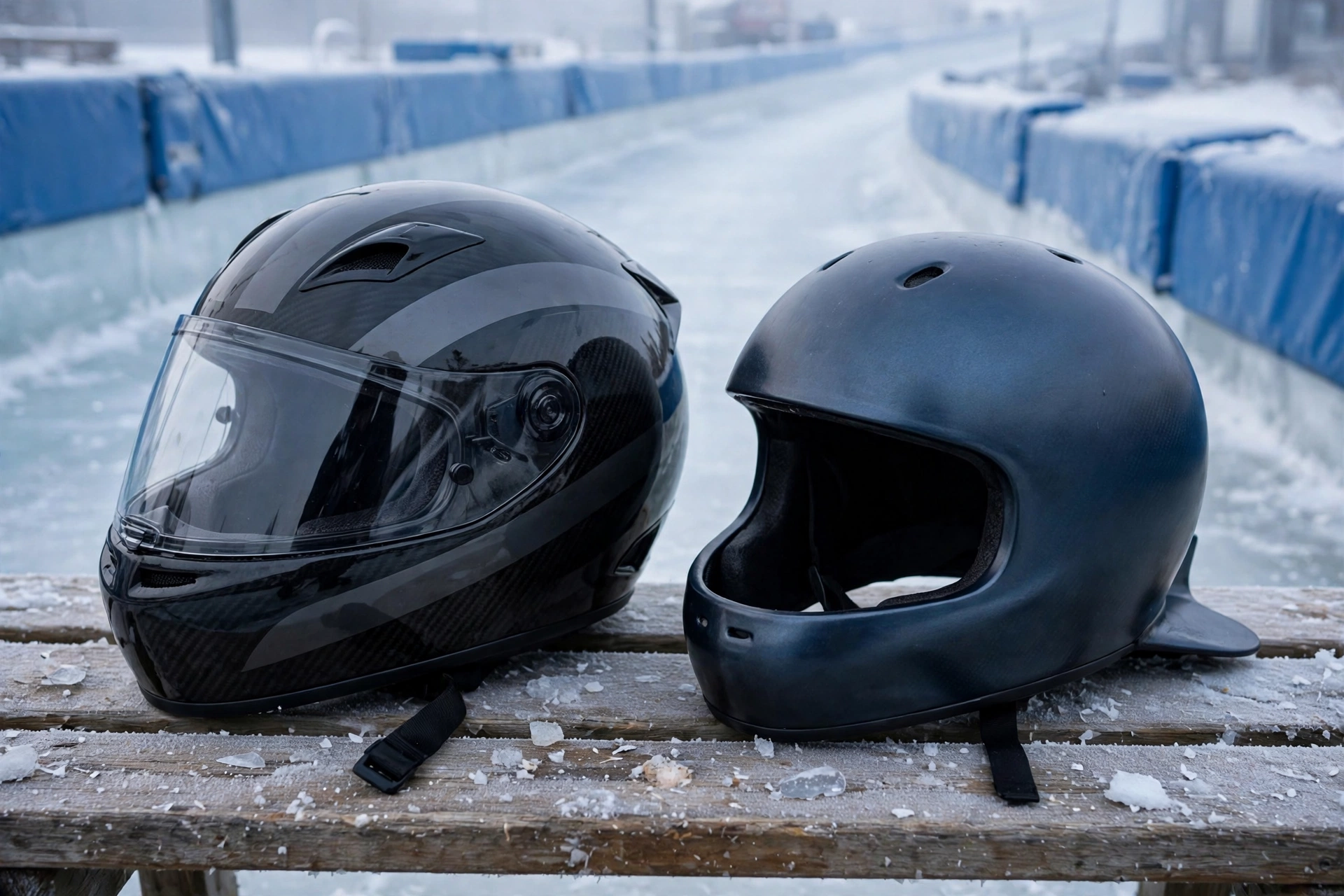
A bobsled helmet and a skeleton helmet are very similar, but they are not identical: the main differences are in the visor shape, the fit around the chin, and the riding position each sport demands. Both are full face sliding helmets worn on the same ice tracks, and in practice many helmets are sold for both sports. But the details of each design reflect how the athlete uses it — a bobsledder sits upright and steers, while a skeleton slider lies face down, head first, inches from the ice.
If you are choosing a helmet for one of these sports, the differences are worth understanding. This guide compares the two helmets side by side, so you can see what matters and what is mostly shared design.
What Do the Two Helmets Have in Common?
Both helmets share the same basic job: protect the head of an athlete sliding down an ice track at high speed. Both are full face designs with a hard, smooth outer shell, a clear visor, and snug padding inside. Both are built to slide on ice rather than catch, and both must stay firmly in place under the vibration and forces of a run.
They also share the same safety logic. The full face coverage protects the jaw and chin, which are exposed in an open-face helmet. The visor protects the eyes from wind, ice spray, and cold air at speed. And the snug fit means the helmet does not shift when the athlete is thrown around by the bumps of the track. In general terms, if you put the two helmets side by side without knowing which was which, you would struggle to tell them apart at first glance.
How Does the Visor Differ?
The visor is where the differences start to show. A skeleton helmet’s visor is shaped for a head-down, face-forward position. The slider lies flat on the sled with their chin just above the ice, looking ahead and slightly down the track. The visor needs to give a clear view in that low position, and it often curves to follow the shape of the helmet closely so it does not catch the wind.
A bobsled helmet’s visor is shaped for a seated, more upright position. The driver sits at the front of the sled and looks forward and around the curves of the track. The visor may sit a little higher and give a wider field of view to the sides, because steering needs the driver to read the track ahead and judge the entry to each curve.
In practice, many modern sliding helmets use a visor shape that works for both positions, and riders in either sport may use the same model. But when a helmet is designed mainly for one sport, the visor reflects that sport’s head position.
Does the Riding Position Change the Fit?
Yes, the riding position changes what a good fit feels like. A skeleton slider lies face down with their head low, so the helmet must feel comfortable and stable in that position, with the chin area supported and the visor sitting naturally in the line of sight. If the helmet tilts or the padding presses unevenly when the head is low, it becomes a distraction during a run.
A bobsledder sits upright, so the helmet must feel right in a seated position, with the head held level and the neck free to turn slightly for steering. The chin bar should sit close without pressing, and the helmet should not push the head forward. Because the bobsled crew also run during the push start, the helmet must stay stable while running as well as while sliding.
These differences are small, but they matter at the level of comfort and control. A helmet that fits well in one position may feel slightly off in the other, which is why athletes usually try a helmet in their sport’s position before committing to it.
Are the Safety Standards the Same?
In general terms, both helmets are made to the standards that govern sliding sports, and the requirements are very similar. Tracks and competitions set their own rules about which helmets are allowed, and a helmet that is accepted for bobsled is usually accepted for skeleton too, and vice versa. Always check the rules for the event or track you will use, because the final word belongs to the organiser.
One practical point is that standards for sliding helmets are not the same as standards for ski or bike helmets. A helmet built for another sport may look tough, but it has not been tested for the speeds and impacts of an ice track. If you are learning about helmet technology in general, reading about what MIPS is for helmets can help you understand one of the features found in modern helmets.
Which Helmet Should You Choose?
If you only do one of the two sports, choose a helmet designed for that sport and try it on in the right position. Sit in a bobsled position or lie in a skeleton position and check the view through the visor, the feel of the chin bar, and whether the helmet stays put when you move your head.
If you do both sports, a helmet sold for both is a sensible choice, and many sliding helmets are. Check that the visor gives you a clear view in both positions, and that the fit is snug and even in each. Pay attention to the strap, the padding, and whether the visor can be swapped for a different tint.
Whichever you choose, fit matters more than the label. A helmet that fits your head, suits your position, and gives you a clear view will serve you better than a helmet made for the other sport that does not fit as well.
Frequently Asked Questions
Q: Can I use a bobsled helmet for skeleton?
A: In general terms, yes — many sliding helmets are designed for both sports. Check the fit in the head-down skeleton position and confirm the helmet is allowed by your track or competition.
Q: Why do skeleton helmets look so low and flat?
A: The shape follows the riding position. A skeleton slider lies almost flat, head first, so the helmet is shaped to sit low and smooth, keeping drag down and the visor in the line of sight.
Q: Is one helmet safer than the other?
A: Not in general terms. Both are built for the same ice-track conditions and similar speeds. The safer choice is the one that fits you properly for the sport you actually do.

Olivia
Writer at Helmet Today, covering helmet reviews, fit and riding safety.