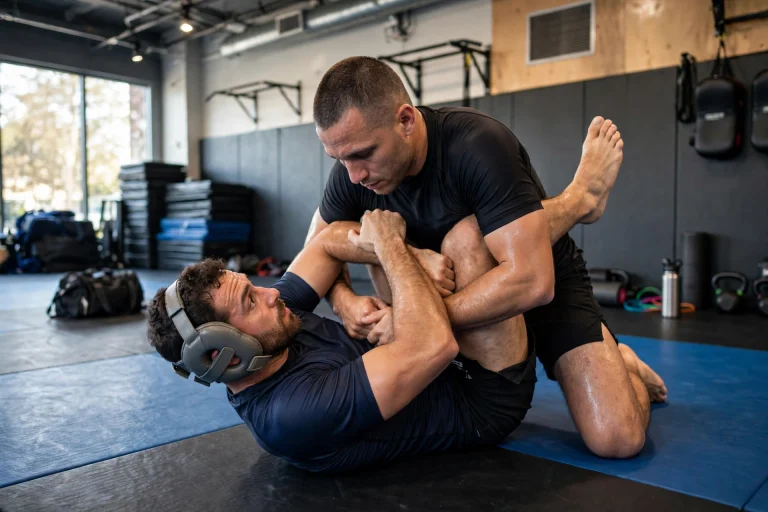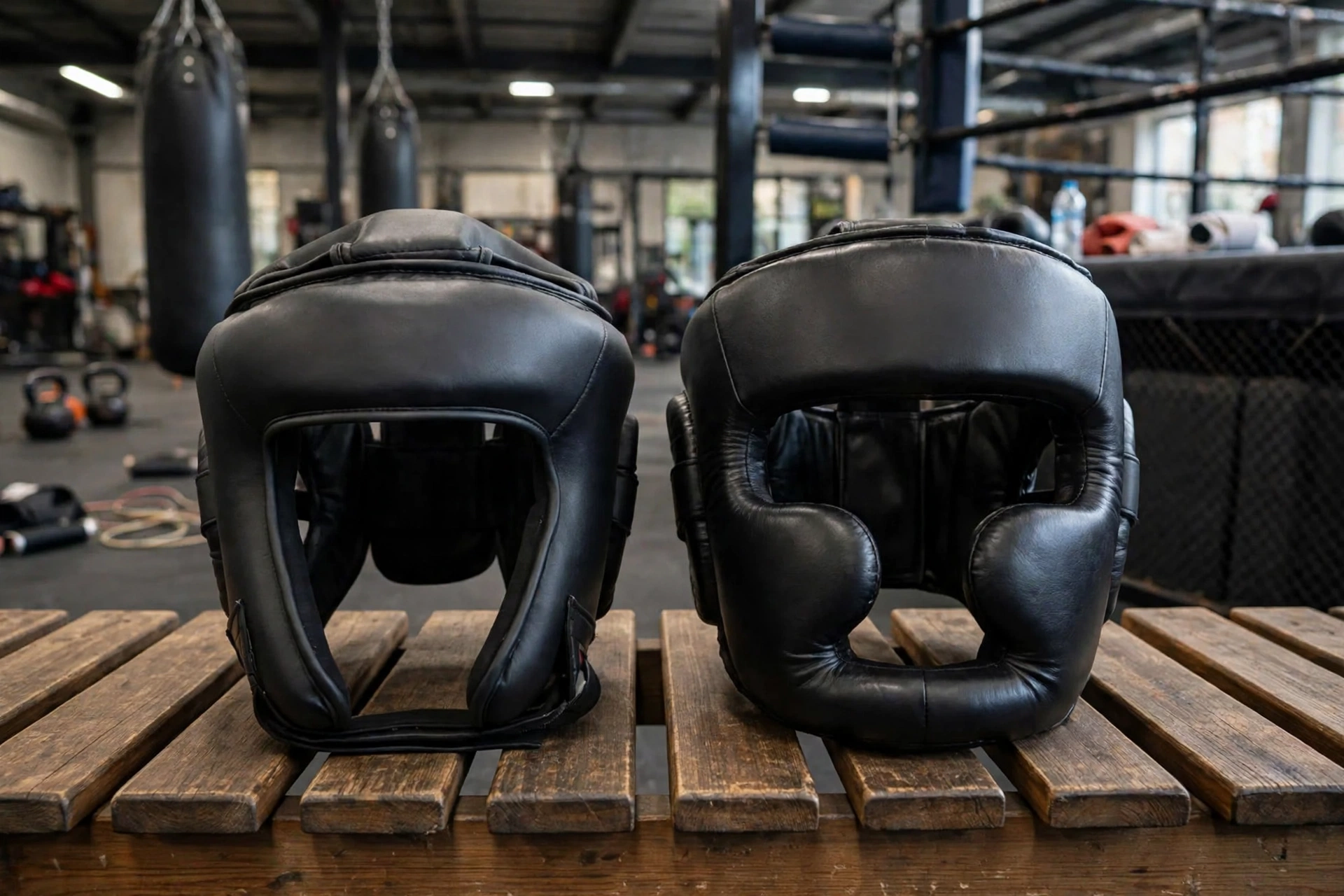
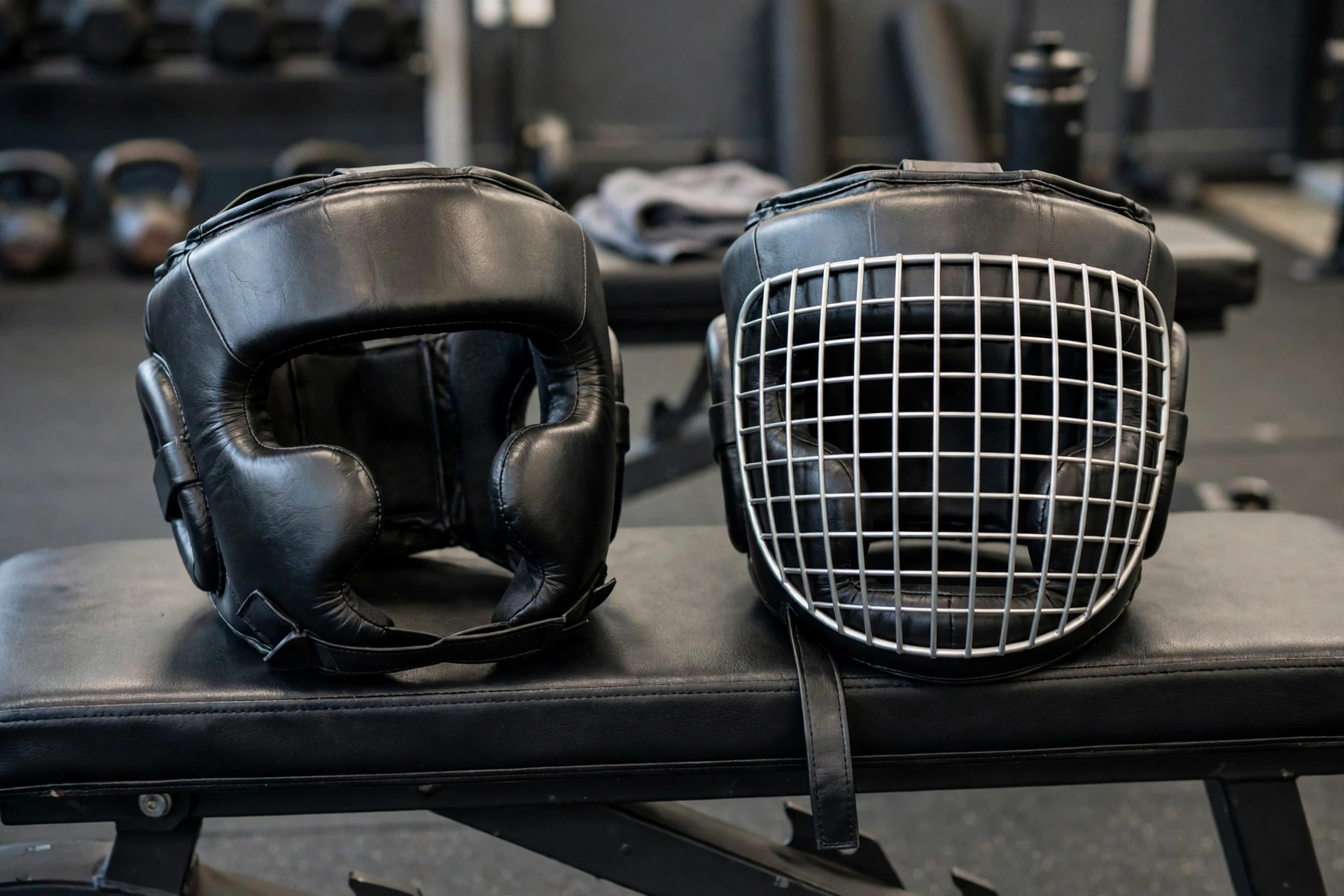
In general terms, an open face boxing headguard leaves your face exposed so you can see clearly and breathe freely, while a full face boxing headguard adds padded cheek bars across the face for extra protection. The open face style is the standard for amateur competition, while the full face style is more common in hard sparring and training, where protection matters more than visibility.
The choice between them comes down to what you are doing. A headguard that suits a competition bout may not suit a heavy sparring session, and vice versa. This guide explains how each style works, who it suits, and how to choose between them.
What Is an Open Face Boxing Headguard?
An open face headguard covers the top, sides, and back of the head, plus the ears, but leaves the face completely open. There is no padding across the cheeks or in front of the nose and mouth, so your whole face is visible. This is the style you will see in amateur competition, where judges need a clear view of the face to score clean punches.
The main advantage of an open face headguard is visibility. With nothing in front of your eyes or cheeks, your peripheral vision is as wide as it gets, and you can see punches coming from the side. Breathing is easier too, since nothing sits across your mouth or nose, which matters in a fast bout when you are breathing hard.
The trade-off is obvious: your face is unprotected. Your nose, mouth, and chin are fully exposed, so cuts and bruises to the face are more likely than with a fuller design. The headguard still protects your forehead, temples, and ears, but it does nothing for the parts of your face that take the most punches.
What Is a Full Face Boxing Headguard?
A full face headguard, sometimes called a face-saver or face-bar headguard, adds thick padded bars across the cheeks, in front of the nose and mouth. The bars sit a short distance from the face, so a punch lands on the padding rather than directly on the nose or cheekbone. The rest of the design is similar to an open face model, covering the top, sides, back, and ears.
The main advantage is protection. The cheek bars shield the nose, cheekbones, and jaw from direct impact, which makes this style popular for heavy sparring, where the aim is to train hard without picking up facial injuries. Boxers who are returning from a facial injury, or who have a fight coming up and cannot afford a cut, often choose a full face model for sparring.
The trade-offs are reduced visibility and harder breathing. The cheek bars narrow your peripheral vision, especially to the sides, and the padding in front of your mouth can make breathing feel more restricted. Some boxers also find that the bars make it harder to slip punches, since they cannot see as clearly. It is a style that protects more but asks you to give up some awareness.
Which Offers More Protection?
In general terms, a full face headguard offers more protection, simply because it covers more of the head. The cheek bars add a layer between a punch and your nose, cheekbones, and jaw — the areas where cuts and fractures are most common. For a boxer who takes a lot of punches in sparring, that extra coverage can mean fewer injuries and less time out of the gym.
That said, more coverage is not the whole story. A headguard only protects you if it fits properly and stays in place, and a full face model that is too loose can shift and block your vision, which is its own kind of danger. An open face headguard that fits well and lets you see punches coming may keep you safer in practice than a full face model that blinds you to the sides.
It is also worth remembering that no headguard prevents concussion. The padding in either style absorbs some impact, but the head still moves when it is hit. Choosing a full face model does not make sparring safe on its own — sensible sparring, matched partners, and good coaching matter just as much.
Which Should You Choose for Training and Sparring?
For most training, the answer depends on the intensity of the session. For light technical sparring and pad work, an open face headguard is usually enough, and its better visibility helps you work on defence and timing. For hard sparring, where punches land with real force, a full face headguard is the safer choice, since it protects the areas most likely to be injured.
Many boxers own both styles and switch between them. They wear an open face model for competition preparation and lighter sessions, and a full face model for heavy sparring weeks. That is a practical approach, and it is worth considering if you train regularly and can afford two headguards.
For competition, the choice is usually made for you. Amateur bouts require an open face style, so if you compete, you need to be comfortable fighting in one. That is another reason to train in an open face headguard sometimes, even if you prefer the full face model for sparring — you do not want competition day to be the first time you have fought with your face exposed.
How Do You Pick the Right Style for You?
Start by thinking about what you do most. If you compete, you need an open face headguard, and that should be your first purchase. If you mostly train and spar hard, and you want to avoid facial injuries, a full face model may suit you better. If you do both, owning one of each is the most flexible option.
Try both styles on before you buy, with your mouthguard in. Check how much you can see to each side, how easily you can breathe, and whether the headguard stays put when you move. The differences between the styles are easy to feel in a shop, and a few minutes of trying them on will tell you more than any description.
Also consider the fit and the quality of the padding, whatever style you choose. A well-made headguard with firm, even padding and a secure strap will serve you better than a cheap one in either style. If you are comparing models and want to understand the safety features listed on the box, reading about what MIPS is for helmets can help you make sense of the technology terms.
Frequently Asked Questions
Q: What is the difference between an open face and a full face boxing headguard?
A: An open face headguard leaves your face exposed for maximum visibility, while a full face headguard adds padded cheek bars across the face for extra protection. Open face is the standard for amateur competition.
Q: Is a full face headguard better for sparring?
A: In general terms, yes. The cheek bars protect the nose, cheekbones, and jaw, which makes a full face headguard a good choice for hard sparring when you want to avoid facial injuries.
Q: Can I use a full face headguard in competition?
A: In general terms, no. Amateur competition requires an open face style so judges can see scoring punches clearly. Always check the rules of your event, but expect to compete in an open face headguard.

Olivia
Writer at Helmet Today, covering helmet reviews, fit and riding safety.