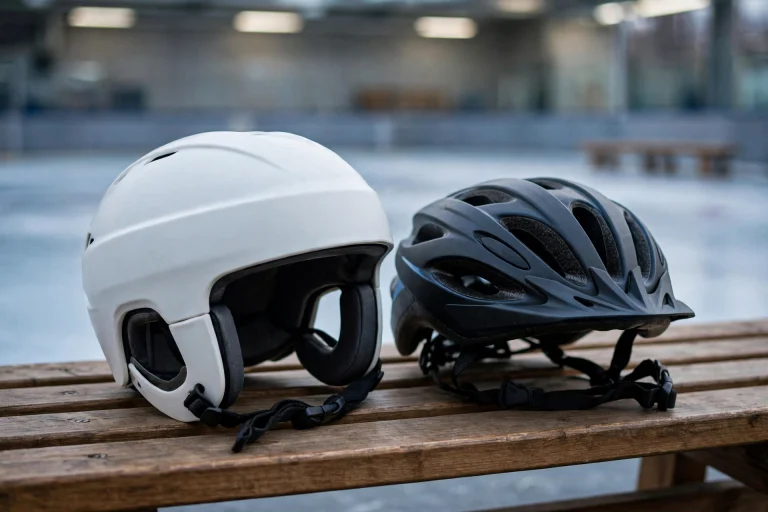
A luge helmet is different from other winter helmets because it is built for an athlete lying on their back, feet first, sliding down an ice track at very high speed. It is a full face helmet with a visor, but its shape, fit, and field of view are all shaped by that unusual position. No ski helmet or snowboard helmet is designed for it, and the differences show up as soon as you put one on.
Luge is one of the fastest sports on ice, and the rider’s head sits just above the track surface for the whole run. This guide explains what makes a luge helmet different, from the shape of the shell to the way the visor works when you are lying flat.
What Does a Luge Helmet Look Like?
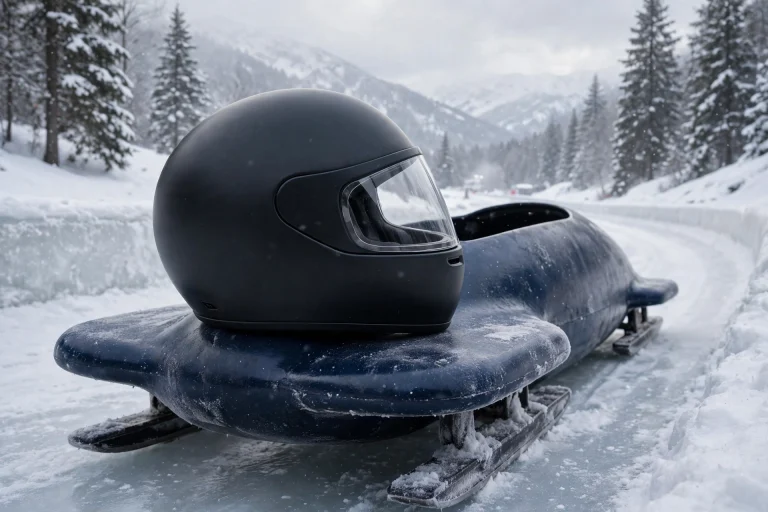
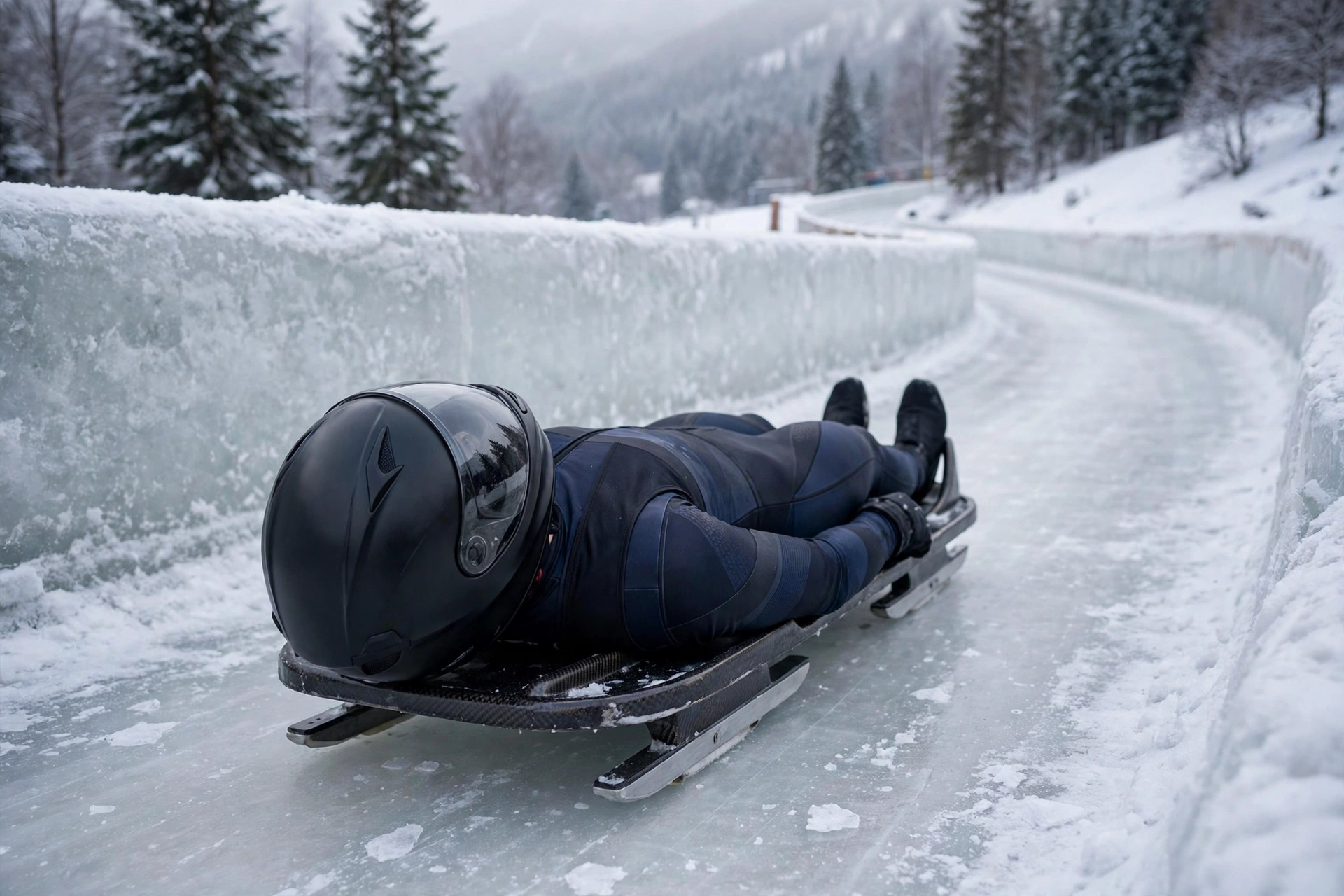
A luge helmet is a full face helmet with a smooth, rounded shell and a clear visor that covers the eyes. It looks a little like a small motorcycle helmet, but it is lighter and shaped for lying down rather than sitting up. The chin bar is part of the shell, protecting the jaw and chin, and the visor sits flush against the helmet so the airflow stays smooth.
The shell is hard and glossy, which matters because the helmet may touch the ice if the rider’s head dips during a run. A smooth shell slides rather than catching, which is safer and less likely to jerk the rider’s head. Inside, the padding is firm and snug, holding the helmet steady through the vibration of the track.
Why Is the Riding Position So Important?
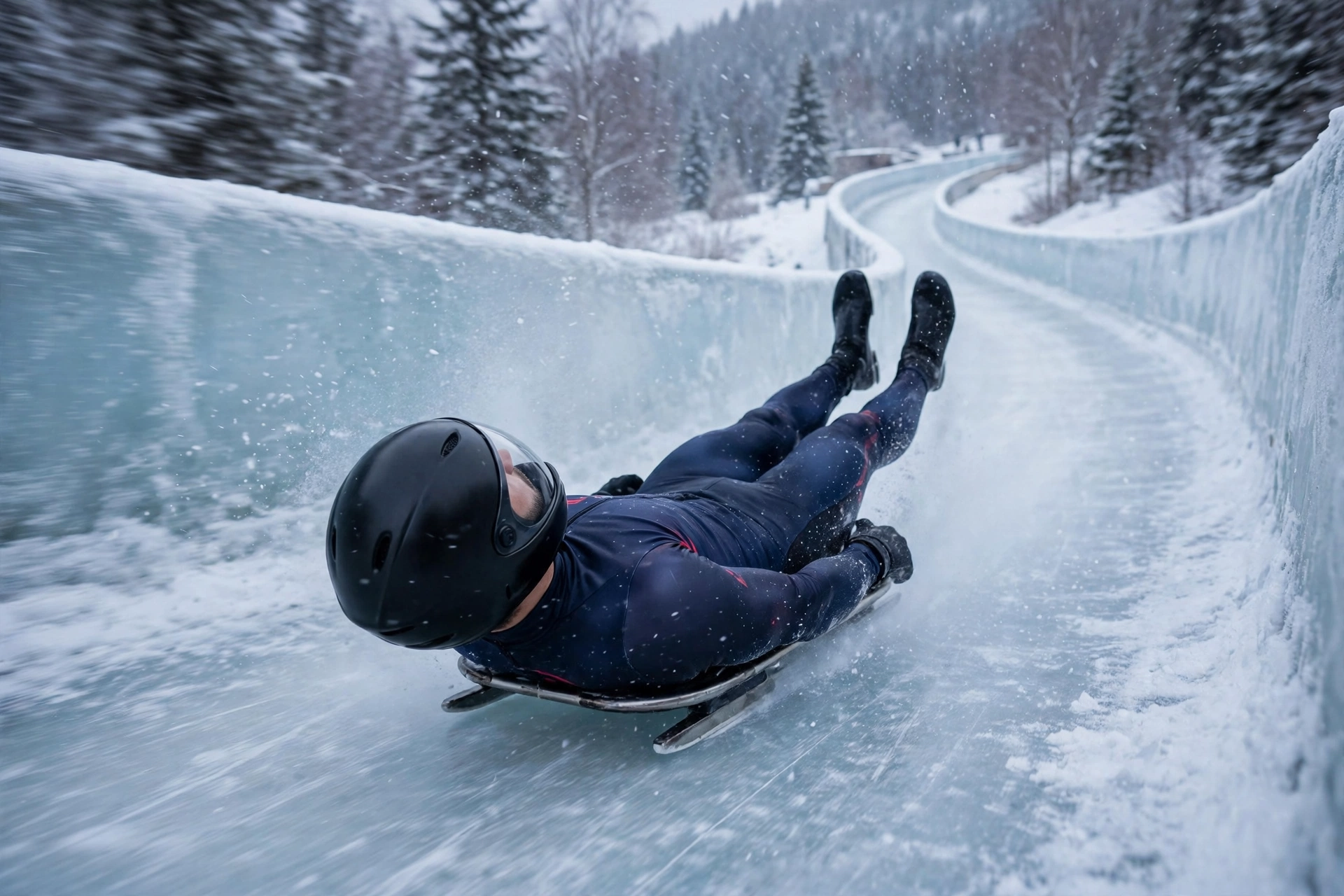
In luge, the rider lies on their back on a small sled, feet first, with their head raised slightly to see the track ahead. This is the opposite of skeleton, where the rider lies face down, and very different from bobsled, where the crew sit upright. The luge position means the helmet must work when the head is tilted back and looking up the track.
That changes the design. The visor must give a clear view upward and forward from a lying position, without the top edge of the helmet blocking the view. The padding must support the head comfortably when it is held slightly raised, and the helmet must not press on the back of the neck when the rider lies flat. A helmet designed for a seated position would feel wrong here: the view would be off, and the balance of the helmet on the head would be different.
The position also affects aerodynamics. In luge, the rider’s body is the main source of drag, and the helmet is part of the shape the air flows over. A helmet that sits smoothly against the body helps the air flow cleanly, which is part of why luge helmets are shaped the way they are.
How Is a Luge Helmet Different from a Skeleton Helmet?
Both are sliding helmets, but they are shaped for opposite positions. A skeleton helmet is designed for a face-down, head-first position, with the visor shaped for looking ahead and slightly down. A luge helmet is designed for a face-up, feet-first position, with the visor shaped for looking ahead and slightly up.
The chin bar differs too. On a skeleton helmet, the chin area is close to the ice and needs protection from below. On a luge helmet, the chin bar protects the jaw from the front, and the shape of the lower shell is designed to sit comfortably against the chest and shoulders when the rider lies back. The padding layout also differs, because the pressure points on the head are different when you lie on your back compared with lying face down.
In practice, the two helmets are not interchangeable. An athlete who tried to use a skeleton helmet for luge would find the view wrong and the fit uncomfortable, and the same is true in reverse.
What About the Visor?
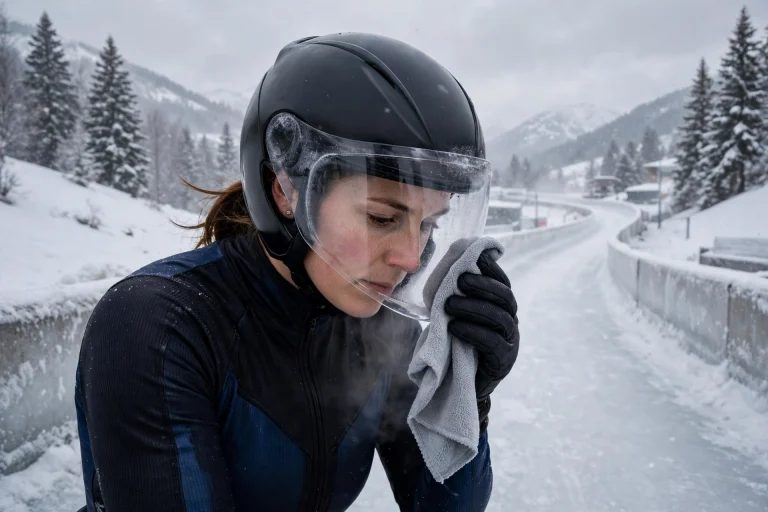
The visor on a luge helmet is one of its most important parts. It must stay clear in cold, damp conditions, because a fogged or iced visor can blind the rider at the worst moment. Many luge helmets use a visor with an anti-fog treatment, and riders may carry a spare visor in a different tint for bright days.
The visor also protects the eyes from wind and ice spray. At luge speeds, even a small ice crystal hitting the eye would be painful and distracting, so the visor needs to seal well against the helmet. Riders check the visor before every run, wiping it clean and making sure it sits properly.
If you are learning about helmet technology in general, reading about what MIPS is for helmets can help you understand one of the features found in modern helmet design.
What Should You Check Before Buying a Luge Helmet?
Try the helmet on in the luge position. Lie back, raise your head slightly, and check that you can see clearly through the visor without the top of the helmet cutting into your view. The helmet should feel snug all round, without pressure points, and it should not rock when you move your head.
Check the strap and the visor fitting. The strap should fasten securely under the chin, and the visor should sit flush and seal well. Ask whether spare visors are available in different tints, and whether the padding can be removed for washing, since a helmet used on ice tracks gets damp and needs regular care.
Finally, confirm the helmet meets the standard required by your track or competition. Luge has its own rules, and the helmet must be accepted for the event you are entering. A helmet that fits well, gives a clear view, and meets the standard is the right starting point.
Frequently Asked Questions
Q: Can I use a ski helmet for luge?
A: In general terms, no. A ski helmet is an open-face design built for falls onto snow, while a luge helmet is a full face design built for high-speed sliding on ice in a lying position.
Q: Do luge helmets have ventilation?
A: Most have very little ventilation compared with a bike or ski helmet, because vents would let in cold air and ice spray at speed. The priority is a smooth shell and a clear visor.
Q: How do luge riders stop the visor fogging up?
A: In general terms, riders use anti-fog treatments, keep the visor clean and dry between runs, and choose a helmet with a visor that seals well. A spare visor is useful if conditions change.

Olivia
Writer at Helmet Today, covering helmet reviews, fit and riding safety.