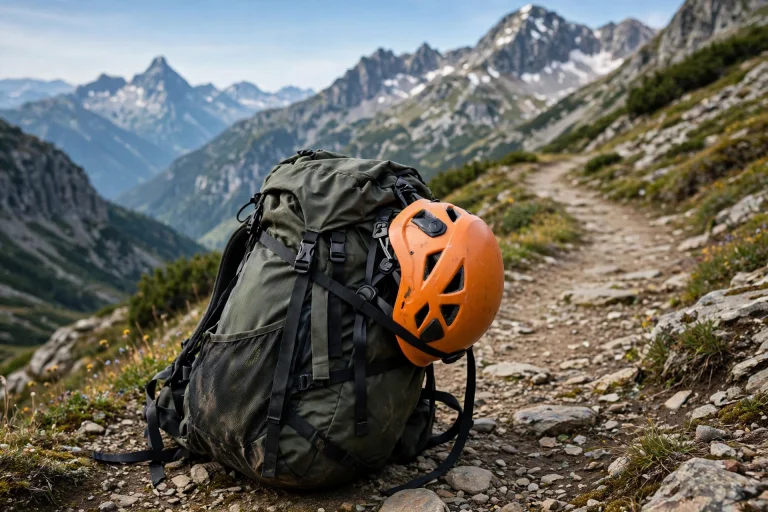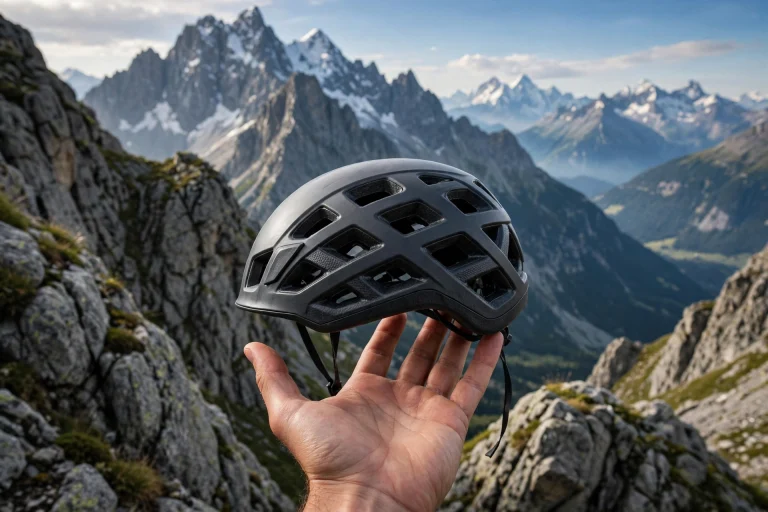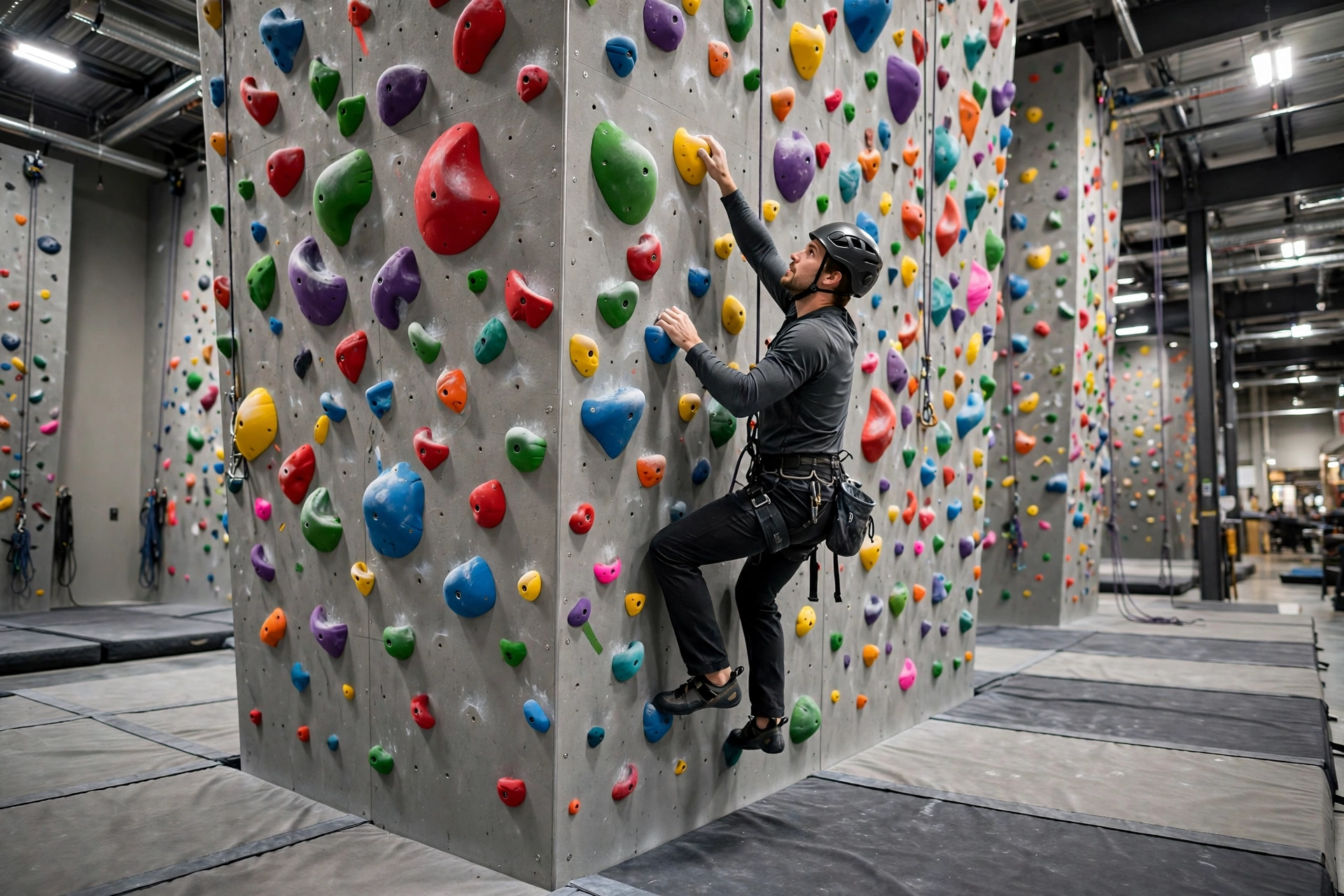
Usually you do not need one — but it depends on the gym. In general terms, most indoor climbing gyms let adults climb roped routes and boulder without a helmet, while some gyms require helmets for children, school and group sessions, lessons, or particular walls — and any climber is free to choose to wear one. Check your gym’s rules before your first visit, and think hardest about a helmet if you are learning, lead climbing, or climbing beneath other people.
Outdoors, the helmet decision is obvious because rocks fall. Indoors there are no loose rocks, so many climbers never consider it. This guide covers what gyms usually require, what risks remain under a roof, and who genuinely benefits from wearing one.
What Do Indoor Climbing Gyms Usually Require?
Policies vary widely from gym to gym, and there is no single rule to quote. The common pattern, in general terms, is that helmets are optional for adult members climbing on their own, and required — or strongly directed — for minors, school groups, birthday parties, and instructed lessons, where the gym takes responsibility for people who cannot judge risks themselves.
Some gyms set different expectations by area: a lead wall where falls are longer, an auto-belay area popular with beginners, or a dedicated youth zone may carry its own rule. Rental helmets are available at many gyms precisely because their rules require them for some users.
The practical takeaway is to check before you climb: the gym’s website, waiver, and front desk all state the policy, and staff will enforce it their way regardless of what the gym across town allows. If a rule surprises you, it is still the rule for that building.
What Head Risks Exist Indoors, Even Without Rockfall?
The main one is your own fall. A climber who falls awkwardly — a foot catching the rope, an unexpected swing, a slip close to the wall — can strike the wall, a volume, or a large hold with their head. Padded floors protect landings; they do nothing about what you meet on the way down.
The second risk comes from above. Indoor walls stack climbers vertically: routes overlap, and the climber above you can drop a phone, a water bottle, or a belay device, or dislodge a loose hold. None of it has the energy of alpine rockfall, but a hard object falling a few metres onto an unprotected head is a real injury mechanism, and it is the reason helmets indoors are not a silly idea.
A gym helmet is simply the same certified climbing helmet used outdoors, with foam that crushes to absorb impact — some models adding rotational-impact systems like MIPS for angled strikes. There is no separate indoor category; if you wear one, wear the real thing.
Who Benefits Most From Wearing a Helmet at the Gym?
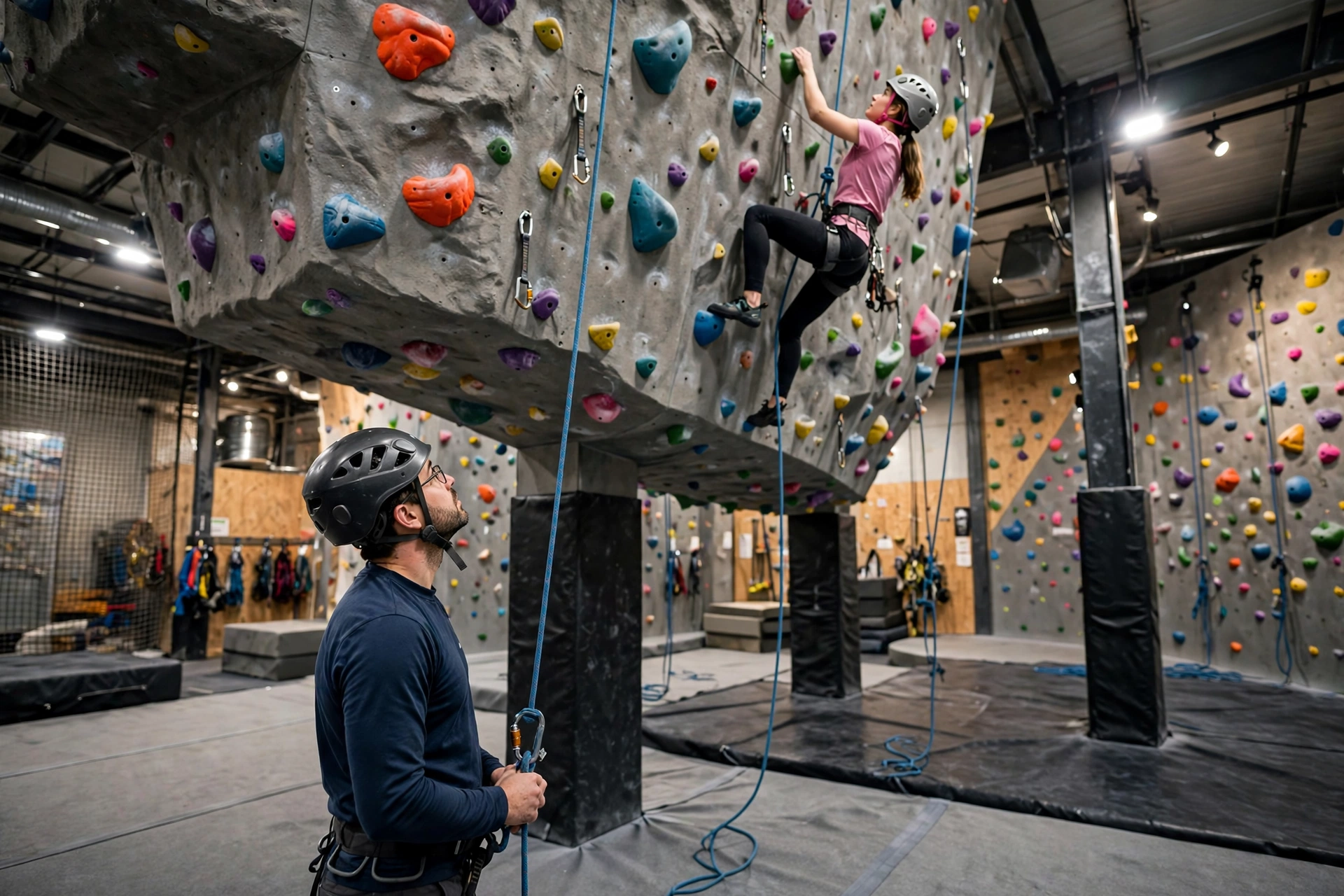
Beginners benefit most. New climbers fall unpredictably, swing when they let go, and have not yet built the instincts that keep a fall clean. The learning phase — the first months of climbing, and especially learning to lead — is when an indoor helmet earns its keep.
Children are the second clear group, which is why so many gyms simply mandate helmets for them: kids fall more, judge less, and climb in busy areas under other people’s routes. If your child climbs, a helmet is cheap sense whether or not the front desk insists.
Lead climbers and their belayers form the third group. Lead falls are longer and less predictable than top-rope falls, and the belayer stands directly in the fall and drop zone. Add anyone climbing on a busy wall beneath other routes, and anyone an instructor advises to wear one — local judgment deserves respect.
Does Bouldering Change the Answer?
Bouldering removes the rope but not the head risk: the classic bouldering head injury is not hitting the mat — mats are good — it is striking the wall, a volume, or a hold on the way down, especially in a rotating or inverted fall from height. Tall bouldering walls and dynamic moves raise that possibility.
In practice, very few boulderers wear helmets, and most gyms do not ask them to: falls are short, walls are designed with clear fall zones, and spotters manage the landing. That is a reasonable norm for experienced adults making their own choice.
It stops being the obvious norm for children, complete beginners, and anyone working problems high on a tall wall above featured terrain. If a fall from your project could plausibly swing your head toward the wall, the helmet calculus is the same as on a rope.
If You Wear One Indoors, What Should It Be?
A certified climbing helmet — the same one you would wear outside, marked to a climbing standard such as EN 12492. Fit matters more than model: it should sit level, stay put when you shake your head, and be comfortable enough that you forget it during a session, because a helmet left in your gym bag protects nothing.
Lightweight foam models are popular indoors for exactly that comfort, and one helmet can cover both your gym sessions and outdoor days, which simplifies replacement and inspection — one helmet, one history, retired after any significant impact wherever it happened.
Do not substitute a bike helmet for gym climbing: its coverage and impact design are built for road falls, not wall strikes and dropped objects. And if you only climb indoors occasionally, the gym’s rental helmet — a proper climbing helmet — is a better answer than improvising with the wrong one.
Frequently Asked Questions
Q: Do I need a helmet for top-rope climbing at a gym?
A: In general terms, most gyms do not require one for adults on top rope, but policies vary — check yours. Wearing one is always permitted and is a sensible choice while you are learning, when falls are least predictable.
Q: Why do gyms make children wear helmets but not adults?
A: Gym policies commonly set stricter rules for minors and instructed groups, because the gym is responsible for their risk judgment. Adults are generally left to decide for themselves — which is a responsibility, not a verdict that helmets are pointless.
Q: Can I use my bike helmet at the climbing gym instead?
A: No — a bike helmet is designed and certified for road falls, with different coverage and impact priorities. If you want head protection indoors, use a certified climbing helmet or one of the gym’s rentals.

Olivia
Writer at Helmet Today, covering helmet reviews, fit and riding safety.