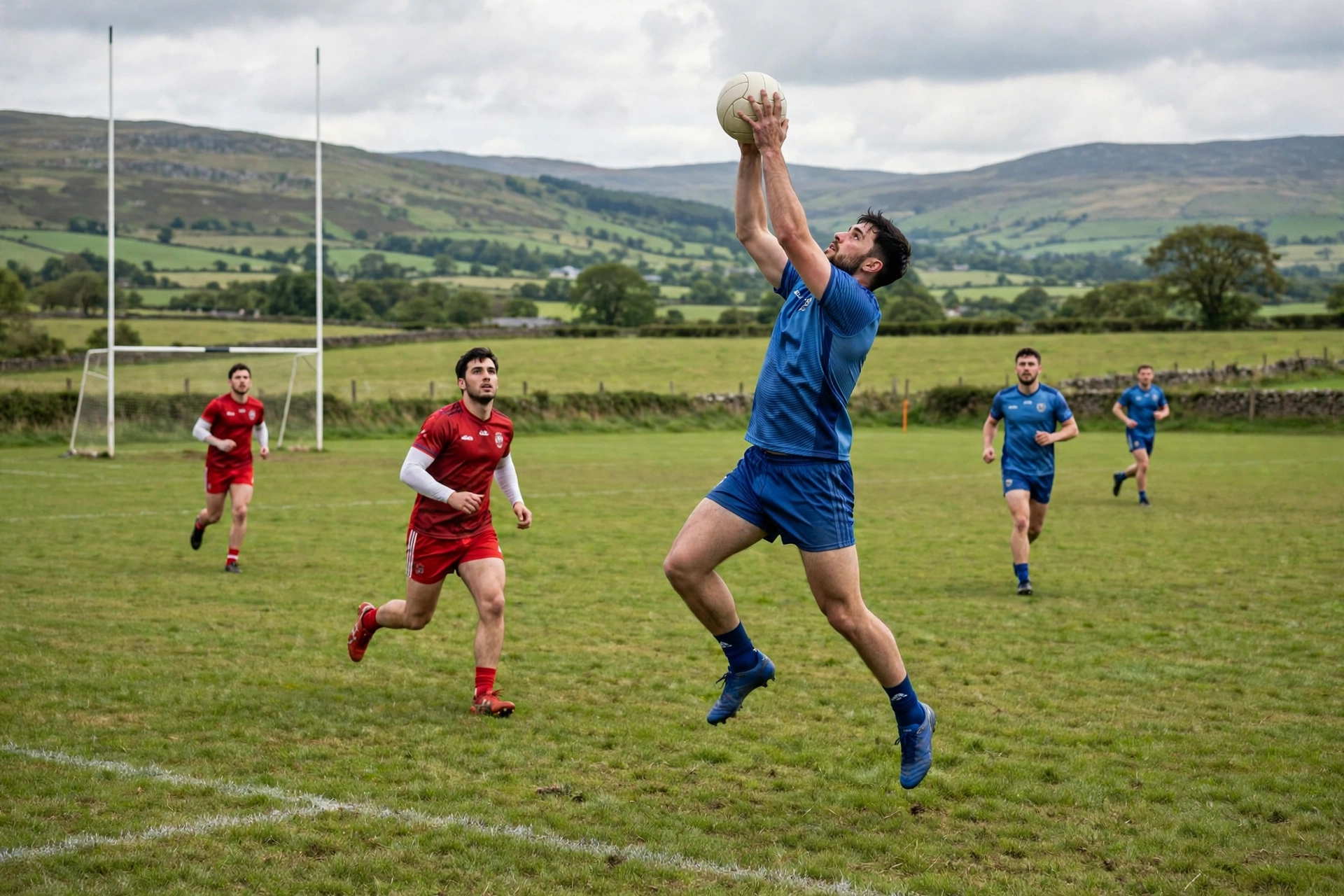
In general terms, Gaelic football players do not wear helmets, and headgear is rarely seen in the game. Unlike hurling and camogie, where hard helmets with faceguards are part of the kit, Gaelic football is played without a helmet, and most players wear no head protection at all. Soft padded headgear is permitted in general terms, but it is uncommon, and you will see very few players wearing it at any level of the game.
This surprises many people who are new to Gaelic games, because the sport is fast, physical, and involves catching a ball above your head while other players challenge you. This guide explains what Gaelic football headgear is, whether it is worn, why it is rare, and when a player might consider it.
Do Gaelic Football Players Wear Helmets?
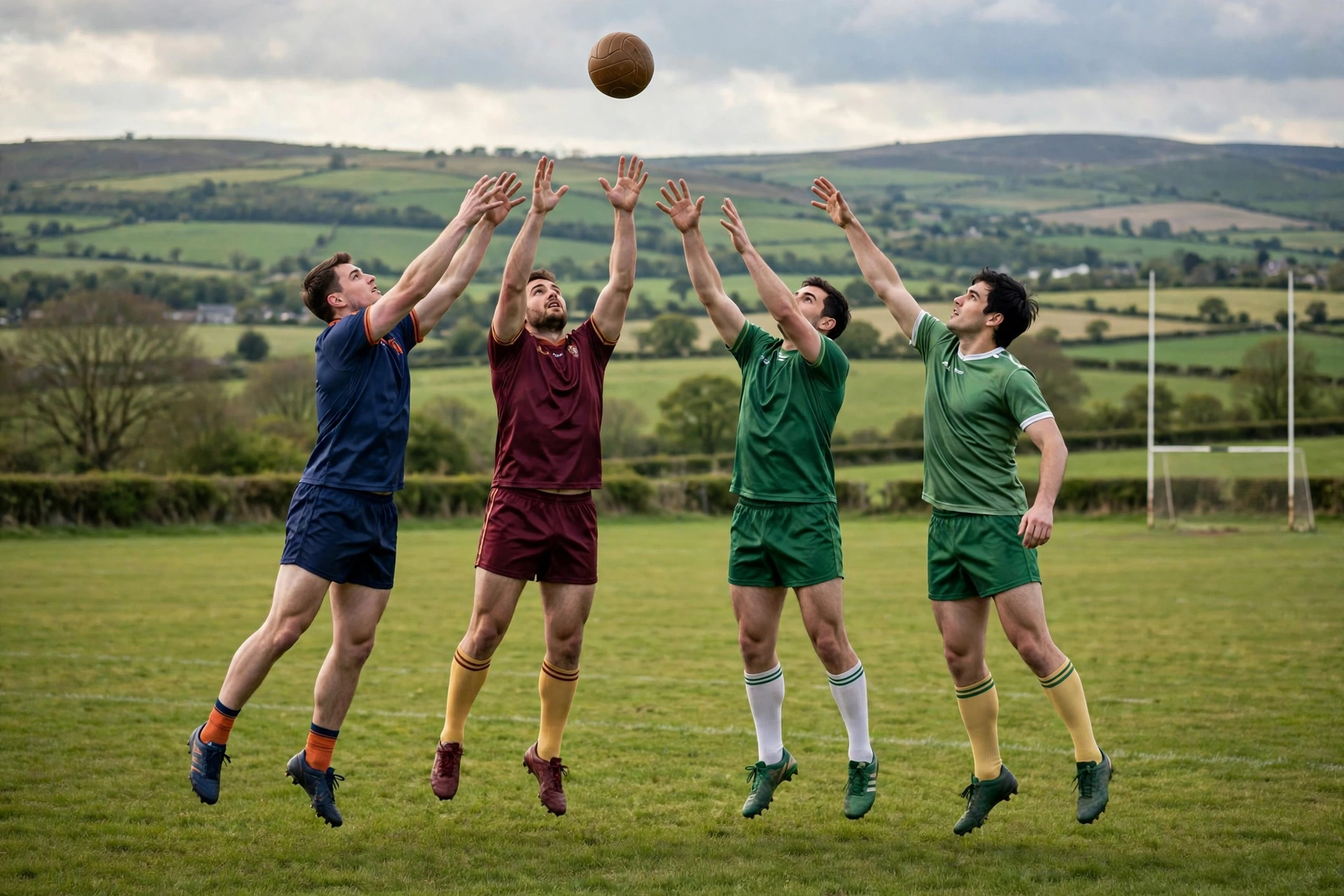
No, in general terms Gaelic football players do not wear helmets. There is no hard helmet in Gaelic football, and no faceguard either. Players wear a jersey, shorts, socks, and boots, and that is the whole kit for most of them. A player who turns up wearing a hurling helmet would stand out immediately, because it is simply not part of the game.
That does not mean Gaelic football is risk-free. It is a contact sport, and players collide, fall, and compete for high balls. But the game has developed without helmets, and players, coaches, and officials have not treated headgear as a normal part of the kit. A new player should expect to play without a helmet, just like everyone else on the pitch.
Is Soft Headgear Allowed in Gaelic Football?
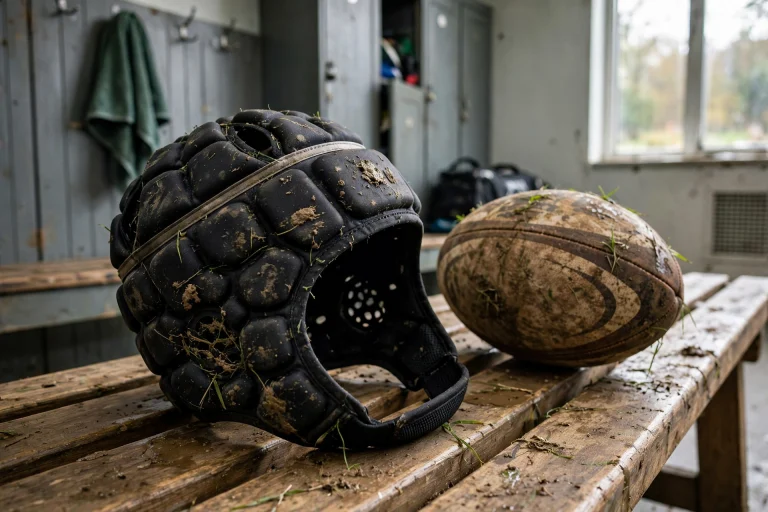
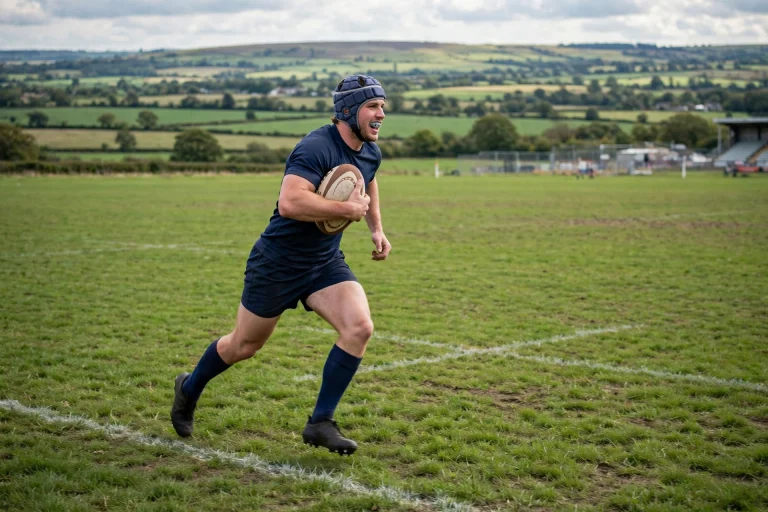
Soft padded headgear is permitted in general terms, and a player who wants to wear it can do so. This is the same kind of soft, padded headgear used in rugby: a close-fitting cap of foam padding that covers the top, sides, and back of the head, with openings for the ears. It is not a hard helmet, and it has no faceguard.
The key point is that wearing it is a choice, not a requirement. A player may wear soft headgear for their own comfort or peace of mind, and the rules do not stop them. But because almost nobody else wears it, a player who does will stand out, and some players decide not to bother for that reason alone.
If a player does want to wear soft headgear, it should fit well and stay in place during play. A loose cap that slides over the eyes is a distraction, and a cap that needs constant adjustment is worse than no cap at all. It should be the right size, done up properly, and checked before the game starts.
Why Is Headgear Uncommon in Gaelic Football?
There are a few reasons why headgear has never caught on in Gaelic football. The first is tradition: the game has always been played without it, and players grow up seeing their heroes play bare-headed. Young players copy what they see, and what they see is no headgear at all.
The second reason is the nature of the game itself. Gaelic football is a catching and kicking game with a large ball, and the head is less exposed to direct, hard impacts than in hurling. Players do collide and fall, but the game does not involve a stick or a small hard ball travelling at speed towards the head.
What Does Gaelic Football Headgear Look Like?
The headgear a Gaelic football player might wear is a soft padded cap, much like a rugby scrum cap. It is usually made from foam padding covered in a fabric outer, shaped to fit closely around the head. It covers the crown, the sides, and the back of the head, with cut-outs or thinner sections around the ears so the player can hear.
It fastens under the chin with a strap, and some designs have a lace or adjustable fitting at the back. It is lightweight compared with a hard helmet, and it can be folded or packed away easily in a kit bag. Some players choose it in their club colours, and it looks like part of the kit rather than a medical device.
It is important to be clear about what this headgear is not. It is not a hard helmet, and it does not offer the same protection as one. It is soft padding, and it should be understood as a comfort choice rather than a guarantee of protection. Players and parents should not assume that wearing it makes the head safe from all injury.
Should Young or Returning Players Consider Headgear?
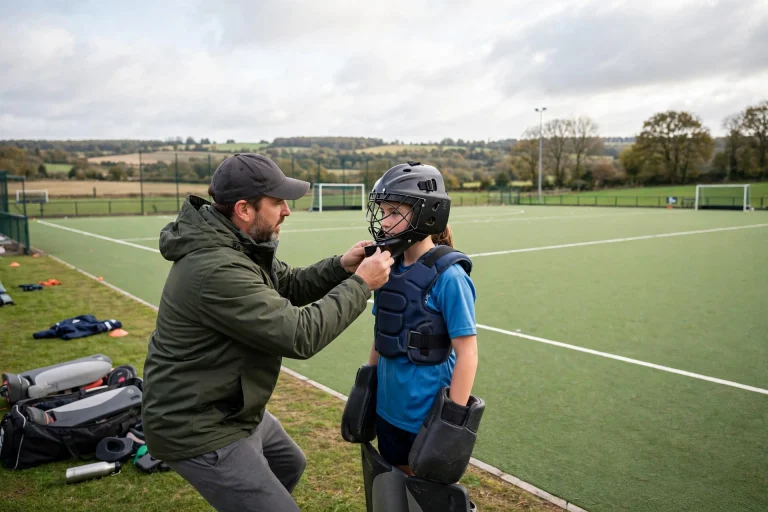
For young players, the question of headgear usually comes from parents. A parent watching their child play a contact sport for the first time may wonder whether something should be worn on the head. The honest answer is that headgear is a personal choice, and it is worth talking to the coach about it. The coach knows the age group, the level of contact, and what other players in the group are doing.
Returning players are another group who sometimes ask about headgear, for example after time away from the game or after a knock in an earlier season. For them, the same advice applies: talk to the coach, try the headgear in training first, and see whether it feels comfortable and stays in place. A decision made in training is better than one made on match day.
How Does Gaelic Football Compare With Hurling on Head Protection?
The comparison with hurling is the clearest way to understand Gaelic football headgear. In hurling, a hard helmet with a faceguard is the norm, because the ball is small and hard and the hurley is a wooden stick swung at head height. In Gaelic football, there is no stick, the ball is bigger and softer, and the game has simply developed without helmets.
This difference is not a judgement about which sport is safer. Both are physical contact sports, and both carry risks. The difference is about what the equipment needs to guard against, and about what players in each game have always worn. A hurling helmet would not suit Gaelic football, and a Gaelic football player does not need one.
What the two games share is the importance of good technique and awareness. In both sports, keeping your head up, watching the ball, and knowing where other players are will do more for a player’s safety than any piece of kit on its own. If you are interested in how helmet technology works in general, reading about what MIPS is for helmets explains one feature found in many modern hard helmets, even though it is not a feature of soft Gaelic football headgear.
Frequently Asked Questions
Q: Is headgear worn in Gaelic football?
A: In general terms, no. Most Gaelic football players wear no head protection at all. Soft padded headgear is permitted, but it is rarely seen at any level of the game.
Q: Can a Gaelic football player wear a rugby scrum cap?
A: In general terms, yes. Soft padded headgear of the rugby style is allowed, and a player may wear it if they choose. It is a personal choice rather than a requirement, and it should fit well and stay in place during play.
Q: Do children need headgear to play Gaelic football?
A: In general terms, no. Most young players play without headgear. Parents who are unsure should talk to the coach, who can advise on what is normal for the age group and whether soft headgear would suit their child.

Olivia
Writer at Helmet Today, covering helmet reviews, fit and riding safety.