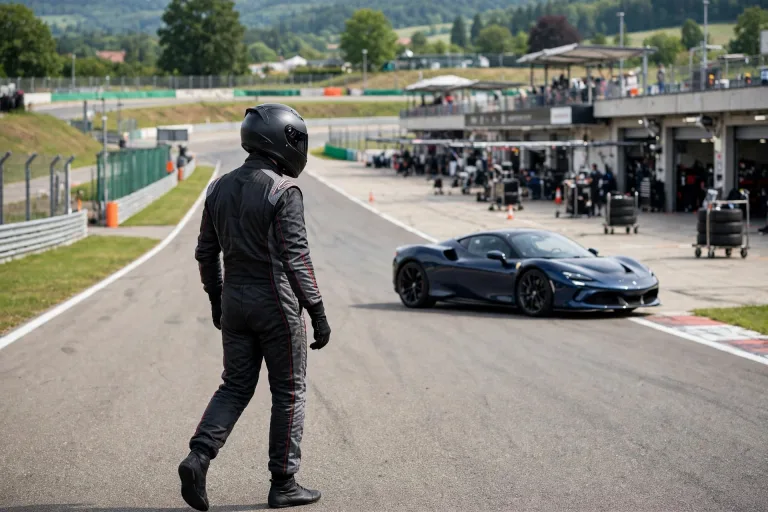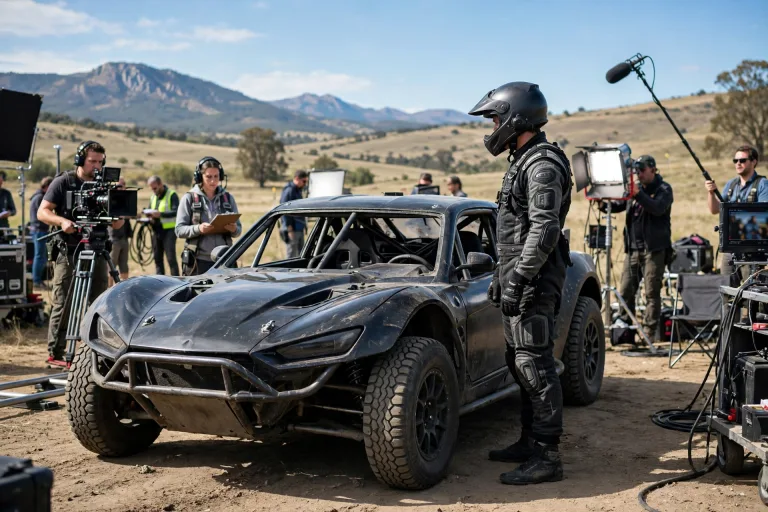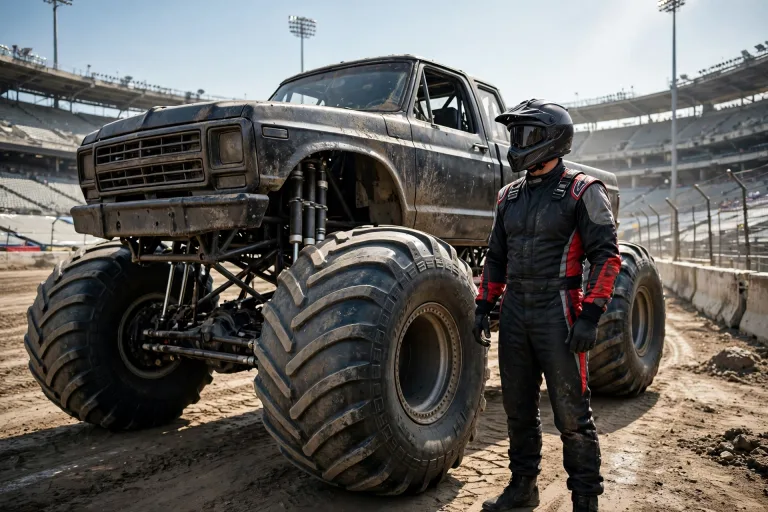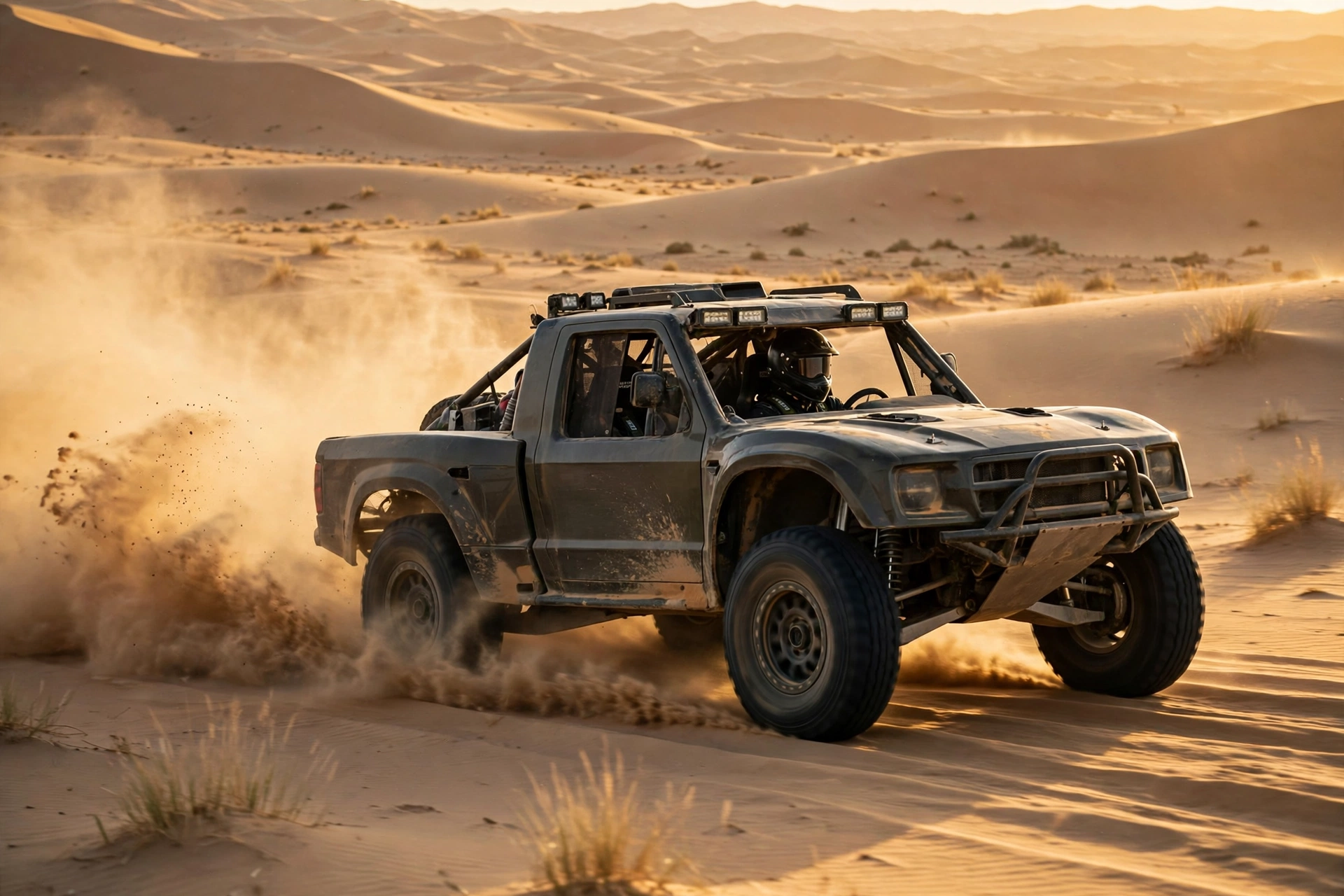
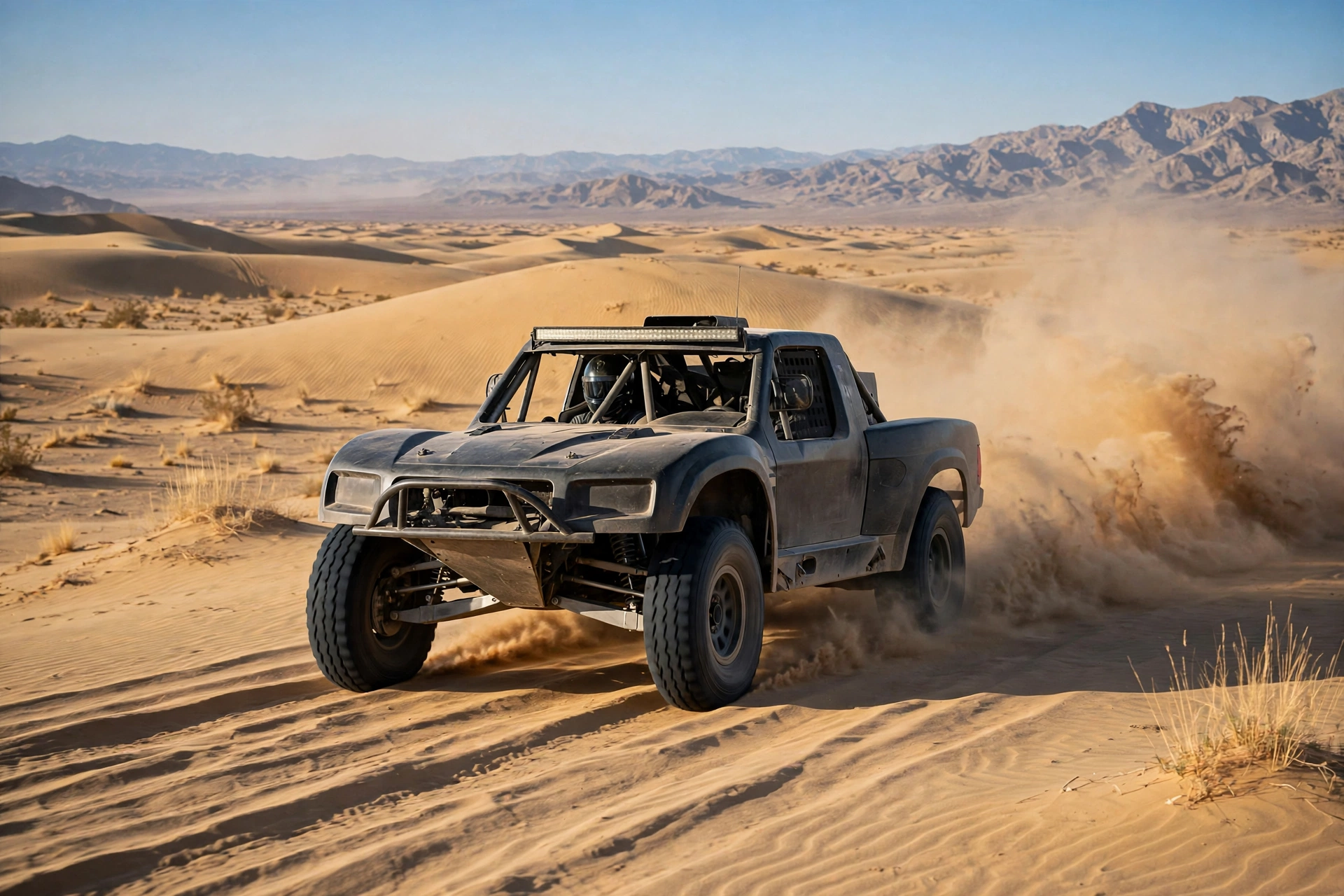
A helmet for desert racing is a helmet worn by a driver or rider in an off-road race across sand and desert, and in general terms it should be a strong, well-ventilated helmet with a secure fit, good dust protection, and a visor or goggles that keep sand out of the eyes. Desert racing takes place in heat, dust, and rough terrain, with vehicles bouncing over dunes, rocks, and dry river beds at speed. A helmet in that setting has to protect the head from impacts and from the desert itself, and it is treated as essential safety equipment, not as an optional extra.
A desert race can last for hours, and the driver or rider is exposed to sun, heat, and fine dust for the whole time. The vehicle shakes and jumps, the air is full of sand thrown up by the wheels, and a mistake can send the vehicle into a ditch or onto its side. A helmet that fits well, stays in place, and keeps the dust out helps the driver to stay safe and to keep their focus on the course ahead.
Why do desert racers need a helmet?
Desert racers need a helmet because the terrain is rough and a crash can happen without warning. A dune can hide a sharp drop, a rock can throw a wheel sideways, and a rut can catch a tyre and tip a vehicle over. In general terms, a helmet spreads the force of an impact and helps to protect the skull, and that protection matters all the more when the ground is hard and the vehicle is moving fast. A roll or a heavy landing can also throw the driver against the roll cage, the steering wheel, or the door, and a helmet gives a layer of protection against those knocks.
There is also the dust and the sun to think about. Fine desert dust gets into everything, and it can sting the eyes and make it hard to see the course. A helmet with a visor or with goggles helps the driver to keep their eyes clear.
What kind of helmet is best for desert racing?
The best helmet for desert racing is, in general terms, a light, strong helmet with a hard outer shell, good ventilation, and a fit that works with goggles. Many desert racers use a full-face helmet, because it covers the whole head and the face and keeps dust out, and it works well with goggles that seal against the helmet. The helmet should be made for motorsport or for off-road riding, because those helmets are built to cope with dust, heat, and the kind of impacts that happen off road.
Ventilation matters in the desert, because a racer works hard in the heat and a helmet that traps hot air becomes a distraction. Vents that let air in without letting in too much dust are useful, and a lining that can be removed and washed is a practical feature after a dusty race. The helmet should also be light enough to wear for hours without tiring the neck, and the chin strap should hold it firmly in place over rough ground.
How should a helmet for desert racing fit?
A helmet for desert racing should fit snugly, sit level on the head, and stay in place when the driver shakes their head or bounces over rough ground. The helmet should cover the forehead and the top of the head, and the chin strap should be fastened securely every time the driver is in the vehicle. A strap that is left loose lets the helmet lift in the wind or slide in a crash, and a helmet that comes off at speed is no help at all.
The fit should be checked with the exact goggles the driver will wear, because goggles change how a helmet sits. Goggles should sit neatly against the helmet without leaving a gap that lets dust in, and the helmet should not press on the arms of glasses or push them out of place. The driver should also check that the helmet does not block their hearing, because a desert racer needs to hear the engine, the co-driver, and any warnings over the radio.
What should a desert racer check before a race?
Before a race, a desert racer should check the helmet for cracks, dents, or damage to the shell, and should look at the lining, the vents, and the chin strap to make sure they are sound and working. A helmet that has taken a hard knock in a crash should be looked at with care, and in general terms a helmet that has taken a serious impact should be replaced rather than used again. The damage may not be easy to see, so the driver should think honestly about what the helmet has been through.
The driver should also check the goggles, the dust mask, and the communications equipment before setting off, because a helmet works best as part of a complete set-up. A helmet is only one part of staying safe in the desert, and it works best when the driver also drives within their ability, keeps to the marked course, and stays hydrated in the heat.
How should a desert racing helmet be looked after?
A desert racing helmet should be looked after with regular cleaning and sensible storage, in the same way as any motorsport helmet. After a race, the driver should shake out the dust, wipe the shell clean, and let the helmet dry naturally away from direct heat. Strong heat, such as a hot car, can harm the materials in a helmet over time, so a cool, dry place is a better choice for storage. The lining should be aired out and washed if it can be removed, because dust and sweat build up quickly in the desert.
The helmet should be kept where it will not be knocked about or used as a seat or a shelf, because a hard knock can damage it even when no crack is visible. A helmet bag is a simple way to protect it between races and on the journey to the desert. Drivers who are choosing a new helmet may also want to learn about features that can help in a fall, including a system designed to reduce rotational forces, such as MIPS, which is found in some motorsport and off-road helmets. A well-kept helmet, worn every race, gives a desert racer the best chance of finishing the course in safety.
Can a motocross helmet be used for desert racing?
Yes, in general terms a motocross helmet that fits well and is in good condition is often suitable for desert racing, because motocross helmets are built for dust, heat, and off-road impacts. The key points are fit, goggle compatibility, and a secure chin strap.
Do desert racers need goggles as well as a helmet?
Yes, in general terms most desert racers wear goggles with their helmet, because goggles seal against the helmet and keep fine dust and sand out of the eyes. A visor alone may not keep the dust out in a desert race.
When should a desert racing helmet be replaced?
A desert racing helmet should be replaced after a hard impact or a crash, or when it no longer fits well, shows damage, or has been worn for a long time. When in doubt, replace it rather than keep racing in it.

Olivia
Writer at Helmet Today, covering helmet reviews, fit and riding safety.