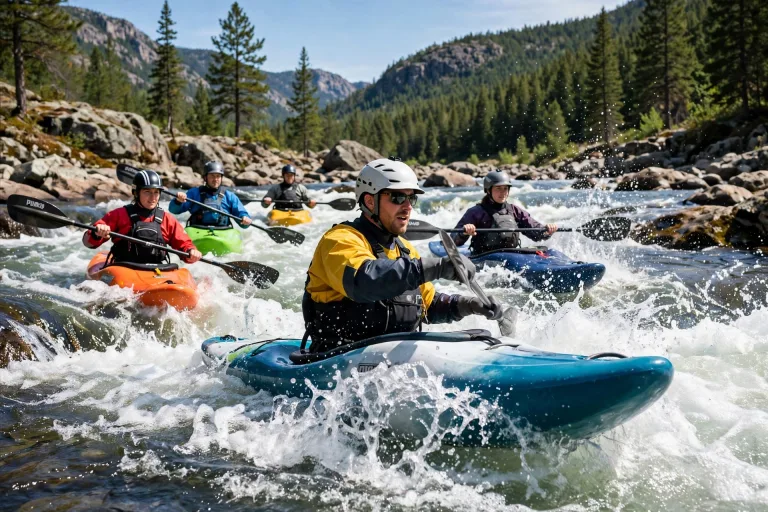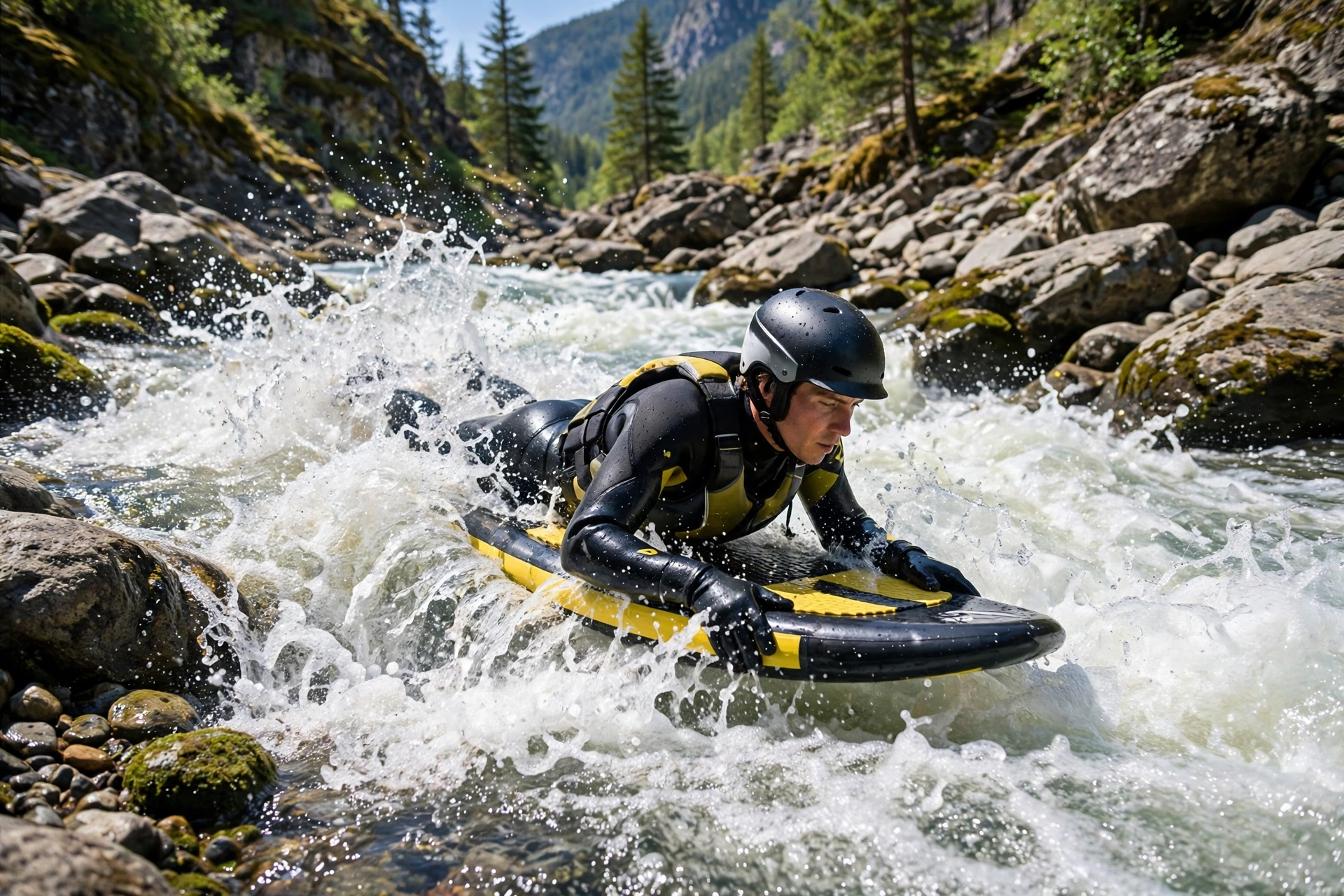
A helmet for riverboarding is a helmet worn by a riverboarder lying face down on a small board in whitewater to protect the head from rocks, the riverbed, and knocks from the board itself, and in general terms every riverboarder should wear one that fits well, drains quickly, and stays in place in fast, moving water. Riverboarding, sometimes called hydrospeed, is a whitewater sport in which the rider holds on to a buoyant board and steers with their body and fins, with their head close to the surface of the river. The river can be fast, rocky, and unpredictable, so a helmet is treated as essential safety equipment, not as an optional extra.
A riverboarder’s head sits low in the water, often only just above the surface, and the riverbed is never far away. In shallow sections the rider can be tipped forward onto rocks, and in a rapid the current can push them into a boulder or a bank before they have time to react. A helmet gives the rider protection in those moments, and it also shields the head from the board itself if the board is thrown about by the water.
Why do riverboarders need a helmet?
Riverboarders need a helmet because a whitewater river is full of hard objects that a rider can hit at speed. Rocks, both above and below the surface, are the main danger, and a rider who is flipped by a wave or a hole in the river can be carried into one before they can steer away. In general terms, a helmet spreads the force of an impact and helps to protect the skull, and that protection matters all the more when the rider is lying face down.
There is also the risk of being struck by the board, by a fin, or by debris carried along by the river, such as a branch or a log. A helmet gives a layer of protection against those knocks too. The cold water is another reason to wear one: a helmet keeps the head a little warmer and helps the rider stay focused on reading the river ahead, rather than flinching from every splash of cold water on the face.
What kind of helmet is best for riverboarding?
The best helmet for riverboarding is, in general terms, a light, well-ventilated water sports helmet with a hard outer shell, a secure chin strap, and drainage holes that let water out quickly. Many riverboarders use a helmet made for whitewater kayaking or canoeing, because those helmets are designed to cope with being submerged, to drain fast, and to stay in place in a strong current. The key points are a snug fit, quick drainage, and a strap that holds the helmet firmly when the rider is tumbled by the water.
The helmet should also cope with repeated soaking and with sun. A helmet used on the river will get wet on every trip, so it should be made of materials that do not soak up water and should dry out quickly between sessions. A lining that can be removed and washed is a practical feature, because river water can leave a smell behind. A helmet that is too heavy or that holds water will pull on the rider’s neck and become a distraction on a long run down the river.
How should a helmet for riverboarding fit?
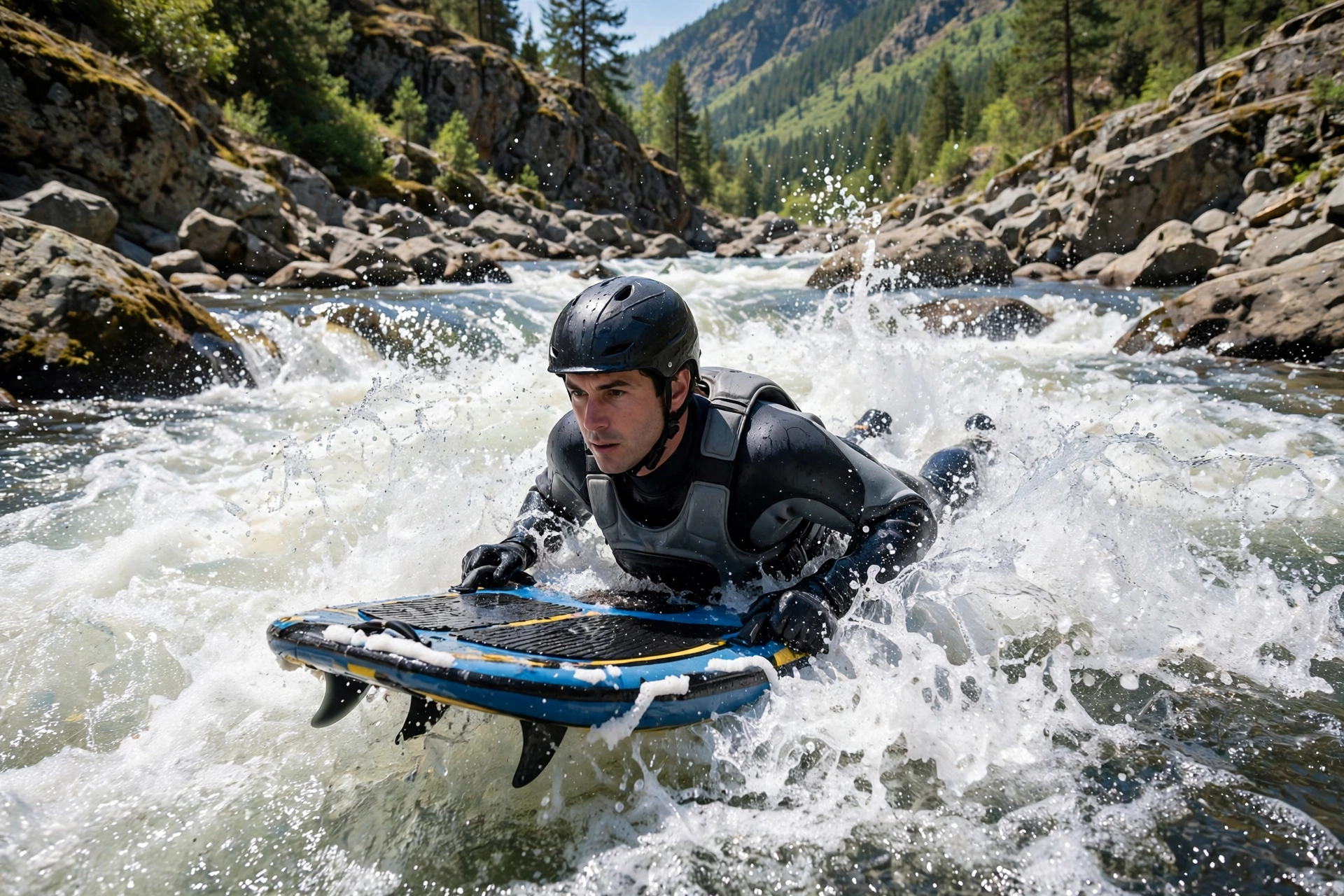
A helmet for riverboarding should fit snugly, sit level on the head, and stay in place when the rider shakes their head or is pushed by the water. The helmet should cover the forehead and the top of the head, and the chin strap should be fastened securely every time the rider gets into the river. A strap that is left loose lets the helmet lift in the current or slide in a fall, and a helmet that comes off in a rapid is no help at all.
The fit should be checked with any other gear the rider will actually wear, such as a wetsuit hood or ear protection, because extra layers can change how a helmet sits. The helmet should not press painfully on the forehead or squeeze the ears, and it should not block the rider’s hearing, because a riverboarder needs to hear their guide, other riders, and any warnings from the bank. A rider who wears glasses should check that the helmet does not push them out of place.
What should a riverboarder check before getting in the water?
Before getting in the water, a riverboarder should check the helmet for cracks, dents, or damage to the shell, and should look at the lining, the strap, and the buckle to make sure they are sound and working. A helmet that has been knocked against a rock, or that has taken a blow in a fall, should be looked at with care, and in general terms a helmet that has taken a serious impact should be replaced rather than used again. The damage may not be easy to see, so the rider should think honestly about what the helmet has been through.
The rider should also check the river, the weather, and the condition of the board before setting off. A helmet is only one part of staying safe on the water, and it works best when the rider also checks the water level, the weather upstream, and that the board and fins are in good order. Going down a river with other people nearby, rather than alone, is a sensible habit too.
How should a riverboarding helmet be looked after?
A riverboarding helmet should be looked after with regular cleaning and sensible storage, in the same way as any sports helmet. After a day on the river, the rider should rinse the helmet with fresh water to wash out silt and river dirt, and let it dry naturally away from direct heat. Strong heat, such as a hot car, can harm the materials in a helmet over time, so a cool, dry place is a better choice for storage.
The helmet should be kept where it will not be knocked about or used as a seat or a shelf, because a hard knock can damage it even when no crack is visible. A helmet bag is a simple way to protect it between trips. Riders who are choosing a new helmet may also want to learn about features that can help in a fall, including a system designed to reduce rotational forces, such as MIPS, which is found in some helmets made for whitewater and other fast-moving sports. A well-kept helmet, worn every time, gives a riverboarder the best chance of enjoying a fast run down the river in safety.
Do all riverboarders wear a helmet?
In general terms, most riverboarders wear a helmet today, and many guides and organised trips expect it. A rider who is unsure should check the rules for the river or the trip before getting in the water.
Can a kayak helmet be used for riverboarding?
Yes, in general terms a whitewater kayak helmet that fits well and is in good condition is often suitable for riverboarding. The key points are fit, drainage, and a secure chin strap.
When should a riverboarding helmet be replaced?
A riverboarding helmet should be replaced after a hard impact or a knock against a rock, or when it no longer fits well, shows damage, or has been worn for a long time. When in doubt, replace it rather than keep riding in it.

Olivia
Writer at Helmet Today, covering helmet reviews, fit and riding safety.