A certified hockey helmet carries a sticker showing it was tested to a recognised standard: HECC certification is the one most leagues in the United States rely on, while CSA certification is the Canadian equivalent, and in general terms a helmet needs the right current sticker for the league you play in. Certification is not a brand claim — it means samples of that helmet model were independently tested for impact protection, and the sticker on your helmet is the proof.
This guide explains what HECC and CSA each mean, where to find the stickers, what certification does and does not cover, and how to tell whether a helmet is still legal to wear.
What Does HECC Certification Mean for a Hockey Helmet?
HECC stands for the Hockey Equipment Certification Council, the body that runs the certification programme for hockey helmets in the United States. In general terms, a HECC-certified helmet is one whose model has passed laboratory impact tests set out in the standard the council works to, and the maker has agreed to ongoing conditions, such as keeping production helmets consistent with the ones that were tested.
The practical part for a player is the sticker. A certified helmet carries a HECC sticker, usually on the back or inside of the shell, and in general terms that sticker includes an expiry element, because certification is treated as time-limited rather than permanent. Leagues and officials can ask to see it, and a helmet with a missing or out-of-date sticker can be ruled out even if the helmet itself looks fine.
Most organised hockey in the US — youth leagues especially — requires a HECC-certified helmet as a condition of playing. That makes the sticker the first thing to check when you buy, borrow, or hand down a helmet.
What Does CSA Certification Mean in Canada?
CSA refers to the Canadian Standards Association, whose mark appears on helmets sold and used in Canada. In general terms, the CSA programme works the same way in principle: the helmet model is tested against a Canadian standard for ice hockey helmets, covering impact performance and construction, and certified helmets carry the CSA mark so players, parents, and officials can identify them.
Canadian leagues and Hockey Canada-governed play in general terms require a CSA-certified helmet. Many helmets sold in North America carry both marks, because makers sell the same models on both sides of the border, and a dual-sticker helmet satisfies the usual requirement in either country.
If you buy a helmet while travelling, check which sticker it carries before you assume it is legal at home. A helmet certified for one market may not carry the mark your league checks for, even when the helmet itself is identical.
What Does Certification Actually Test on a Hockey Helmet?
Certification testing is about impact protection. In general terms, helmet samples are fitted to headforms and struck under controlled conditions, and instruments measure how much force reaches the headform. The helmet passes only if the measured forces stay within the limits the standard allows, across the impact points and conditions the standard specifies.
Standards also look at the helmet as a system: whether it stays in place during impacts, whether its construction holds together, and whether things like the ear covers and fasteners are properly part of the certified design. That is why modifying a helmet — swapping in non-original parts or removing ear covers — can undermine the certification even though the sticker is still on the shell.
What certification does not test is just as important. It does not promise a helmet will prevent concussion, because concussion involves how the whole head and brain move, including the twisting, rotational forces that angled hits create — the same problem addressed by low-friction liner designs explained in this guide to what MIPS is for helmets. Certification sets a minimum bar for measured impact performance; it is a floor, not a guarantee.
Where Do You Find the Certification Sticker, and What Should You Check?
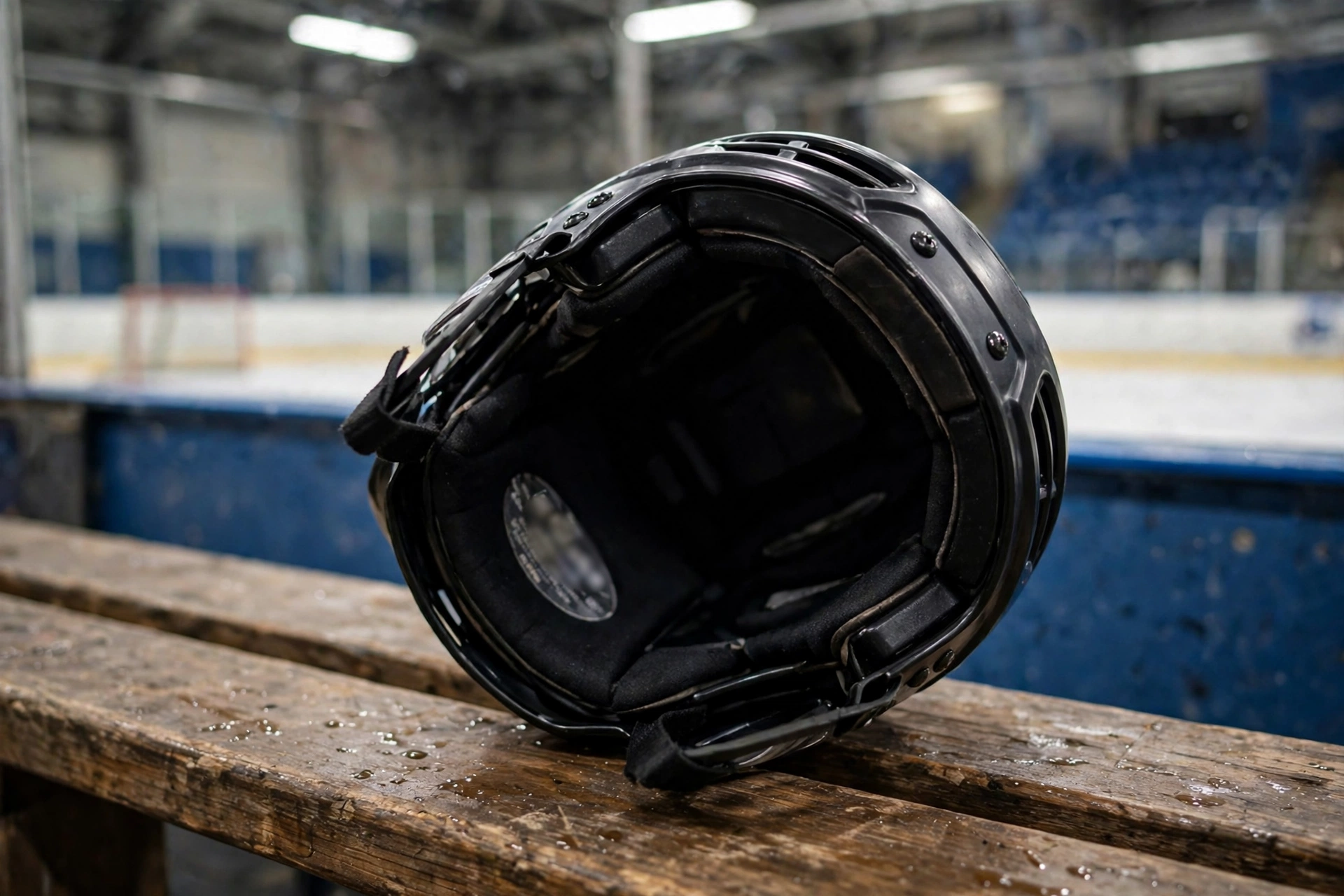
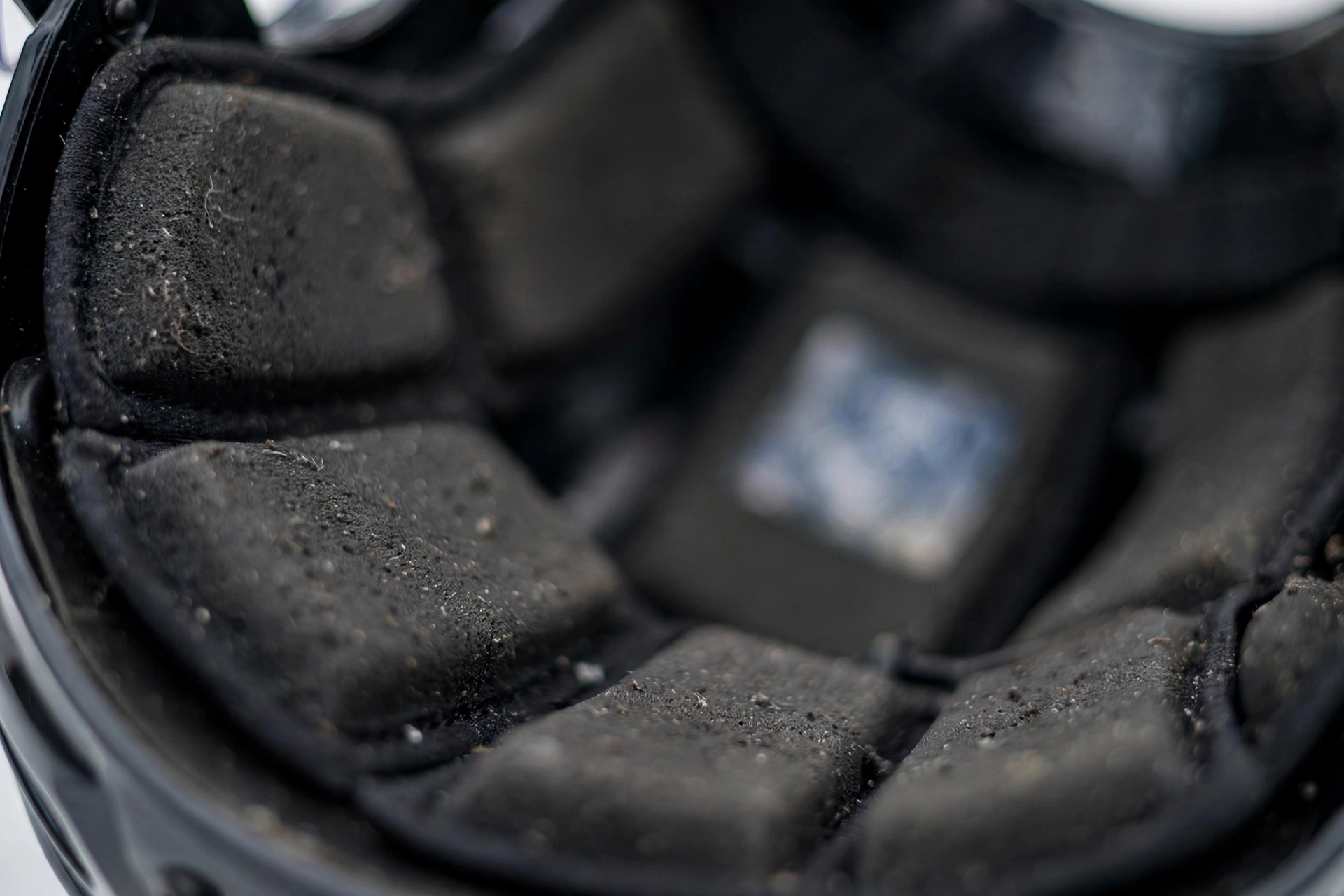
Look at the back of the helmet first, then inside the shell and under the liner edges. The certification sticker is small and easy to miss under dirt and tape residue, so clean the area and look properly rather than assuming it is there. On many helmets the maker also prints size and model information nearby, which helps if you ever need to order matching parts.
Check three things. First, that a sticker for your country is present at all — no sticker, no certification you can prove. Second, that it is legible: a sticker worn blank by sweat and friction tells an official nothing. Third, in general terms, that any date or expiry element on the sticker has not passed, because leagues that check stickers treat an expired one the same as a missing one.
- Present: a HECC and/or CSA sticker you can actually find on the helmet
- Legible: the mark and any dates can still be read
- Current: the certification has not passed the expiry shown
- Unmodified: ear covers, cage mounts, and parts are the maker’s own
If you cannot find a sticker on a used helmet, treat it as uncertified for league purposes, however good it looks. For casual, non-league skating it is still protection, but organised play runs on the sticker.
When Is a Certified Helmet No Longer Legal or Safe to Use?
Certification ends in two ways: the date runs out, or the helmet’s condition does. An expired sticker means the helmet cannot be shown to meet the league’s requirement, and officials can remove it from play. The helmet may still look new — the rule is about the certification period, not appearance.
Condition matters just as much. A helmet that has taken a serious impact, has cracked foam or shell damage, has stretched or torn straps, or has been modified with parts the maker did not supply is no longer the helmet that was tested, whatever the sticker says. Certification describes the helmet as made and as tested, not after years of knocks and home repairs.
The safe habit is simple: check the sticker and the helmet together at the start of every season. If either one fails — expired certification or worn-out condition — replace the helmet, and keep the old one out of league play entirely rather than demoting it to a spare for games.
Frequently Asked Questions
Q: Is a helmet with both HECC and CSA stickers legal in both countries?
A: In general terms, yes. Dual-certified helmets are common in North America, and carrying both marks means the helmet satisfies the usual certification check in US leagues that look for HECC and Canadian leagues that look for CSA. Your league’s own rulebook is always the final word.
Q: Can I replace a lost certification sticker?
A: Not yourself. Certification stickers are applied under the maker’s programme, and a homemade or copied sticker proves nothing and may breach league rules. If a sticker has worn off, contact the maker for guidance; if it cannot be verified, treat the helmet as uncertified for league play.
Q: Does certification mean a helmet prevents concussions?
A: No. Certification shows the helmet model passed standardised impact tests within set limits. It does not guarantee against concussion or any specific injury. Fit, condition, and keeping the helmet within its certified life all matter alongside the sticker.

Olivia
Writer at Helmet Today, covering helmet reviews, fit and riding safety.