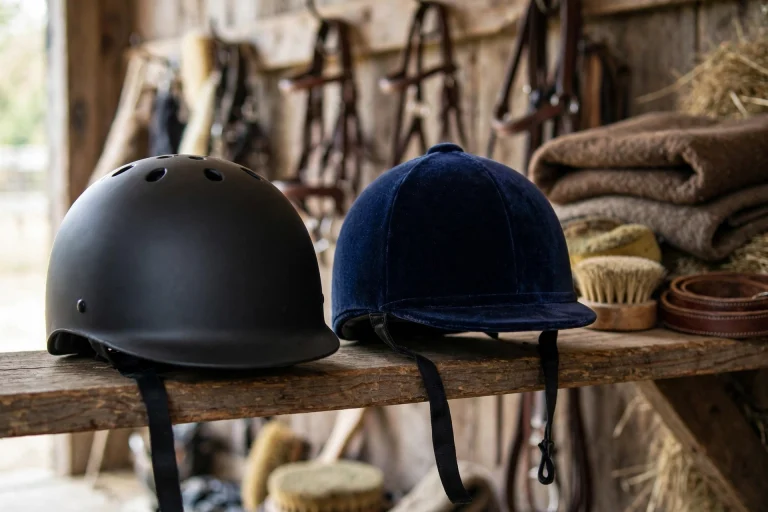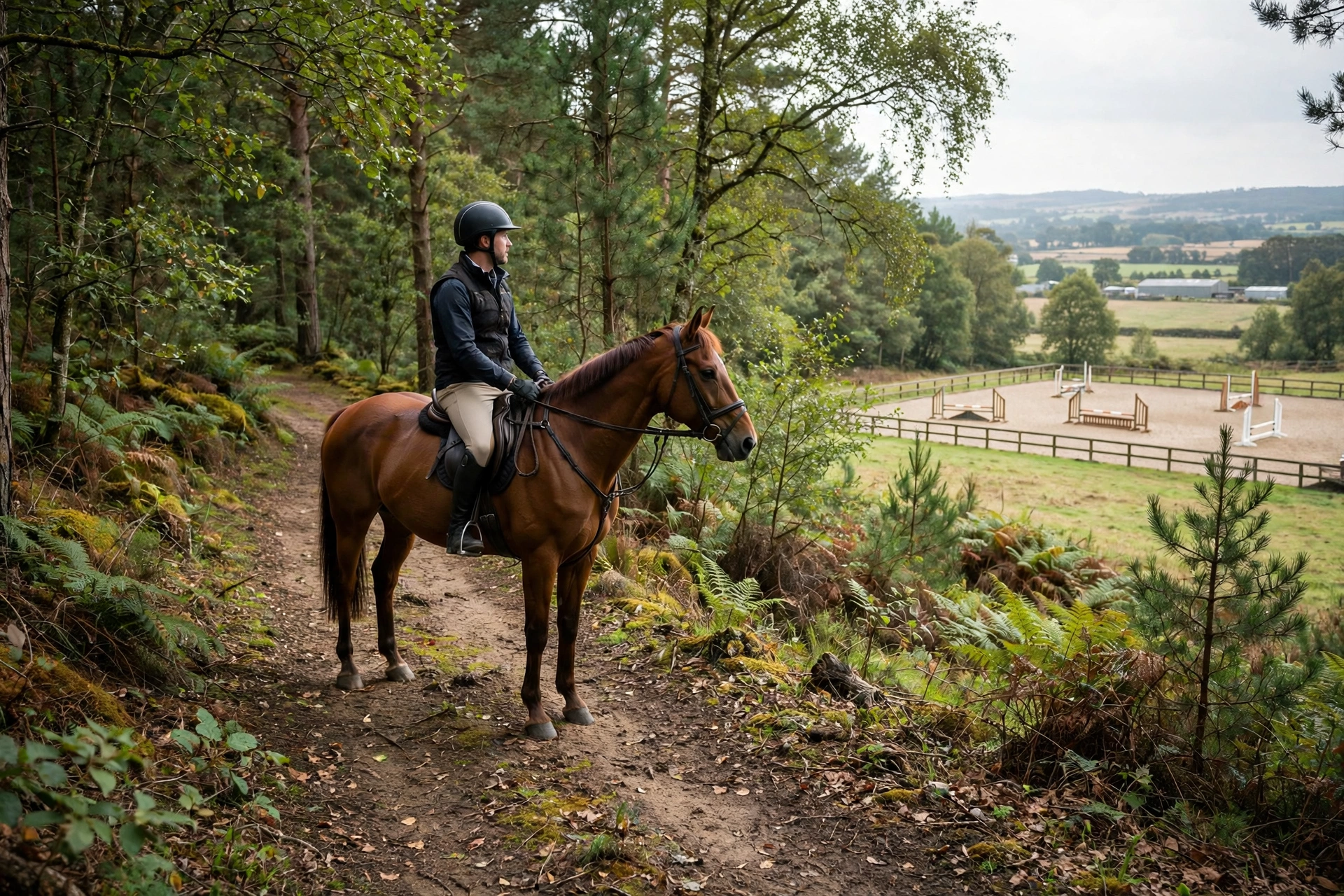
There is no safety difference: trail riding and schooling call for the same certified, correctly fitted helmet, because the protection standard does not change with the scenery — the real differences are practical ones like sun shade, ventilation, visibility, and how much you care about scuffs, which is why many riders use one certified helmet for both and some keep a hardier one for the trail. Buy for fit and certification first; choose trail-versus-schooling features second.
This guide sets out what genuinely differs between the two jobs, and what must never differ.
Is the Safety Requirement the Same for Trail and Schooling?
Yes, completely. A fall onto a trail is no softer than a fall onto arena footing — often harder, onto rock, roots, tarmac, or frozen ground, and usually further from help. If anything, the case for full certified protection is stronger out hacking than in a fenced school with other people around. The helmet for both jobs must meet a recognised standard such as ASTM/SEI or an accepted European equivalent, shown by the label inside.
Fit requirements are identical too: level, snug, harness fastened, every ride. Trail riders sometimes undo or loosen the harness on a quiet stretch, or push the helmet back in heat — habits that quietly cancel the protection on exactly the ride where a spook at a pheasant can unseat anyone. The horse does not know which activity is on the schedule, and neither does gravity.
Features such as rotational liners are equally relevant in both settings — angled falls onto hard ground are precisely what they are designed for, so riders weighing that option can read up on what MIPS is for helmets once and apply the answer to both helmets or the one shared helmet.
What Features Suit Trail Riding Best?
Sun and weather shape the trail list. A wider peak or sun visor shades the eyes and face on long, bright rides — removable wide visors exist for many schooling helmets for exactly this reason. Ventilation matters more on the trail too: rides are longer, the pace varies, and there is no shade cloth over a forest track at midday, so a well-vented helmet earns its keep over two hours in a way it never has to in a forty-minute lesson.
Visibility is a trail feature with real safety weight. Riders on roads are traffic, and a helmet in a bright colour or fitted with a hi-viz cover is simply easier for drivers to see; some trail riders also attach a small light for dusk rides. A cover does double duty here — hi-viz and a shield against the branch scratches and hedge scrapes that mark a trail helmet’s shell within a season.
Finally, durability of finish. Trail helmets get knocked by branches, dropped on hardstanding, and hung on gates. A tough matte shell or a sacrificial cover keeps a helmet presentable; a velvet show finish will not survive a winter of hacking, which is a cosmetic point, not a safety one — the foam does not care about scratches.
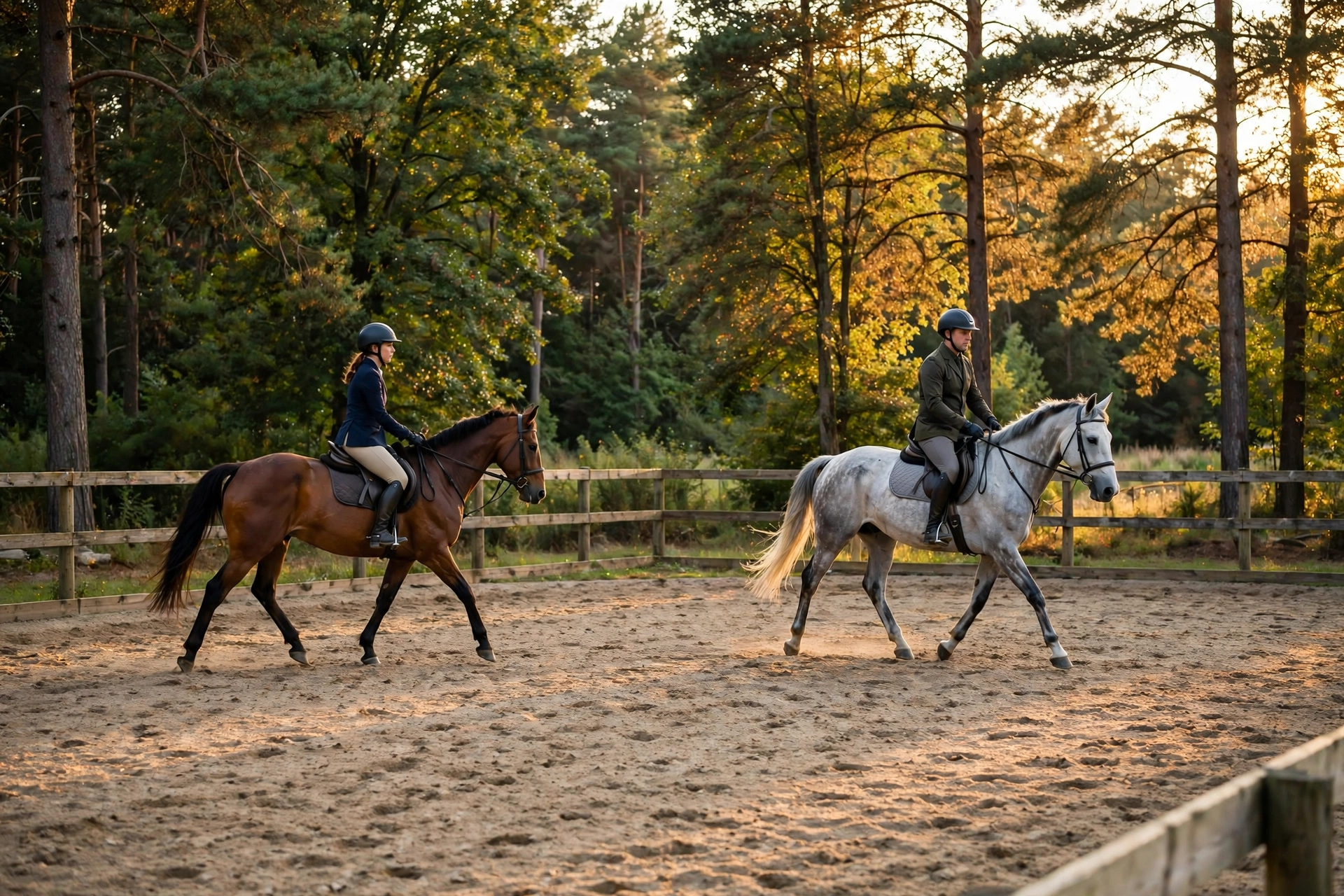
What Features Suit Schooling Best?
Schooling priorities are comfort at close quarters and turnout. In lessons, riders spend long periods at walk and trot with an instructor watching details — including how the helmet sits — so a low-profile, neatly fitting helmet in a traditional finish is the norm at most yards, and some instructors and livery yards set helmet expectations in their rules.
Climate control flips the other way indoors: indoor arenas can be still and humid, so ventilation still counts, but out in a winter school the wind makes a less vented, warmer helmet feel better, and many riders use a fleece-lined cover or ear warmers made for helmets in the cold months. Neither adjustment changes the helmet itself — covers and liners go over or under it without altering fit, provided nothing thick is trapped beneath the shell.
Schooling is also where a second, smarter helmet makes sense for riders who compete: the certified helmet that lives for lessons and shows, kept clean and unmarked, while an older — still certified, still in date — helmet takes the daily trail wear. Both must be genuinely protective; “the scruffy one” is a styling category, never a safety downgrade.
Can One Helmet Do Both Jobs?
For most riders, yes — and this is the sensible default. One certified helmet that fits you properly, with decent ventilation and a finish you do not mind marking, covers schooling and hacking completely. Add a hi-viz cover for road work and a wider visor for summer trails, and the same helmet adapts without any change to its protection.
The riders who genuinely benefit from two are those at the extremes: competitors protecting a show helmet’s finish, endurance riders wanting maximum venting and minimal weight for hours in the saddle, and riders whose trail riding involves long road sections where a dedicated hi-viz setup is worth it. Even then, the second helmet is about features and finish, not about a different level of protection.
What never works is the reverse arrangement: a certified helmet for the school and something lesser — an uncertified “trail hat,” an ancient spare — for hacking. If it goes on your head on a horse, it should be a certified helmet that fits, full stop.
How Should You Decide What to Buy?
Decide by where you spend your hours. Mostly schooling with weekend hacks: buy the schooling helmet you love, add the hi-viz cover. Mostly trails with occasional lessons: buy the vented, visored trail helmet and accept it in the school — no rule of riding says a lesson helmet must be velvet. Split evenly: one helmet, two covers, done.
Whatever you choose, run the same checks: certification label inside, fit checked on your head with your usual hairstyle, harness fastened and adjusted, and a replacement plan — after any fall, and in general terms after about five years of use, sooner if the shell or foam is damaged. Store the helmet out of the sun and away from solvents, on the yard or at home.
The trail-versus-schooling question turns out to be a small one. Get the certified helmet that fits, dress it for the job in front of you, and ride.
Frequently Asked Questions
Q: Do I need a different helmet for trail riding than for lessons?
A: No. The same certified, well-fitted helmet is correct for both. Trail-specific features — a wider visor, more vents, a hi-viz cover — are comfort and visibility choices, not different protection. Many riders use one helmet with different covers for each job.
Q: Is it safe to wear my old helmet for hacking and keep the new one for shows?
A: Only if the old helmet is still certified, undamaged, within its useful life, and fits properly. Trails are not lower-risk riding — falls happen onto harder ground, further from help. An expired, damaged, or loose “old” helmet is not made acceptable by being worn outdoors.
Q: Are vented helmets weaker than solid ones for trail riding?
A: No. Certified vented helmets pass the same standard as closed designs — the vents are engineered into the structure. Ventilation is a comfort feature with no safety cost, and on long hot rides it helps you keep the helmet on and fastened, which is its own safety benefit.

Olivia
Writer at Helmet Today, covering helmet reviews, fit and riding safety.