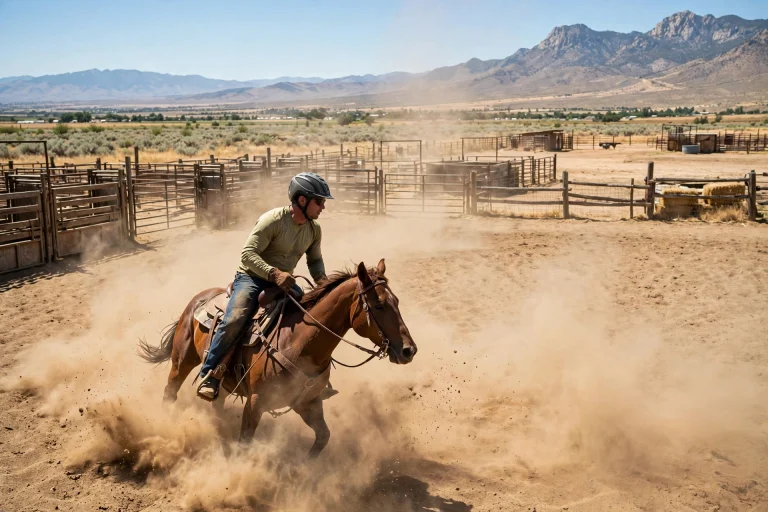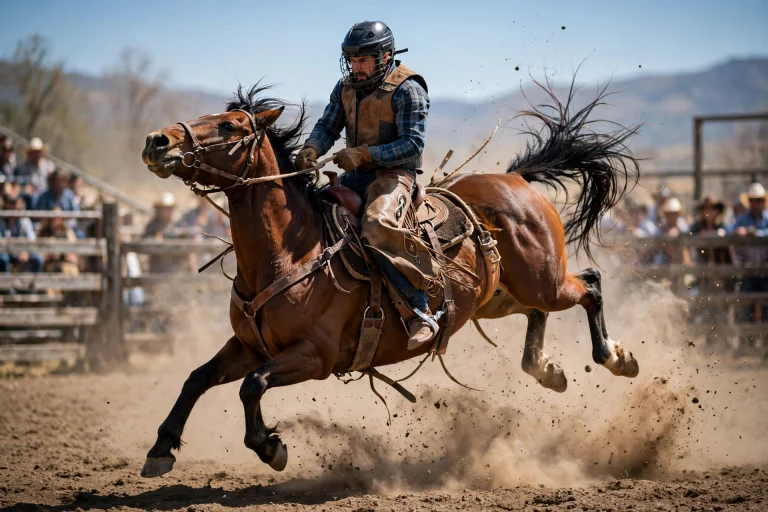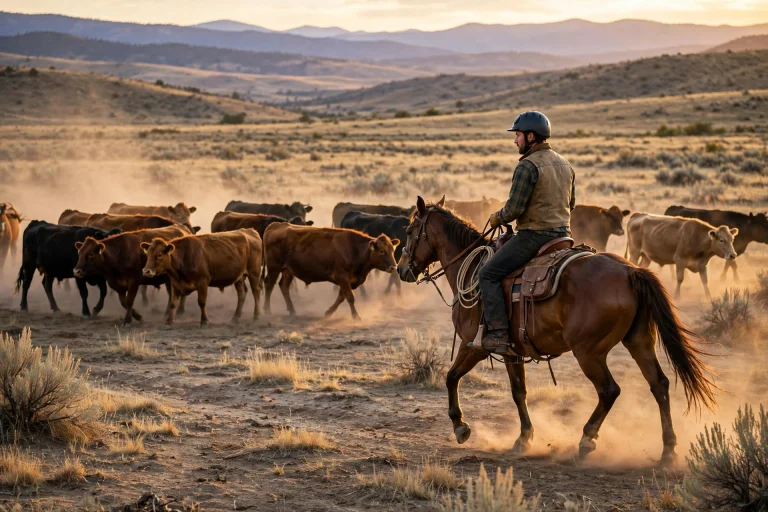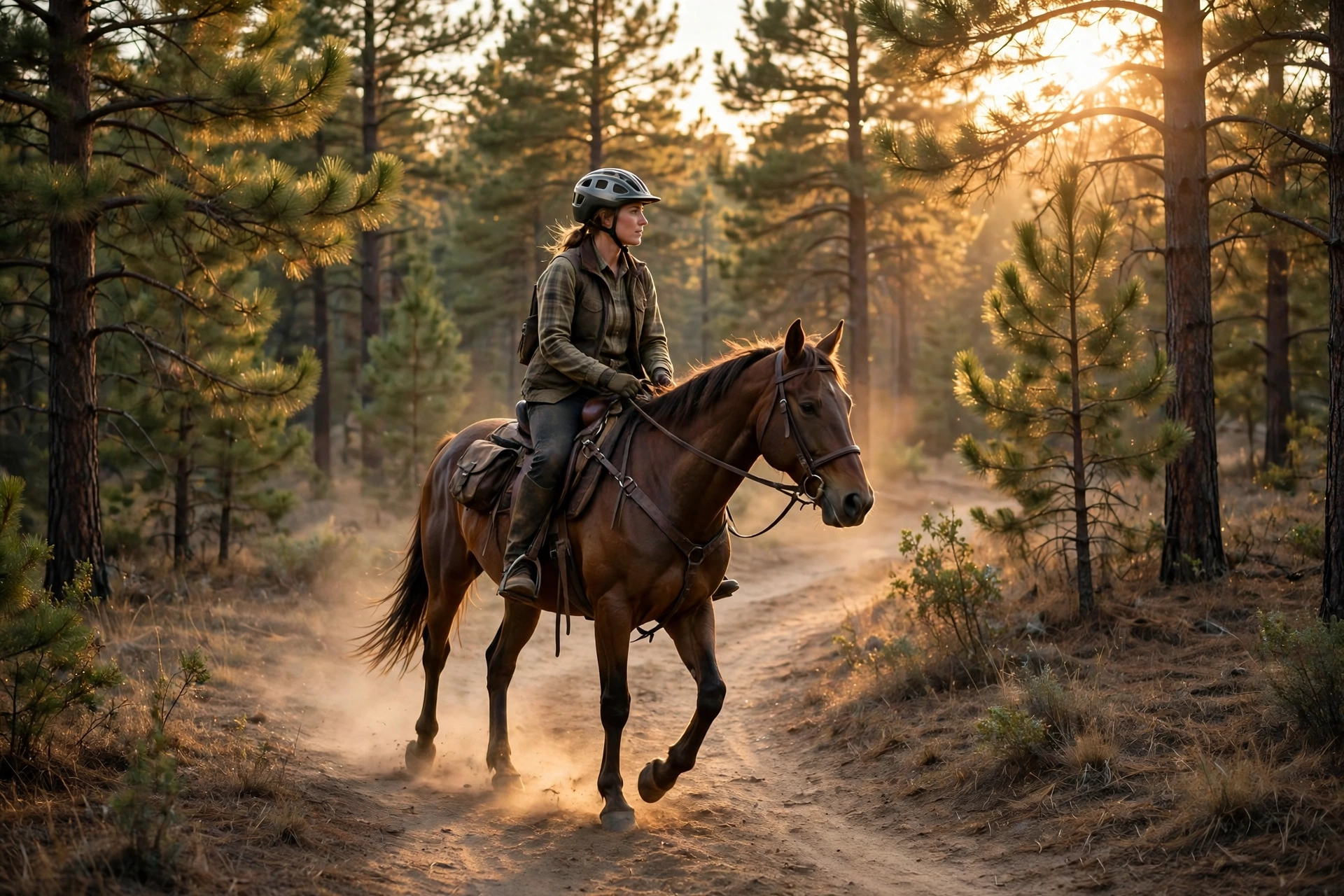
When choosing a western trail riding helmet, look for a certified equestrian helmet that fits snugly, covers the back and sides of your head well, ventilates enough for long hours in the saddle, and feels comfortable enough to wear all day. A trail ride can last hours, and the helmet you choose has to protect you on rough ground while staying comfortable through heat, dust, and long stretches in the saddle.
Trail riding is different from arena riding. You are out on uneven ground, often far from help, riding past low branches, over rocky tracks, and up and down steep slopes. A fall can happen a long way from the nearest road, which makes a good helmet even more important — and makes comfort matter, because a helmet you take off halfway through a ride protects no one.
Why Wear a Helmet on the Trail?
Trail riding carries risks that are easy to underestimate because the pace is often slow. A horse can spook at a snake, a sudden noise, or a moving shadow, and a spook on a narrow trail can throw a rider before they have time to react. Low branches, slippery creek crossings, and steep descents all add to the risk.
Distance is the other factor. On a trail ride you may be an hour or more from the nearest road, and help can take a long time to reach you. In an arena, someone is usually watching and a fall is seen straight away. On a trail, a head injury with no one nearby is far more serious, and a helmet is the simplest protection against it.
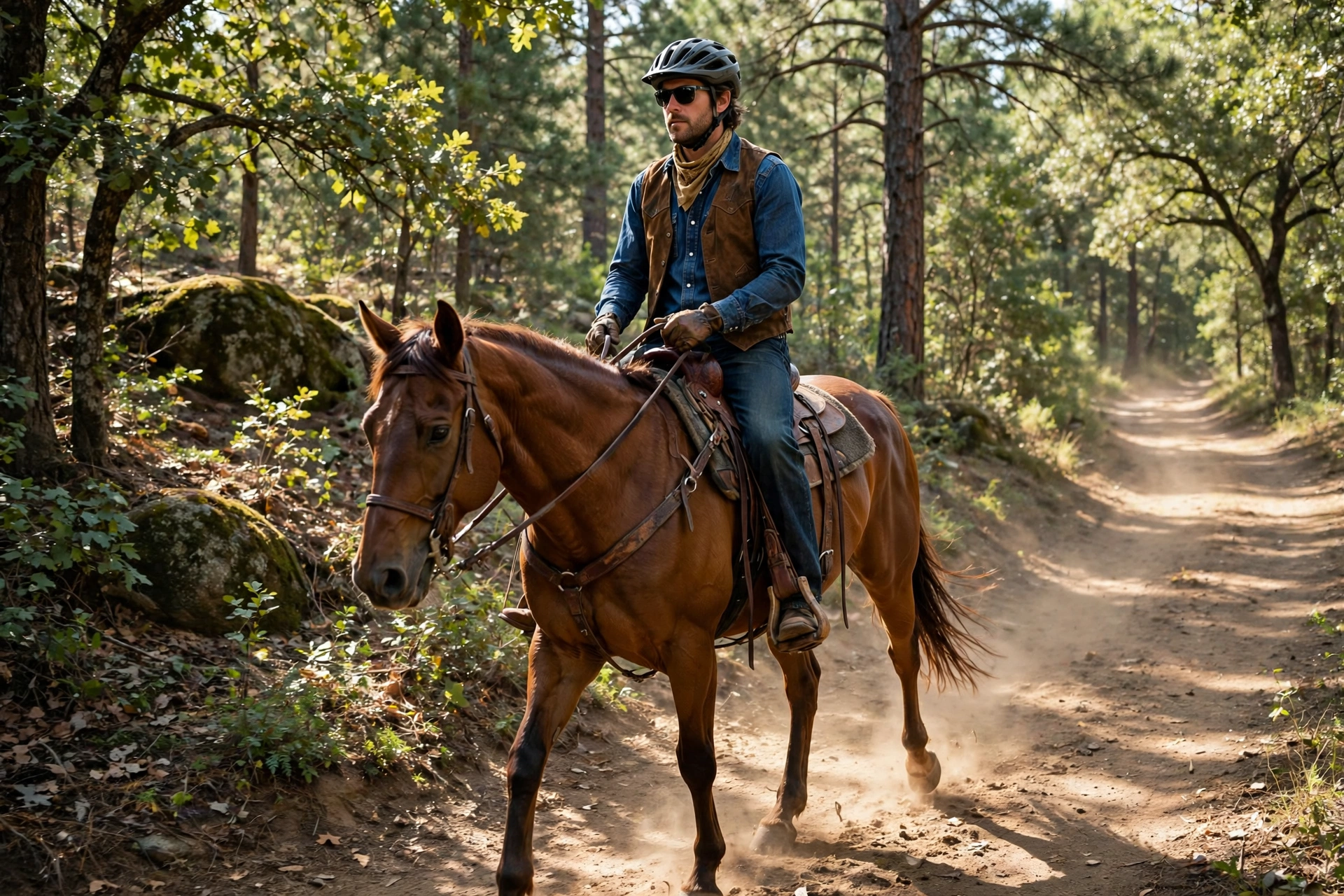
Some riders worry that a helmet looks out of place on a western trail ride, where the cowboy hat is the traditional image. But modern western trail helmets are made in low-profile shapes that sit close to the head and look at home with western tack, and some come with a brim or a hat cover. Protection and western style are not a choice between one or the other.
How Should a Western Trail Riding Helmet Fit?
Fit is the first thing to get right, because a helmet that does not fit will not protect you properly and will be uncomfortable on a long ride. The helmet should sit level on your head, low enough to cover your forehead, and feel snug all around with no pressure points. It should not rock from side to side or slide forward when you shake your head, and the chin strap should be done up snugly enough that the helmet stays put when you lean forward.
Try the helmet on with your hair the way you wear it to ride, and with anything else you plan to wear, such as a bandana or a hat cover. Walk around in the shop for a few minutes before deciding — a helmet that presses after five minutes will be painful after three hours in the saddle.
Remember that sizing varies between makers, so a size label is only a starting point. The shape of the helmet matters as much as the size: some helmets suit rounder heads and others suit longer ones. If one model presses at the front and gaps at the sides, try a different shape rather than a different size.
What Kind of Coverage Do You Need on the Trail?
On the trail, you want a helmet that covers the back and sides of your head well, not just the top. Falls on a trail are unpredictable — you can come off sideways on a slope, backwards on a steep descent, or forward if a horse stumbles — so coverage all the way around matters more than it does in an arena where the ground is flat and predictable.
A low-profile western helmet can still offer good coverage, so do not judge a helmet by how bulky it looks. Check that it sits low enough at the back to cover the base of your skull, and that the sides come down far enough to protect your temples.
Certification is the simplest way to be sure the coverage is real. Look for a helmet that meets a recognised equestrian safety standard for your country, and check the label inside the helmet to confirm it. A certified helmet has been tested for the kinds of impact a rider is likely to face, which is more reassurance than any marketing claim on the box.
How Important Is Ventilation for Long Trail Rides?
Ventilation matters a great deal on the trail, because trail rides are long and often hot. A helmet with poor airflow will trap heat and sweat, and after an hour or two it becomes uncomfortable enough to be a distraction — or worse, a reason to take the helmet off. Good ventilation keeps you cooler, drier, and more focused on the ride.
Look for a helmet with vents that allow air to flow through, not just decorative holes. The best designs channel air in at the front and out at the back. Some helmets have vents you can open or close, which is useful for rides that start cold in the morning and warm up by midday.
Removable, washable lining is worth having too. Trail helmets get sweaty and dusty, and lining you can take out and wash will keep the helmet fresh and comfortable over a whole season. Dark colours look smart with western tack but absorb more heat in the sun, so a lighter colour is the better choice in hot weather.
When Should You Replace a Trail Riding Helmet?
Replace a trail riding helmet after any fall in which your head hits the ground, even if the helmet looks fine from the outside. The protective material inside a helmet can be damaged by an impact in ways you cannot see, and a helmet that has already absorbed one hard knock may not protect you as well the next time.
Also replace it when the fit changes. Foam compresses slowly over time, straps stretch, and lining wears thin, and a helmet that used to fit snugly can gradually become loose. If you can rock the helmet easily from side to side, or if it slides forward when you lean down, it is no longer fitting the way it should.
As a rough guide, a helmet used regularly on the trail is often replaced every few years, but the real test is condition, not the calendar. Check the helmet before every season: look for cracks, worn straps, loose lining, and compressed foam. If you are learning about helmet technology, reading about what MIPS is for helmets can help you understand one of the features you may see when you shop for a replacement.
Frequently Asked Questions
Q: Can I wear a cowboy hat instead of a helmet on the trail?
A: A cowboy hat offers no impact protection, so it is not a substitute for a helmet. Many western trail riders wear a low-profile helmet, sometimes with a brim or a hat cover, to keep the western look.
Q: Do trail riding helmets need to be certified?
A: A certified helmet is always the safer choice. Look for a helmet that meets a recognised equestrian safety standard for your country, and check the label inside the helmet to confirm it.
Q: How do I keep my trail helmet comfortable on long, hot rides?
A: Choose a well-ventilated helmet that fits properly, and keep the lining clean. A helmet that fits your head shape will stay comfortable far longer than one that presses in the wrong places.

Olivia
Writer at Helmet Today, covering helmet reviews, fit and riding safety.