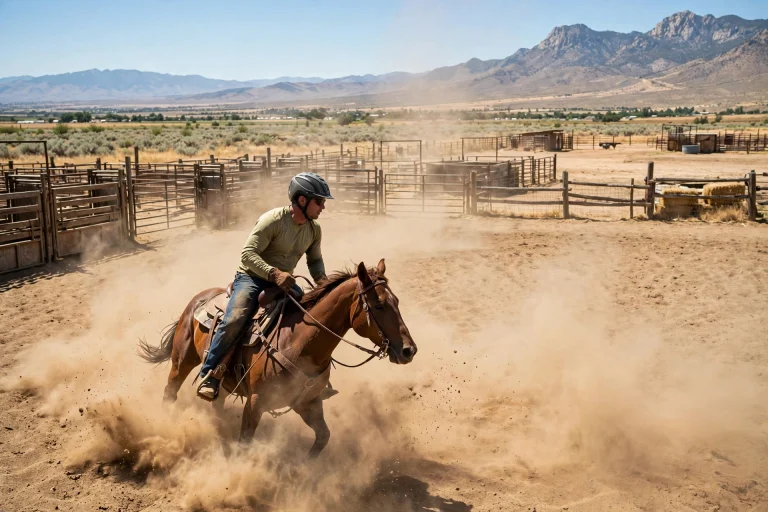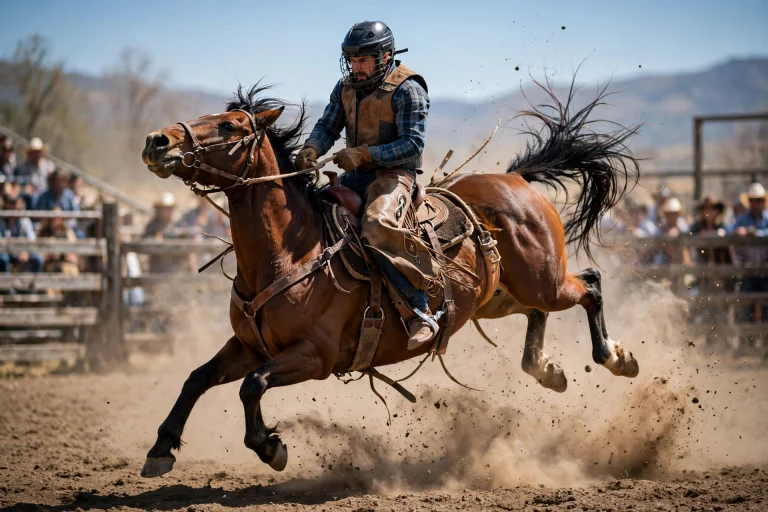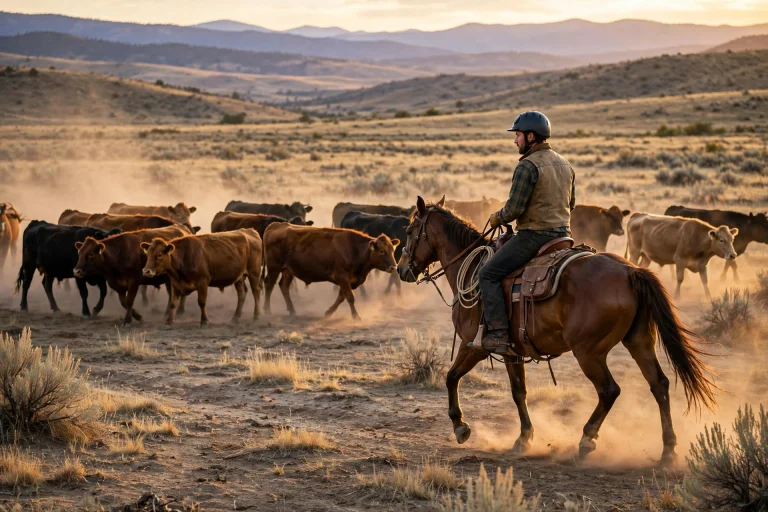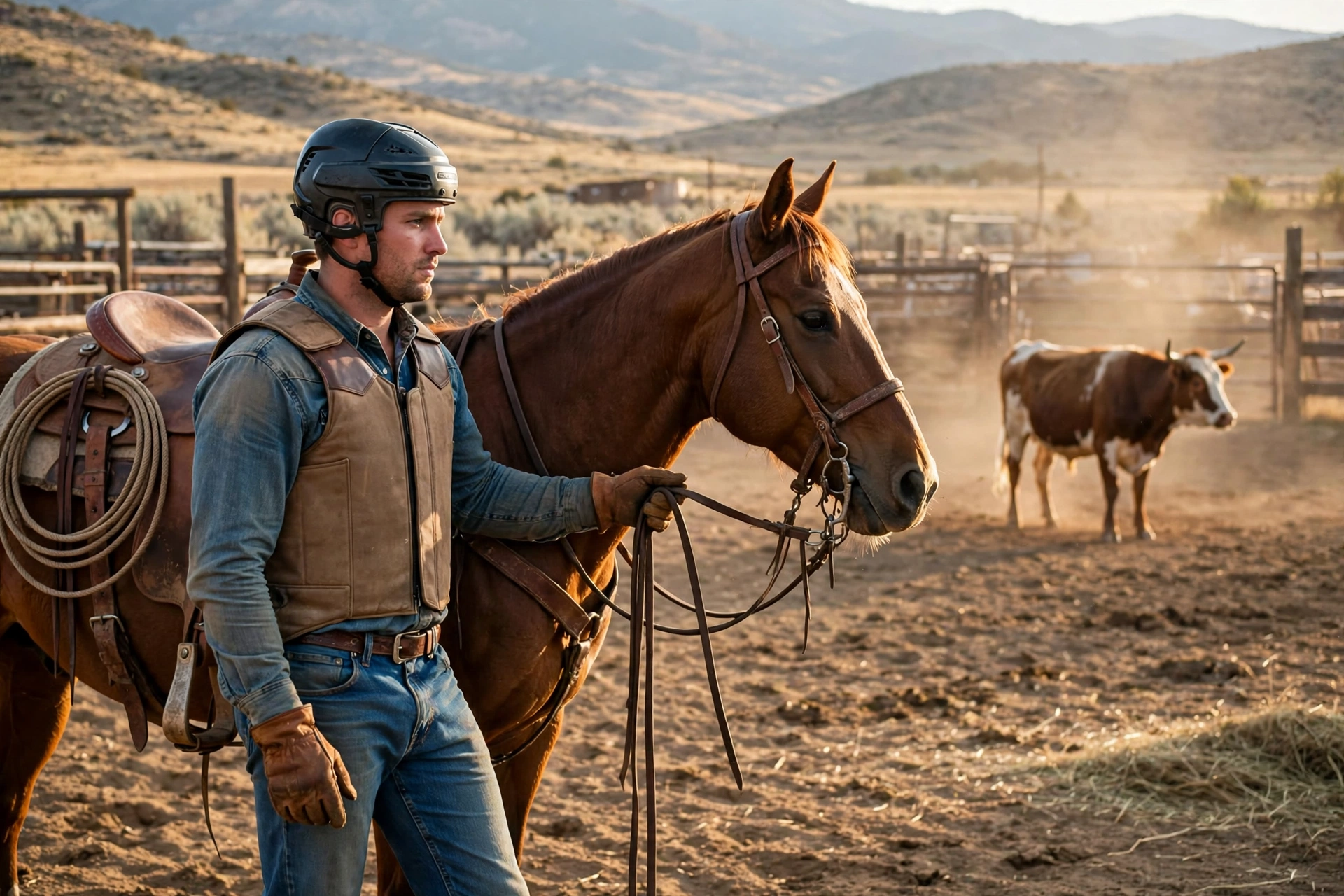
A steer wrestling helmet is a protective equestrian helmet worn by steer wrestlers — also known as bulldoggers — to protect their head during one of the fastest and most physical events in rodeo. In steer wrestling, a rider on horseback chases a steer, slides down from the saddle at a gallop, grabs the steer’s horns, and wrestles it to the ground. That dismount alone makes head protection worth thinking carefully about.
The event happens at speed, close to the ground, and close to a large animal that is moving and struggling. Falls, kicks, and awkward landings are all part of the risk, and a helmet is the simplest protection a steer wrestler can wear. This guide explains what the event involves, what a steer wrestling helmet protects against, how it should fit, and what to look for when buying one.
What Is Steer Wrestling?
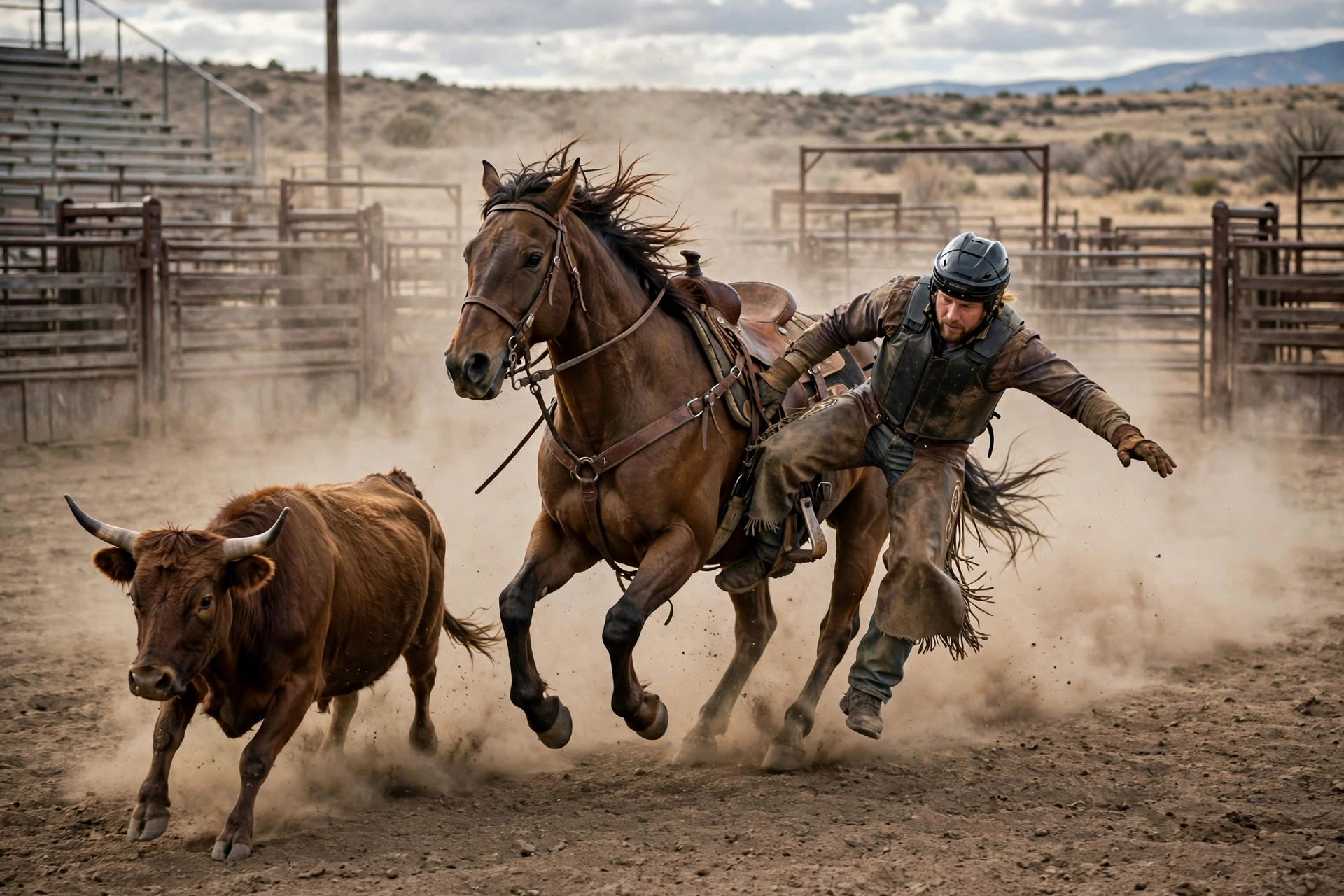
Steer wrestling is a timed rodeo event in which a rider, called a bulldogger, chases a steer on horseback, drops from the saddle while both animals are moving, catches the steer by the horns, and brings it to the ground. The clock stops when the steer is on its side with all four legs pointing the same way.
The dismount is the most demanding part. The rider has to leave the saddle at a gallop, land on their feet while running alongside the steer, and then use their body weight and leverage to bring the animal down. It is a controlled fall, done deliberately, at speed — and that is exactly why head protection matters. A mistimed step, a stumble, or a steer that changes direction can put a rider on the ground head-first.
Steer wrestling is a team effort in one sense: a second rider, called a hazer, rides alongside to keep the steer running straight. Even so, the bulldogger is on their own once they leave the saddle, and the ground they land on is usually dirt in an arena full of moving animals.
What Does a Steer Wrestling Helmet Protect Against?
The main risk a steer wrestling helmet guards against is a head impact during the dismount and the takedown. If a rider stumbles while dropping from the saddle, or if the steer turns and knocks them off balance, their head can hit the ground hard and fast. A helmet spreads that impact and reduces the force reaching the skull.
There are other risks too. A steer can kick out while being wrestled, and a hoof or a horn can strike a rider’s head or face. The horse itself is another hazard: a rider who lands badly can end up close to the horse’s legs. A helmet does not remove these risks, but it gives the rider a layer of protection against the worst of them.
A helmet has limits. It protects against impact, not against every injury in a rodeo arena — it will not stop a twisted ankle or a bruised rib. What it does is protect the part of the body that can least afford an injury, and for an event that involves deliberately leaving a moving horse, that is protection worth having.
How Is a Steer Wrestling Helmet Different From Other Rodeo Helmets?
Steer wrestling helmets are, in general terms, certified equestrian helmets chosen for a rodeo event rather than a separate category of their own. There is no single helmet made only for steer wrestling, so riders usually choose from the same range of certified riding helmets used in other rodeo events. What makes the choice specific to steer wrestling is the way the helmet is used.
The dismount is the key difference. A barrel racer falls from the saddle only if something goes wrong, but a steer wrestler leaves the saddle on purpose, every single run, at a gallop. That means the helmet has to stay perfectly stable during a sudden, violent movement — sliding off a horse, landing on your feet, and grabbing a steer — without shifting, rocking, or slipping over the rider’s eyes.
Fit and stability therefore matter more for steer wrestling than for slower events. A helmet that is merely comfortable for trail riding may not stay put through a bulldogger’s dismount. Steer wrestlers also favour low-profile helmets that sit close to the head, because a bulky helmet can catch on the saddle or the steer’s horns.
How Should a Steer Wrestling Helmet Fit?
A steer wrestling helmet should fit snugly enough that it does not move when you shake your head hard or lean forward quickly. It should sit level, low enough to cover your forehead, and feel even all around your head with no pressure points. The chin strap should be done up snugly — a loose strap lets the helmet shift during the dismount, which is exactly when you need it to stay put.
Try the helmet on and mimic the movement of a dismount: lean forward, twist, and shake your head from side to side. If the helmet slides or rocks, it is either the wrong size or the wrong shape for your head. Sizing varies between makers, so a size label is only a starting point, and the shape of the helmet matters as much as the size — some helmets suit rounder heads, others suit longer ones.
Wear it with anything else you will have on in the arena, such as a hat cover or a bandana, because these can change the fit. And remember that a helmet should be replaced after a hard impact, even if it looks fine, because the protective material inside can be damaged in ways you cannot see.
What Should You Look for When Buying a Steer Wrestling Helmet?
Start with certification. Look for a helmet that meets a recognised equestrian safety standard for your country, and check the label inside the helmet to confirm which standard it meets. Certification is the foundation — without it, you have no way of knowing whether the helmet has been tested to a real standard.
Next, look at stability and coverage. A low-profile helmet with good side and back coverage and a secure strap system will suit the dismount better than a tall, loose-fitting one. Ventilation matters too, because rodeo arenas are hot and dusty, and a helmet that overheats you is a distraction you do not need.
Weight and comfort are worth weighing as well. A lighter helmet is less tiring to wear through a long rodeo day, and removable, washable lining is a practical plus when the helmet gets sweaty and dusty. If you want to understand one of the features you may see listed on the box, reading about what MIPS is for helmets can help you make sense of the options.
Frequently Asked Questions
Q: Do steer wrestlers have to wear a helmet?
A: It depends on the event and the organisation running it. In general terms, helmets are often required for youth competitors and encouraged for adults, but rules vary. Check the rules of the specific event before you enter.
Q: Can I use a regular riding helmet for steer wrestling?
A: Yes, as long as it is a certified equestrian helmet that fits snugly and stays stable during a fast dismount. If it shifts when you move suddenly, it is not the right helmet for this event.
Q: When should I replace my steer wrestling helmet?
A: Replace it after any hard impact, even if it looks undamaged, and when the fit loosens, the lining wears out, or the straps no longer hold securely.

Olivia
Writer at Helmet Today, covering helmet reviews, fit and riding safety.