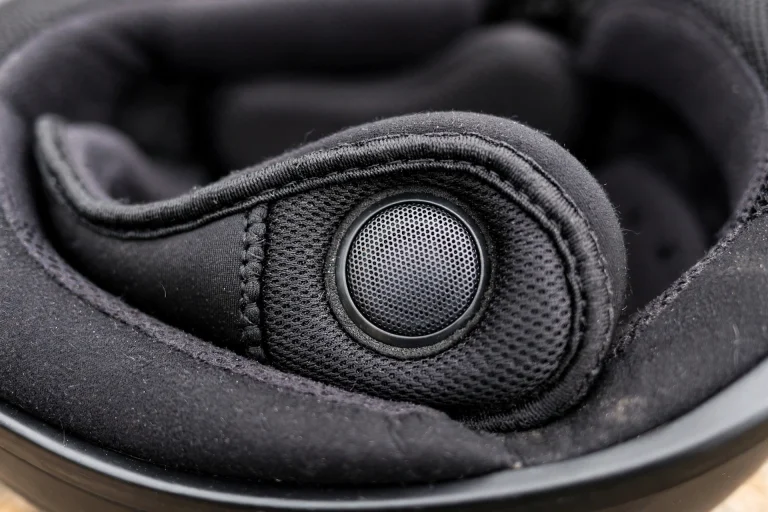
Helmet sweatbands and skull caps are thin layers worn under a helmet to absorb sweat and, in the case of skull caps, add warmth, and in general terms, they work well as long as they are thin enough that the helmet still fits level and snug. A sweatband sits around the forehead and catches sweat before it runs into your eyes, while a skull cap covers the whole head, manages sweat, and adds a light layer of insulation. Both are popular with cyclists, runners, and workers who wear a helmet for long periods.
Sweat in the eyes is more than an annoyance: it stings, blurs vision, and makes you want to wipe your face at the worst moment, such as on a descent or in traffic. A sweatband or skull cap keeps sweat away from the eyes and stops the helmet’s padding from soaking through as quickly. This guide explains how each works, how to fit them safely, and when one is a better choice than the other.
What Is the Difference Between a Sweatband and a Skull Cap?
A sweatband is a narrow band of absorbent fabric that sits around the forehead, under the front of the helmet. It does one job — catching sweat — and does it with the least extra bulk. Because it only covers the forehead, it adds almost no warmth, which makes it a good choice for hot weather, indoor training, or riders who overheat easily.
A skull cap is a close-fitting cap that covers the whole head, including the top, sides, and back, with the ears sometimes covered as well. It absorbs sweat across the whole head, adds a light layer of warmth, and can keep the helmet’s padding cleaner for longer. Skull caps are a better choice for cooler days, for riders who want sun protection on the scalp, or for anyone whose hair makes a sweatband slip.
How Do Sweatbands and Skull Caps Affect Helmet Fit?
This is the most important question, because any layer under a helmet changes the fit a little. A thin sweatband or skull cap usually changes it very little, but a thick one can make the helmet feel tight, push it up, or stop it sitting level. If the helmet sits higher than it should, it covers less of the forehead, and if it feels tight, you may be tempted to loosen the straps or the retention system to compensate — both of which reduce how well the helmet can do its job.
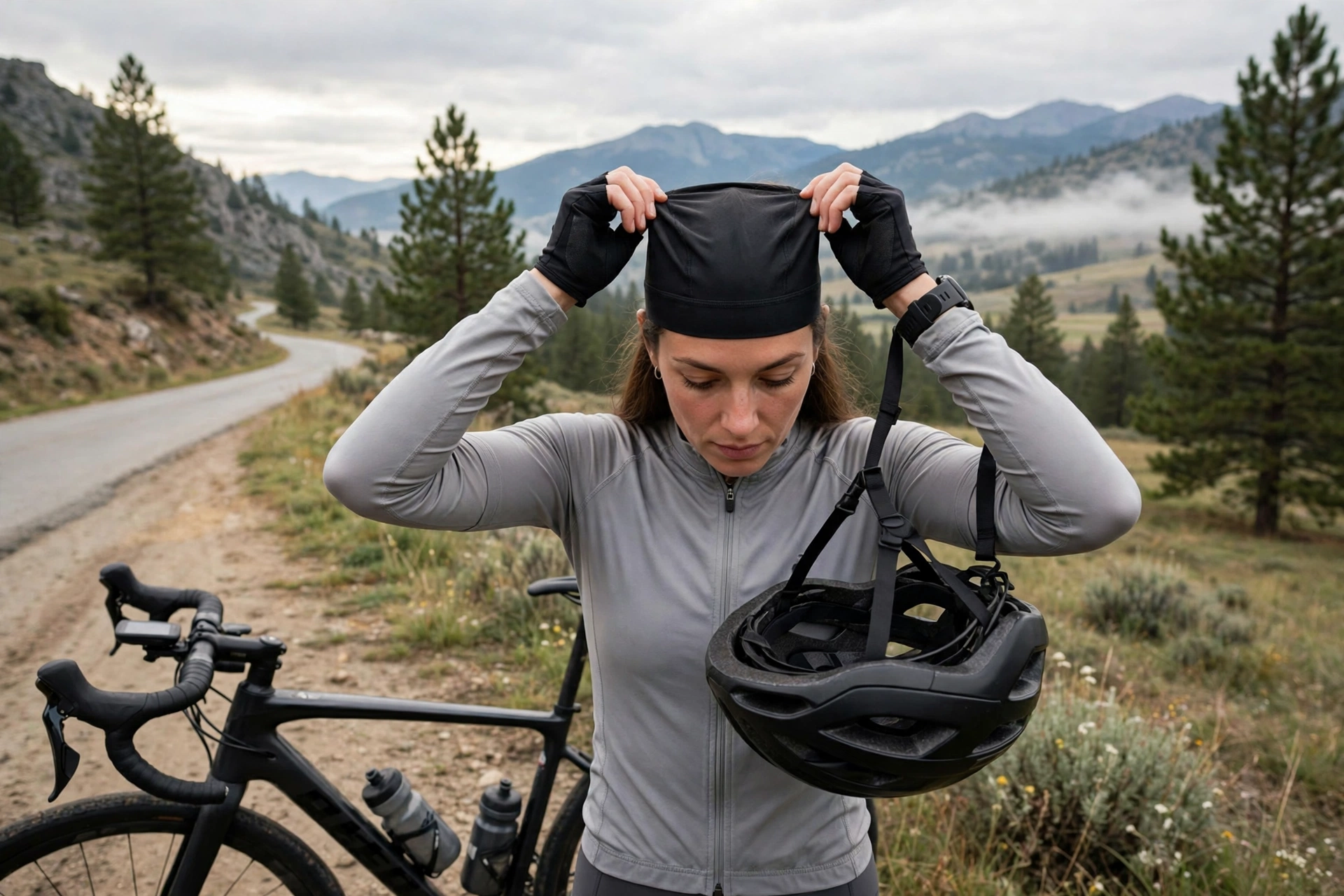
The test is simple: put the sweatband or skull cap on, then put the helmet on and fasten it as normal. The helmet should still sit level, low on the forehead, and snug all around, with no pressure points that throb after a few minutes. Shake your head gently: the helmet should not rock or slide. If you have to loosen the helmet noticeably to fit the layer underneath, the layer is too thick for that helmet.
It is worth trying the combination with the rest of your kit as well. Glasses, a peak, and the helmet’s retention system all sit near the same area, and a skull cap can crowd them. If the cap bunches up at the back or pushes the retention dial out of place, try a thinner cap or a different style. In general terms, the thinnest layer that does the job is the safest choice.
Which Is Better for Hot Weather: a Sweatband or a Skull Cap?
For hot weather, a sweatband is usually the better choice, because it adds the least warmth while still catching sweat at the forehead. A thin, wide sweatband made from a wicking fabric can hold a surprising amount of sweat, and it leaves the top of the head open so heat can escape through the helmet’s vents. That matters on a hot climb, where overheating can be as much of a problem as sweat in the eyes.
A skull cap can also work in heat, but only if it is made from a very thin, breathable fabric. A lightweight mesh or wicking skull cap can actually help in hot sun, by shielding the scalp from direct sun through the vents and by spreading sweat over a larger area so it evaporates more evenly. A thick or fleece skull cap, by contrast, will be too warm and may leave you hotter than riding without one.
Do Skull Caps Help in Cold Weather?
Yes, in general terms, a skull cap is one of the simplest ways to add warmth under a helmet in cold weather. A thin thermal skull cap traps a layer of warm air around the head, covers the ears if it has ear flaps, and stops cold air coming through the helmet’s vents. For many riders, a skull cap under a normal helmet is warmer and more practical than buying a separate winter helmet.
For very cold days, look for a skull cap with a windproof front panel, which blocks the wind that hits your forehead on a descent, and a fleece lining for extra warmth. For milder cold, a single-layer wicking cap may be enough, and it has the advantage of managing sweat as well as adding warmth. Some riders keep two caps — a thin one and a thermal one — and choose between them by the temperature.
The same fit rule applies in winter as in summer: the cap must be thin enough that the helmet still fits properly. A thick winter cap that pushes the helmet up is not worth the warmth it adds. If you need more warmth than a thin cap can give, a helmet cover or a winter helmet with built-in insulation may be a better answer than a thicker layer underneath. If you are learning how helmet fit systems work, reading about what MIPS is for helmets can help you understand why the helmet must still sit as the maker intended once any layer is added underneath.
How Do You Care for Sweatbands and Skull Caps?
Care is simple, but it matters. Wash sweatbands and skull caps regularly, following the maker’s care label, and air-dry them rather than tumble-drying if the label advises it. A clean sweatband absorbs better and feels more comfortable, while a dirty one can transfer sweat and oils into the helmet’s padding and make the helmet smell.
Check the fabric from time to time for thinning, holes, or stretched elastic. A sweatband that has lost its stretch will slip down over your eyes, and a skull cap with a hole will not manage sweat evenly. Replace them when they wear out — they are inexpensive, and a fresh one works far better than a tired one.
Finally, keep a spare in your kit bag, so you are never caught out if the first one is still damp from the last ride.
Frequently Asked Questions
Q: Can I wear a skull cap under any helmet?
A: In general terms, yes, as long as it is thin enough that the helmet still fits level and snug. If you have to loosen the helmet noticeably, the cap is too thick for that helmet.
Q: Do sweatbands stop sweat getting into my eyes completely?
A: They help a lot, but on very hot or long rides some sweat may still get through. A wide, absorbent sweatband works best, and wringing it out or swapping to a spare mid-ride can help.
Q: How often should I wash a helmet sweatband or skull cap?
A: After every ride in hot weather, and regularly in cooler weather too. Wash following the care label and air-dry fully before your next ride.

Olivia
Writer at Helmet Today, covering helmet reviews, fit and riding safety.